Sleep & Circadian Health
What Is Sleep?
How do we fall asleep?
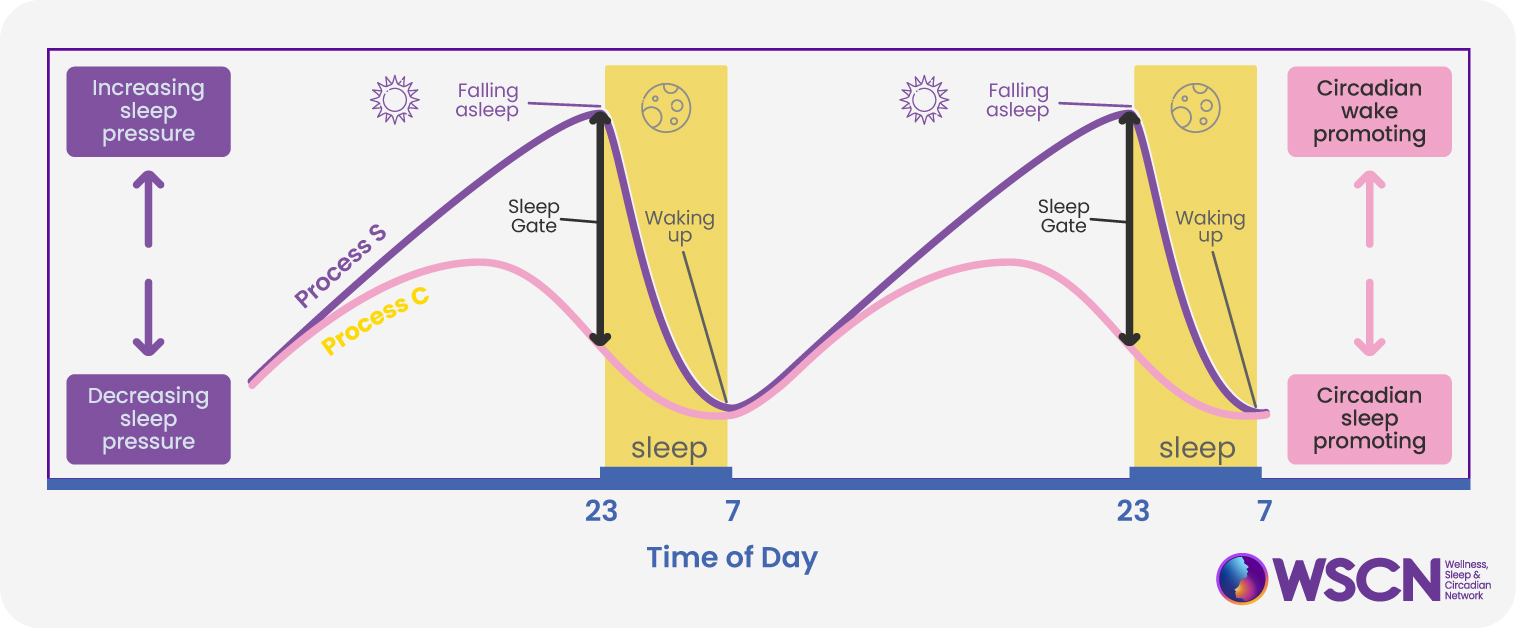
Our bodies have two biological systems that work together to regulate when we feel sleepy and when we are ready to wake up.
Sleep pressure (Process S): The longer we stay awake, the stronger our natural need for sleep becomes. This pressure builds throughout the day and decreases while we sleep.
Circadian timing (Process C): Our internal body clock follows an approximately 24-hour cycle. It helps regulate when we feel alert and when our bodies are naturally ready for sleep.
These two systems work together to determine when we feel sleepy. Even when we have been awake for many hours, falling asleep can be difficult if our internal body clock is still promoting wakefulness.
Understanding how these systems interact helps explain why we sometimes struggle to fall asleep, even when we feel tired.
Sleep pressure (Process S): Why we become sleepy
The longer we stay awake, the stronger our natural need for sleep becomes. This is called sleep pressure. After a good night’s sleep, sleep pressure is usually low. It gradually builds throughout the day and decreases again while we sleep.
One substance involved in this process is adenosine, which builds up in the brain while we are awake. As adenosine levels rise, they help increase our drive to sleep. During sleep, adenosine levels decrease, reducing sleep pressure so we can feel refreshed when we wake up.
This also helps explain how caffeine affects sleep. Caffeine temporarily blocks the effects of adenosine, making us feel more alert even when our need for sleep is increasing. Its effects can last for several hours, which is why drinking caffeine later in the day can make falling asleep more difficult.
Sleep pressure is only part of the picture. Even when our need for sleep is strong, our internal body clock can still influence whether we feel ready to fall asleep.
Circadian timing (Process C): Our internal body clock
Our internal body clock helps regulate when we feel alert and when we are ready for sleep. It follows an approximately 24-hour cycle and also influences important functions such as body temperature and hormone release.
A small area of the brain acts as the body’s master clock. It responds to light and darkness, helping keep our internal rhythms in sync with the day and night.
One important hormone involved in this process is melatonin. Melatonin levels typically rise in the evening as our body prepares for sleep and decrease toward morning. Unlike sleep pressure, melatonin does not build up the longer we stay awake. Instead, it helps signal that it is nighttime.
During the day, our internal body clock helps us stay alert, even as sleep pressure builds. In the evening, these alerting signals gradually decrease, making it easier for us to fall asleep.
The sleep gate: when sleep pressure and our body clock work together
Falling asleep becomes easier when our sleep pressure is high and our internal body clock is no longer sending strong signals to stay awake. This creates a period when our body is naturally more ready for sleep, sometimes called the sleep gate.
As we approach this period, we may begin to feel sleepy, yawn more often, or notice our energy declining. Recognizing these signals can help us develop a bedtime routine that works with our natural sleep timing.
When sleep pressure and our body clock are out of sync, falling asleep can be more difficult. For example:
- Shift work: Someone working nights may struggle to sleep during the day because their internal body clock is still promoting wakefulness.
- Jet lag: Traveling across time zones can leave our body clock out of sync with the local day and night.
Understanding how these two systems work together helps explain why healthy sleep is about more than simply going to bed at a particular time. It is also about giving our body the opportunity to sleep when it is biologically ready.