Sleep & Circadian Health

Understand your sleep, work with your body clock, and own all 24 hours for optimal health and wellness.

Sleep and circadian health work together to support our health and well-being. Sleep allows the brain and body to rest and recover, while our internal body clocks help regulate when we feel sleepy or alert. Together, they influence how we feel and function throughout the day.
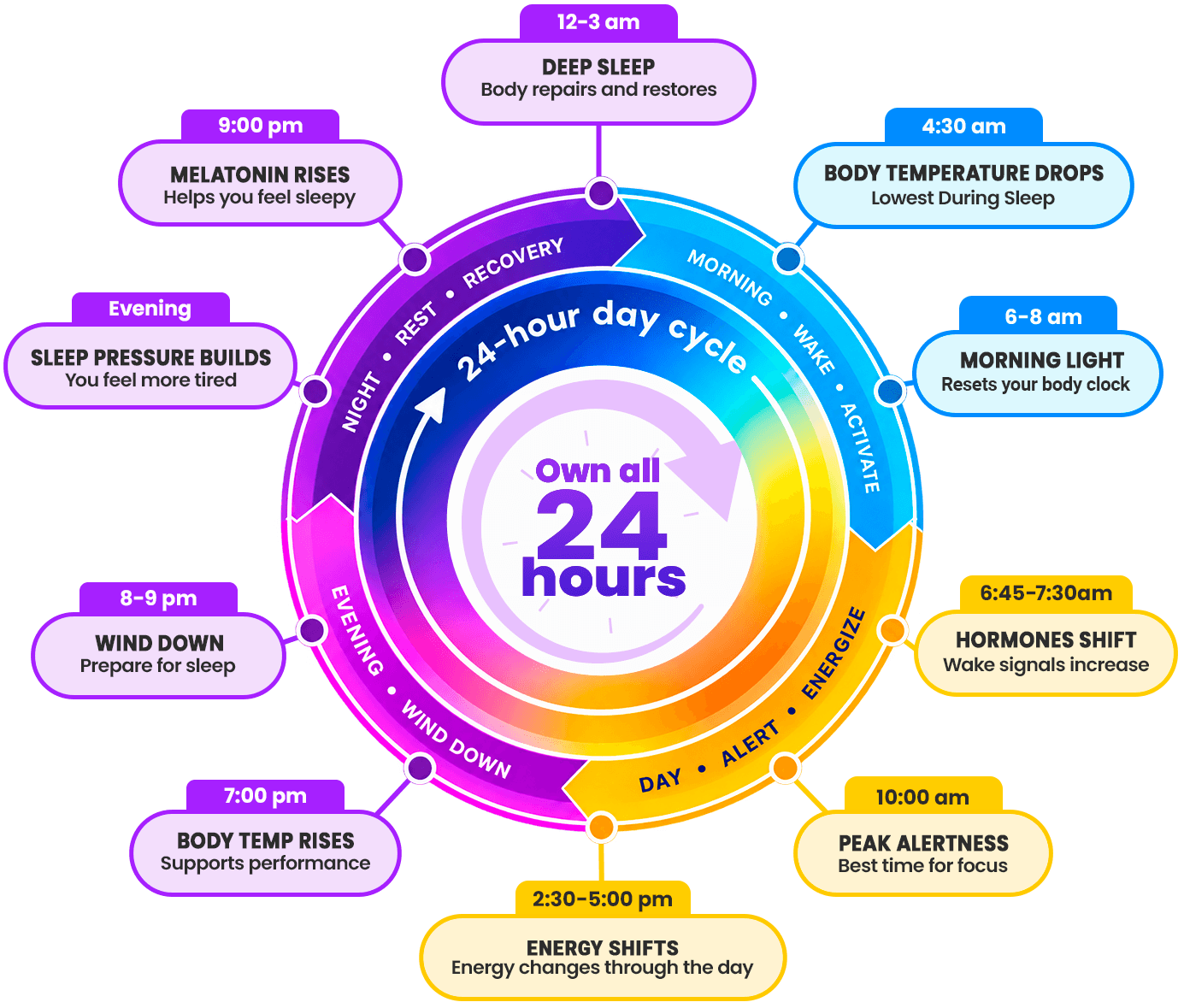
Your Health Runs on a 24-Hour Clock

Sleep and your body clock work together to shape how you feel and function throughout the day. Understanding how they influence your health can help you make the most of all 24 hours.

Own All 24 Hours

Owning all 24 hours means looking at both sleep and daytime rhythms, and how they work together to support health, well-being, and how you feel and function each day.

Sleep Restores Us

Sleep is a time when the brain and body carry out important work. During sleep, we move through different stages that help the body recover, strengthen learning and memory, support the immune system, and restore energy for the next day.

Circadian Rhythm Coordinates Our Body Systems

The circadian rhythm is the body’s internal 24-hour clock. It helps control when we feel sleepy or alert and also influences hormones, body temperature, and metabolism. Light is one of the main signals that helps keep this clock in sync with the day and night.
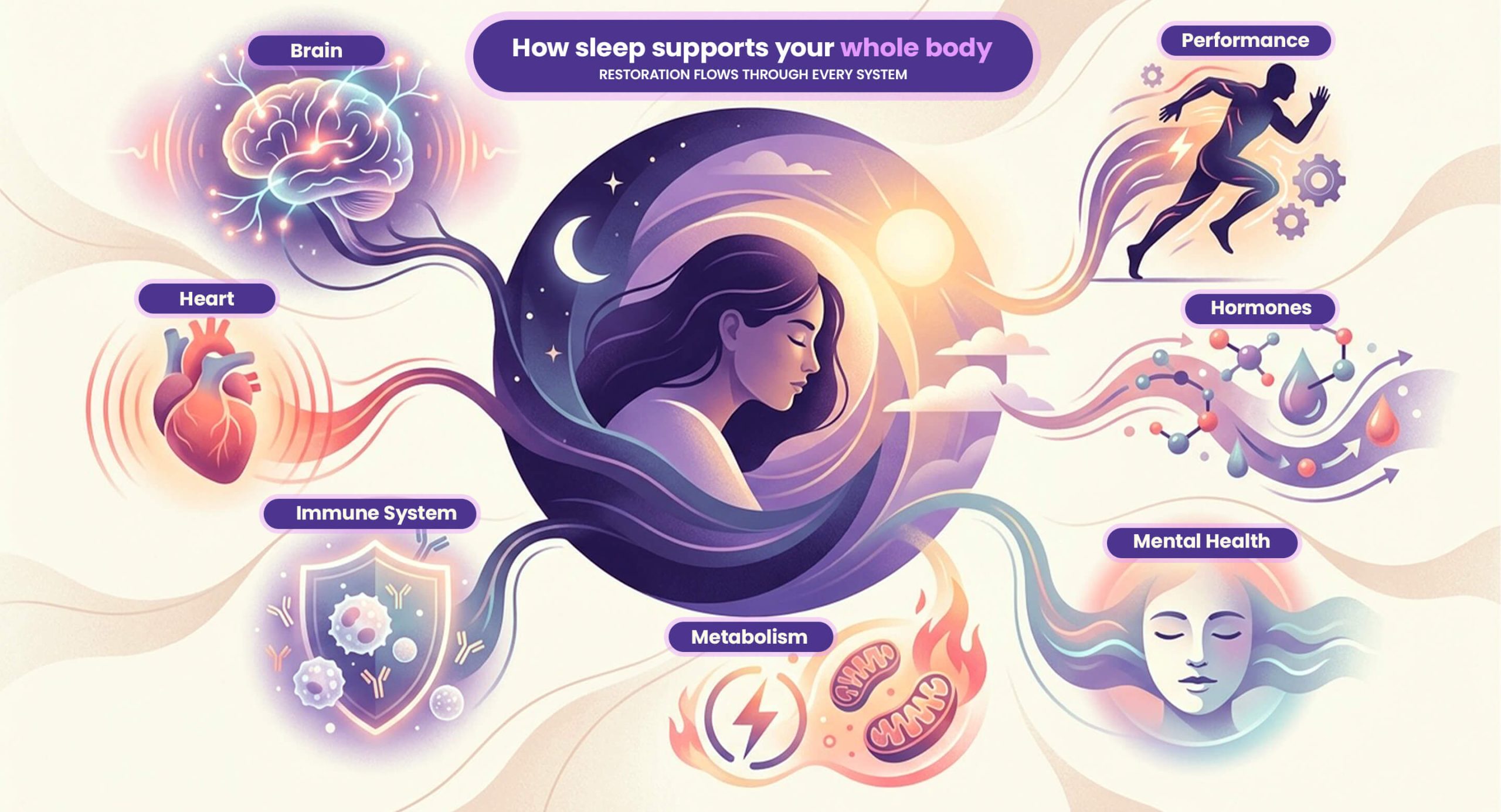
Why Sleep and Circadian Health Matter

Improving your sleep and working with your circadian rhythm can have a powerful effect on your health and daily life. Good sleep helps restore the body and mind, supporting energy, concentration, and creativity during the day. It also supports the immune system and mental health, while helping reduce the risk of chronic conditions such as heart disease and diabetes.

A well-regulated circadian rhythm helps keep your sleep-wake cycle in sync with your daily activities. This can support mood, focus, and a greater sense of balance throughout the day.

From physical health to emotional well-being and social connection, better sleep can help you feel and function at your best. Supporting your sleep and circadian health is one way to strengthen your health across the full 24-hour day.

Healthy Sleep is More Than Hours

Healthy sleep is about more than how long you sleep. It also includes when you sleep, how consistent your sleep is, how well you sleep, and how you feel and function during the day. The six dimensions below provide a fuller picture of sleep health and can help you better understand your own sleep.

Dimensions of healthy sleep

Timing

Your sleep happens at a time that fits your body clock and daily life

Duration

Your total sleep over a 24-hour period is enough for your stage of life

Regularity

Your sleep and wake times are reasonably consistent

Efficiency

You spend most of your time in bed asleep, without long or frequent periods awake

Alertness

You feel awake enough to think, learn, work, play, and take part in daily life

Satisfaction

You feel that your sleep is restful and refreshing
Adapted from Buysse DJ. Sleep health: can we define it? Does it matter? Sleep. 2014 Jan 1;37(1):9-17. DOI: 10.5665/sleep.3298

Related Pages

Across the Body

Sleep and circadian influence every system in the body, and vice versa

Sleep Problems and Disorders

Recognize the signs and discover how to get help for sleep problems

Programs

WSCN offers several support programs to help people access care

Latest News and Stories

Get up to date with the latest news, patient stories, and more