
News
Ten evidence-based habits for better sleep and a thriving life
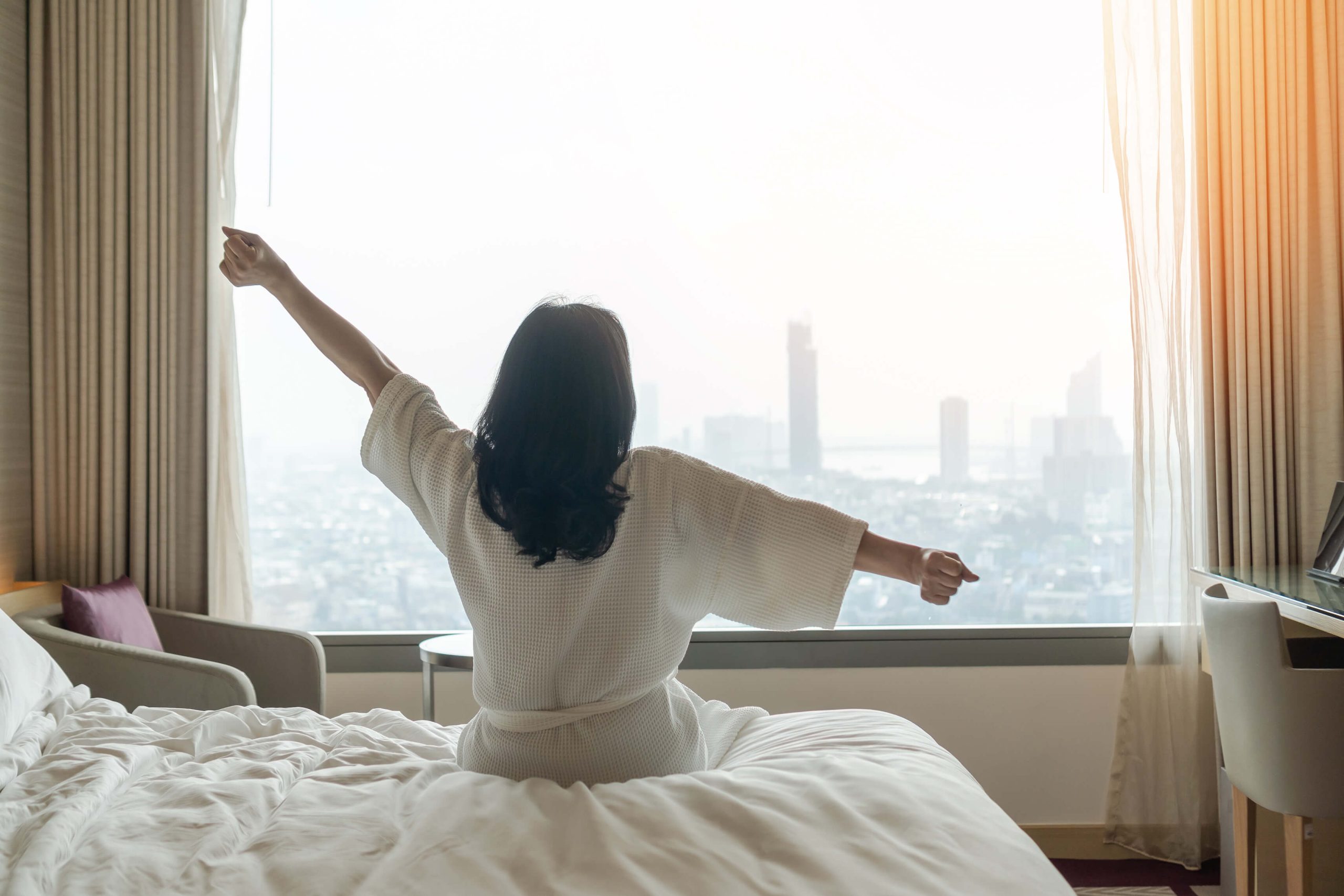
2. Wake up on the bright side: Start your day with intention
Every morning offers a chance to set the tone for the day ahead. While we cannot control everything that happens to us, we can influence how we approach the day and respond to its challenges.
Some mornings are easier than others. After a poor night’s sleep, you might feel tired, frustrated, or tempted to write off the day before it has begun. Acknowledging how you feel while focusing on what you can do to make the day better can help shift your outlook.
A positive start doesn’t mean forcing yourself to feel cheerful. It might mean taking a moment to appreciate something good in your life, getting outside for some daylight, or making time for an activity you enjoy. Small choices like these can support your mood and help you approach the day with greater confidence.
And remember, an occasional bad night doesn’t have to define the next day. If poor sleep becomes a regular problem, look for patterns in your daily routines and consider seeking support. Better sleep and better days often go hand in hand.
3. Fuel wisely: Nourish your body for better rest
What we eat and when we eat can influence how well we sleep. Regular meal times also help support our body’s internal clocks, which coordinate digestion and metabolism throughout the day.
Eating a large or heavy meal close to bedtime can make it harder to fall asleep or stay comfortable during the night. Fatty or spicy foods may also disrupt sleep, particularly for people who experience indigestion or acid reflux. When possible, try to finish larger meals a few hours before bedtime to give your body time to digest.
Going to bed hungry can also interfere with sleep. If you need something to eat in the evening, a light snack is generally fine. The goal is not to follow strict eating rules, but to find meal times and food choices that work for your body and daily routine.
Pay attention to how your eating habits affect your sleep. Small adjustments to meal timing or portion sizes may help you feel more comfortable at night and support better rest.

5. Move with purpose: Exercise regularly, but not right before bed
Regular physical activity can improve sleep quality and help you feel better throughout the day. Good sleep also supports physical recovery and helps you get the most out of your exercise.
When you exercise can make a difference, particularly if your workouts are intense. A large study involving more than 14,000 physically active people found that strenuous exercise close to bedtime was associated with later sleep onset, shorter sleep duration, and poorer sleep quality.
However, this doesn’t mean you need to avoid evening exercise altogether. Gentle activity, such as walking or stretching, is generally fine before bed. If you enjoy vigorous workouts, try finishing them several hours before bedtime, especially if you notice they make it harder to fall asleep.
The best exercise routine is one that fits your life and supports both your daytime wellbeing and a good night’s sleep.

6. Nap smart: Make daytime rest work for you
A short daytime nap can help you recharge, improve alertness, and lift your mood. Napping can be a healthy part of your daily routine, particularly when you need an extra boost of energy.
For many people, a nap of around 20 minutes is enough to feel refreshed without waking up groggy. Taking a nap earlier in the afternoon is also less likely to interfere with nighttime sleep. Longer or later naps can make it harder to fall asleep at your usual bedtime.
Pay attention to how naps affect you. If you wake feeling refreshed and still sleep well at night, there’s usually no reason to avoid them. However, if you suddenly need more naps than usual or regularly struggle to stay awake during the day, consider discussing this with a healthcare professional.

9. Make time to unwind: Create a relaxing bedtime ritual
After a busy day, taking time to unwind can help you transition from daytime activity to restful sleep. A relaxing bedtime routine gives your mind and body a chance to slow down.
Find activities that help you relax, whether that’s taking a warm bath, listening to calming music, reading, or practicing meditation. Relaxation techniques such as progressive muscle relaxation, which involves gently tensing and releasing different muscle groups, can also help ease physical tension and quiet a busy mind.
Try to make your wind-down routine a regular part of your evening. Over time, familiar bedtime activities can become cues that help your body recognize when it’s time to sleep.

Own all 24 hours
At WSCN, we want everyone to feel empowered to take sleep and circadian health seriously. Learn how to take ownership of all 24 hours to improve your personal health and wellbeing. Visit the sleep and circadian education page to begin the journey.
- Morin, C. M., & Buysse, D. J. (2024). Management of insomnia. The New England Journal of Medicine, 391(3), 247–258. https://doi.org/10.1056/NEJMcp2305655
- Robbins, R., & Quan, S. (2024). Sleep health. NEJM Evidence, 3(8), EVIDra2300269. https://doi.org/10.1056/EVIDra2300269
- Munzer, T., Milkovich, L. M., Madigan, S., Tomopoulos, S., Parga-Belinkie, J., Ajumobi, T., Cross, C., Gerwin, R., & Council on Communications and Media. (2026). Digital ecosystems, children, and adolescents: Technical report. Pediatrics, 157(2), e2025075321. https://doi.org/10.1542/peds.2025-075321
- Knutson, K. L., Dixon, D. D., Grandner, M. A., Jackson, C. L., Kline, C. E., Maher, L., Makarem, N., Martino, T. A., St-Onge, M.-P., Johnson, D. A., American Heart Association Council on Lifestyle and Cardiometabolic Health, Council on Cardiovascular and Stroke Nursing, Council on Clinical Cardiology, & Council on Lifelong Congenital Heart Disease and Heart Health in the Young. (2025). Role of circadian health in cardiometabolic health and disease risk: A scientific statement from the American Heart Association. Circulation, 152(21), e408–e419. https://doi.org/10.1161/CIR.0000000000001388
- Porwal, A., Yadav, Y. C., Pathak, K., & Yadav, R. (2021). An update on assessment, therapeutic management, and patents on insomnia. BioMed Research International, 2021, 6068952. https://doi.org/10.1155/2021/6068952
- Watson, N. F., Badr, M. S., Belenky, G., Bliwise, D. L., Buxton, O. M., Buysse, D., Dinges, D. F., Gangwisch, J., Grandner, M. A., Kushida, C., Malhotra, R. K., Martin, J. L., Patel, S. R., Quan, S. F., & Tasali, E. (2015). Joint consensus statement of the American Academy of Sleep Medicine and Sleep Research Society on the recommended amount of sleep for a healthy adult: Methodology and discussion. Journal of Clinical Sleep Medicine, 11(8), 931–952. https://doi.org/10.5664/jcsm.4950
- Chaput, J.-P., Dutil, C., Featherstone, R., Ross, R., Giangregorio, L., Saunders, T. J., Janssen, I., Poitras, V. J., Kho, M. E., Ross-White, A., & Carrier, J. (2020). Sleep duration and health in adults: An overview of systematic reviews. Applied Physiology, Nutrition, and Metabolism, 45(10, Suppl. 2), S218–S231. https://doi.org/10.1139/apnm-2020-0034
- Yu, H., Yang, C., Xu, C., & Zhuang, Y. (2025). The effects, mechanisms and strategies of daytime napping on athletes: A narrative review. European Journal of Applied Physiology, 125(5), 1257–1269. https://doi.org/10.1007/s00421-025-05724-2
- Gardiner, C., Weakley, J., Burke, L. M., Roach, G. D., Sargent, C., Maniar, N., Townshend, A., & Halson, S. L. (2023). The effect of caffeine on subsequent sleep: A systematic review and meta-analysis. Sleep Medicine Reviews, 69, 101764. https://doi.org/10.1016/j.smrv.2023.101764
- van Dam, R. M., Hu, F. B., & Willett, W. C. (2020). Coffee, caffeine, and health. The New England Journal of Medicine, 383(4), 369–378. https://doi.org/10.1056/NEJMra1816604
- Chung, N., Bin, Y. S., Cistulli, P. A., & Chow, C. M. (2020). Does the proximity of meals to bedtime influence the sleep of young adults? A cross-sectional survey of university students. International Journal of Environmental Research and Public Health, 17(8), 2677. https://doi.org/10.3390/ijerph17082677
- Chong, M. Y., Koster, A., Meertens, R. M., Pot, G. K., de Galan, B. E., van der Kallen, C. J. H., Savelberg, H. H. C. M., Bosma, H., Simons, S. O., Bours, M. J. L., Weijenberg, M. P., & Eussen, S. J. P. M. (2026). Associations of chrono-nutrition with sleep and quality of life: The Maastricht Study. Clinical Nutrition, 59, 106593. https://doi.org/10.1016/j.clnu.2026.106593
- American Psychiatric Association. (2022). Diagnostic and statistical manual of mental disorders (5th ed., text rev.). https://doi.org/10.1176/appi.books.9780890425787
- Gardiner, C., Weakley, J., Burke, L. M., Roach, G. D., Sargent, C., Maniar, N., Huynh, M., Miller, D. J., Townshend, A., & Halson, S. L. (2025). The effect of alcohol on subsequent sleep in healthy adults: A systematic review and meta-analysis. Sleep Medicine Reviews, 80, 102030. https://doi.org/10.1016/j.smrv.2024.102030
- Leota, J., Presby, D. M., Le, F., Czeisler, M. É., Mascaro, L., Capodilupo, E. R., Wiley, J. F., Drummond, S. P. A., Rajaratnam, S. M. W., & Facer-Childs, E. R. (2025). Dose-response relationship between evening exercise and sleep. Nature Communications, 16(1), 3297. https://doi.org/10.1038/s41467-025-58271-x