
Sleep & Circadian Disorders

Non-24-Hour Sleep-Wake Rhythm Disorder

Non-24-hour sleep-wake rhythm disorder (non-24) is a circadian rhythm sleep-wake disorder. The body clock does not stay synchronized with the 24-hour day, so sleep and wake times gradually move around the clock. A person may cycle between periods of sleeping well and periods of nighttime insomnia, daytime sleepiness, and impaired function.

Non-24 sleep disorder is not a lack of effort or an irregular schedule by choice. It occurs most often in people who are totally blind and have no visible light perception, but it can also occur rarely in sighted people. Evaluation can identify the pattern, and treatment may help stabilize timing and improve function across the whole day.

Overview

  • Non-24 causes the sleep-wake cycle to drift because the circadian clock is not reliably synchronized to the 24-hour light-dark cycle.
  • Symptoms often come and go in a repeating pattern as the internal clock moves into and out of alignment with daily life.
  • Nighttime insomnia and daytime sleepiness may be two parts of the same changing circadian pattern.
  • The disorder is most common in people who are totally blind with no light perception; sighted non-24 is rare.
  • Diagnosis usually requires at least 14 days of sleep records plus actigraphy; specialized circadian testing may be helpful.
  • Treatment is individualized and may include precisely timed medication, light when appropriate, and consistent daily timing cues.

About Non-24-Hour Sleep-Wake Rhythm Disorder

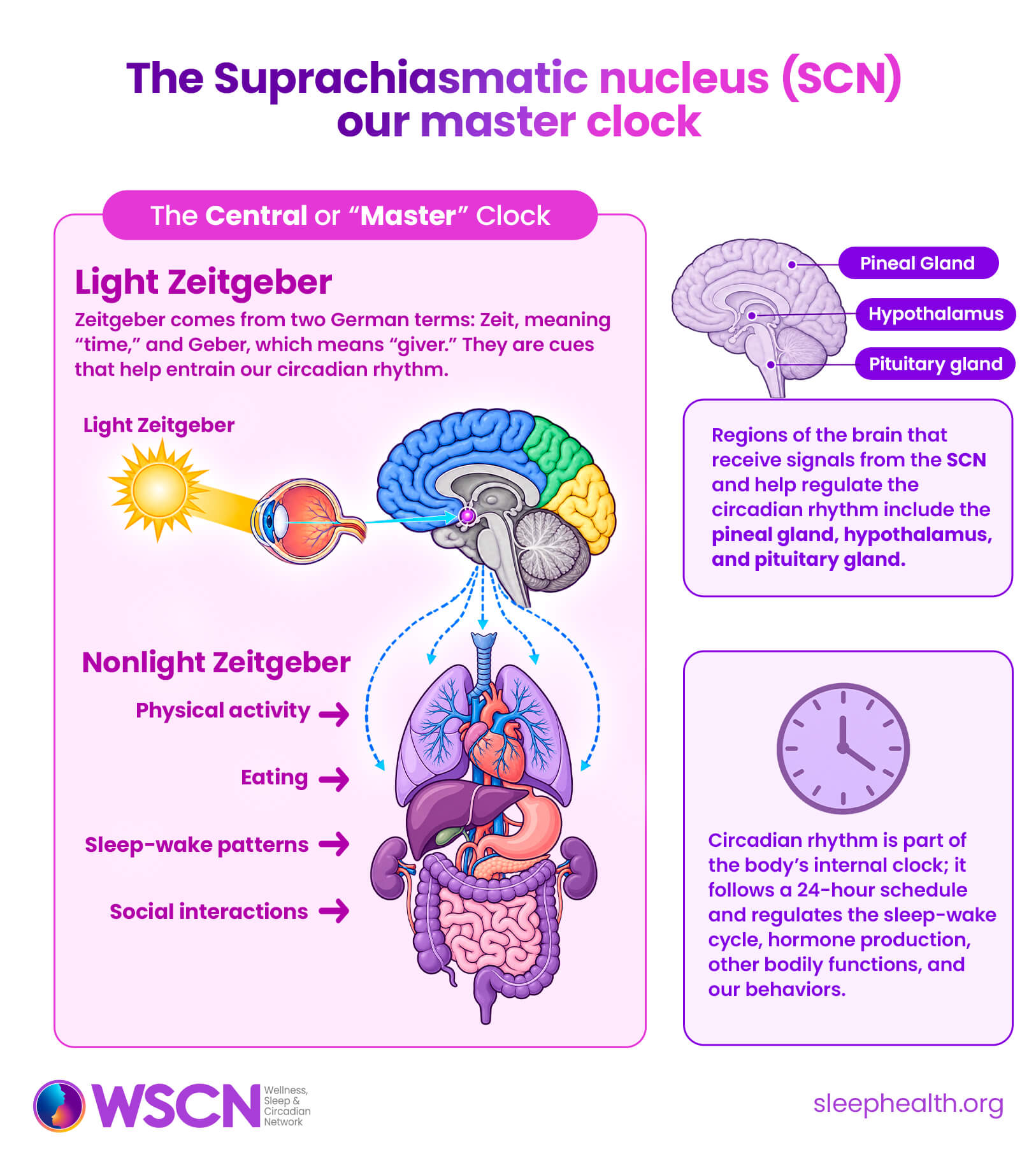
The circadian system coordinates sleep and alertness with hormone release, body temperature, digestion, metabolism, and other daily functions. Most human internal body clocks naturally run around 10-18 minutes longer than the 24 hour day. Light reaching specialized cells in the eyes is the strongest signal that resets the clock each day and keeps us aligned with the earth’s day/night cycles.

In non-24, this daily reset is not strong enough or does not occur. The internal day usually runs longer than 24 hours, so sleep and wake times drift later over successive days. Less often, they may move earlier. The amount of drift varies and may not be obvious without several weeks of tracking.

The changing pattern distinguishes non-24 from a stable late schedule. When the internal night overlaps with a person’s intended bedtime, sleep may be relatively easy and refreshing. As it drifts away, the same person may be unable to sleep at night and may struggle to stay awake during work, meals, travel, or social activities.

Signs and Symptoms

Symptoms may appear in cycles lasting days or weeks, and include:

  • Difficulty falling asleep, staying asleep, or waking at the needed time
  • Sleep and wake times that become progressively later, or occasionally earlier
  • Periods of satisfactory sleep followed by periods of severe disruption
  • Excessive daytime sleepiness or unplanned sleep
  • Fatigue, low energy, difficulty concentrating, or slowed reaction time
  • Changes in mood, irritability, or reduced motivation
  • Missed work, appointments, meals, medications, or social activities
  • Safety concerns with driving, mobility, cooking, caregiving, or hazardous work

Sleepiness means difficulty staying awake; fatigue means low energy or reduced capacity. Non-24 can cause either or both. Symptoms may seem inconsistent until sleep, alertness, light exposure, and daily demands are viewed across multiple 24-hour periods.

Screening and Diagnosis

Diagnosis looks for a recurring pattern of sleep-wake timing that is not synchronized to 24 hours and that causes insomnia, excessive sleepiness, distress, or impaired function. A clinician will ask about vision and light perception, sleep timing, free days versus scheduled days, daytime function, medications, substances, mental health, and other sleep symptoms.

Assessment may include:

  • A sleep diary for at least 14 days and sometimes several weeks
  • Wrist actigraphy to estimate sleep, rest, and activity over time
  • A light-exposure record or sensor, when available
  • Repeated measurements of melatonin or a melatonin metabolite in saliva or urine
  • Evaluation for other sleep and circadian disorders

An overnight sleep study does not diagnose the drifting circadian pattern. It may be used when another sleep disorder is suspected. 

When to talk with a healthcare professional

A person does not need to know the name or exact nature of a condition before asking for help. If a person experiences any of the symptoms above, it is appropriate to discuss them with a healthcare professional. 

Red Flag: Seek urgent medical care if symptoms or sleep loss are affecting a person’s ability to drive or work safely, or is causing severe distress or thoughts of self-harm.

What to bring to a doctor’s visit

A primary care physician is a good place to start for a sleep disorder evaluation. They can conduct preliminary screenings and recommend next steps for diagnosis. It can be helpful to bring information to an initial visit: try using WSCN’s Preparing to meet your new healthcare provider checklist..

Causes, Risk Factors, and Health Implications

Causes and risk factors

The main established cause is failure of environmental time cues – especially light – to reset the circadian clock each day.

  • Total blindness without light perception: Damage to the eyes or light-signaling pathway can prevent the internal master body clock (the suprachiasmatic nucleus, or SCN) from receiving a reliable light-dark signal, which means it is unable to align to normal day/night rhythms. Risk differs by the cause of blindness; not every totally blind person develops non-24.
  • Sighted non-24: This is rare and not fully understood. Reported contributors include an unusually long internal circadian period, a previous delayed sleep pattern, limited or poorly timed light exposure, and weak or irregular daily time cues.
  • Neurological, developmental, or environmental factors: Brain injury, neurodevelopmental conditions, severe mental illness, limited mobility, or highly isolated routines may contribute in some people, but an individual assessment is needed.
Long-term health implications

Long-term disease-specific evidence for non-24 remains limited. Concern is greatest when repeated misalignment causes chronic sleep loss, irregular meals and medication timing, or prolonged impairment.

  • Safety: Sleepiness and reduced alertness may increase driving, workplace, mobility, and household risks.
  • Mental health: Recurrent insomnia, isolation, and unpredictable function may worsen distress, depression, or anxiety.
  • Metabolic health: Repeated circadian misalignment may disrupt glucose regulation, appetite, and meal timing.
  • Heart health: Broader laboratory research links circadian misalignment with changes in blood pressure and inflammatory or metabolic cardiovascular risk markers, although individual risk from non-24 is not yet known.
  • Daily function and quality of life: Symptoms may affect employment, healthcare access, relationships, and the ability to keep essential routines.

Treatment and management

The goal is usually entrainment: keeping the internal clock synchronized to a 24-hour schedule. Treatment timing is critical. Melatonin, melatonin-receptor medicines, or light used at the wrong circadian time may be ineffective or shift the clock in an unwanted direction. Taking a whole-person approach across all 24 hours can identify the best opportunities for optimizing health and wellbeing.

Options may include:

  • Tasimelteon: This prescription melatonin-receptor agonist is approved in the United States for adults with non-24. Trials in totally blind adults found that some participants achieved entrainment and that continued treatment was generally needed to maintain it.
  • Melatonin: Clinician-guided, precisely timed melatonin may help some blind adults. Product quality, dose, timing, side effects, and interactions matter. AASM guidance supports strategically timed melatonin for blind adults with non-24, but the recommendation is based on limited evidence.
  • Timed light: Bright light may help some sighted people or people with a functioning circadian light pathway. Timing should be planned carefully, and eye disease, bipolar disorder, light-sensitive conditions, and photosensitizing medications require clinical review.
  • Stable daily timing cues: A consistent wake time, meals, activity, social contact, and medication schedule may reinforce the plan. These supports do not replace circadian treatment.
  • Care for related conditions: Treating sleep apnea, insomnia, mood symptoms, medication effects, or other conditions can improve overall sleep and function.

Living with non-24

  • Track sleep, naps, alertness, light exposure, meals, medications, and safety concerns before and during treatment
  • Use reminders or accessible tools to support consistent timing, especially when symptoms are severe
  • Discuss predictable shifts, flexible start times, remote work, transportation help, or disability accommodations when appropriate
  • Avoid hazardous tasks when sleepy
  • Involve a trusted support person for maintaining routines

Non-24 often requires ongoing management. Difficulty maintaining entrainment is not a failure; the treatment plan may need adjustment from time to time.

Research and What We Are Still Learning

Researchers are working to improve home-based circadian measurement, identify who is most likely to respond to each treatment, and understand non-24 in sighted people. Larger independent trials are needed, particularly for melatonin, light-based approaches, combination treatment, long-term outcomes, and accessibility-centered care. Studies should measure daytime function, safety, mental health, participation, and quality of life—not only clock timing.

References

Auger, R. R., Burgess, H. J., Emens, J. S., et al. (2015). Clinical practice guideline for the treatment of intrinsic circadian rhythm sleep-wake disorders: Advanced sleep-wake phase disorder, delayed sleep-wake phase disorder, non-24-hour sleep-wake rhythm disorder, and irregular sleep-wake rhythm disorder. Journal of Clinical Sleep Medicine, 11(10), 1199–1236. https://doi.org/10.5664/jcsm.5100

Czeisler CA, Duffy JF, Shanahan TL, Brown EN, Mitchell JF, Rimmer DW, Ronda JM, Silva EJ, Allan JS, Emens JS, Dijk DJ, Kronauer RE; New Collective Author. Stability, precision, and near-24-hour period of the human circadian pacemaker. Science. 1999 Jun 25;284(5423):2177-81. https://doi.org/10.1126/science.284.5423.2177

Connolly, P. J., Quigg, M., & Davis, E. M. (2024). Improvement in non-24-h sleep-wake rhythm disorder in a sighted individual treated with a melatonin receptor agonist. Sleep Medicine, 116, 41–42. https://doi.org/10.1016/j.sleep.2023.10.041

Flynn-Evans, E. E., Tabandeh, H., Skene, D. J., & Lockley, S. W. (2014). Circadian rhythm disorders and melatonin production in 127 blind women with and without light perception. Journal of Biological Rhythms, 29(3), 215–224. https://doi.org/10.1177/0748730414536852

Lockley, S. W., Dressman, M. A., Licamele, L., et al. (2015). Tasimelteon for non-24-hour sleep-wake disorder in totally blind people (SET and RESET): Two multicentre, randomised, double-masked, placebo-controlled phase 3 trials. The Lancet, 386(10005), 1754–1764. https://doi.org/10.1016/S0140-6736(15)60031-9

Malkani, R. G., Abbott, S. M., Reid, K. J., & Zee, P. C. (2018). Diagnostic and treatment challenges of sighted non-24-hour sleep-wake disorder. Journal of Clinical Sleep Medicine, 14(4), 603–613. https://doi.org/10.5664/jcsm.7054

Micic, G., Lovato, N., Ferguson, S. A., et al. (2021). Circadian tau differences and rhythm associations in delayed sleep-wake phase disorder and sighted non-24-hour sleep-wake rhythm disorder. Sleep, 44(1), zsaa132. https://doi.org/10.1093/sleep/zsaa132

Morris, C. J., Purvis, T. E., Hu, K., & Scheer, F. A. J. L. (2016). Circadian misalignment increases cardiovascular disease risk factors in humans. Proceedings of the National Academy of Sciences, 113(10), E1402–E1411. https://doi.org/10.1073/pnas.1516953113

Roth, T., Nir, T., & Zisapel, N. (2015). Prolonged release melatonin for improving sleep in totally blind subjects: A pilot placebo-controlled multicenter trial. Nature and Science of Sleep, 7, 13–23. https://doi.org/10.2147/NSS.S71838


Medical disclaimer
This article is for educational purposes only and is not intended to replace professional medical advice, diagnosis, or treatment. Speak with a qualified healthcare professional about questions or concerns related to your sleep. Read full medical disclaimer