
Sleep & Circadian Disorders
Narcolepsy
Narcolepsy is a chronic neurological sleep disorder that affects the brain’s ability to regulate sleep and wakefulness. People with narcolepsy experience excessive daytime sleepiness, often struggling to stay awake even after getting enough sleep at night.
Narcolepsy can also disrupt nighttime sleep and make everyday activities more challenging. Although it is a lifelong condition, appropriate treatment and support can help people manage their symptoms, stay active, and participate more fully in daily life.
Overview
- Narcolepsy causes excessive daytime sleepiness and difficulty maintaining alertness, even when someone gets enough sleep at night.
- Symptoms can include sudden sleep attacks, disrupted nighttime sleep, sleep paralysis, and vivid dream-like experiences when falling asleep or waking up.
- Some people experience cataplexy, a sudden loss of muscle strength triggered by emotions such as laughter or surprise.
- There are two main types of narcolepsy. Type 1 is associated with a loss of orexin, a brain chemical that helps regulate wakefulness, and often involves cataplexy. Type 2 occurs without cataplexy, and its underlying cause is less well understood.
- Narcolepsy is a lifelong condition, but medications and adjustments to daily routines can help manage symptoms and improve quality of life.
About Narcolepsy
Narcolepsy belongs to a group of sleep disorders called central disorders of hypersomnolence, which cause excessive daytime sleepiness. In narcolepsy, the brain has difficulty maintaining stable boundaries between sleep and wakefulness.
This can cause features of rapid eye movement (REM) sleep, the stage associated with vivid dreaming, to appear at unusual times. For example, temporary muscle paralysis or dream-like experiences can occur while someone is falling asleep or waking up.
There are two main types of narcolepsy:
Narcolepsy type 1: Usually involves cataplexy, a sudden loss of muscle strength triggered by emotions. It is associated with low levels of orexin (also called hypocretin), a brain chemical that helps maintain wakefulness. Some people have type 1 without cataplexy if testing confirms low orexin levels.
Narcolepsy type 2: Causes excessive daytime sleepiness without cataplexy. Orexin levels are not abnormally low when measured, and the underlying cause is less well understood.
Narcolepsy often begins in childhood, adolescence, or early adulthood, but diagnosis can take years. Symptoms may be mistaken for insufficient sleep, attention problems, or other health conditions, delaying access to appropriate care.
Signs and Symptoms
Narcolepsy affects people differently. Some experience sudden, noticeable symptoms, while others develop more subtle difficulties that can be mistaken for ordinary tiredness or poor sleep.
Daytime symptoms
The main symptom of narcolepsy is excessive daytime sleepiness, which can make it difficult to stay awake and alert during everyday activities.
Common symptoms include:
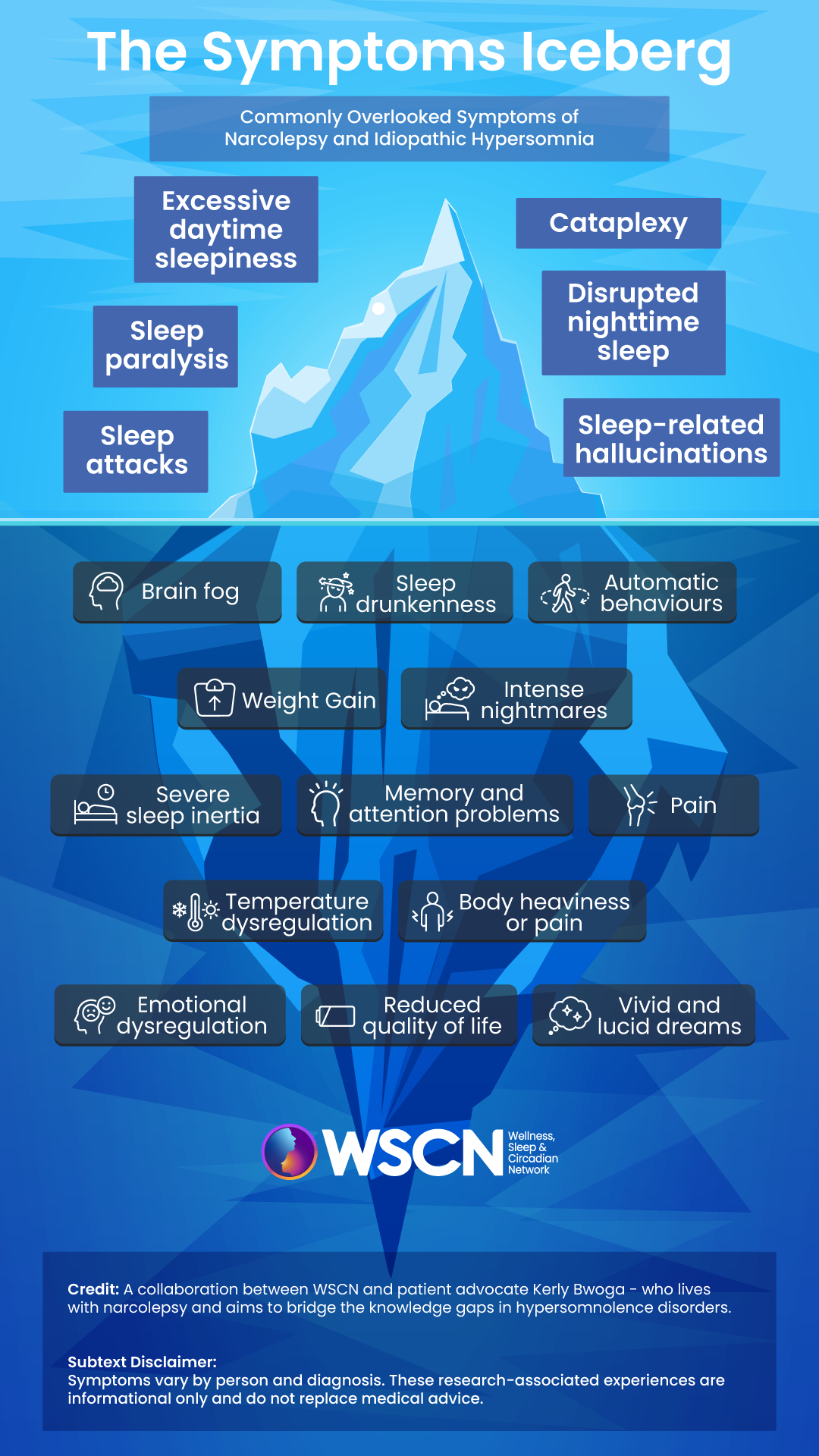
- Sleep attacks: Sudden, sometimes overwhelming episodes of sleepiness that can lead to falling asleep unintentionally.
- Briefly refreshing naps: Short naps often improve alertness, but sleepiness usually returns.
- Difficulty concentrating: Problems with attention, memory, or clear thinking, sometimes described as brain fog.
- Automatic behaviors: Continuing familiar activities with little awareness or memory of what happened.
- Mood changes: Irritability, frustration, or emotional distress related to persistent symptoms.
Excessive sleepiness can also create safety risks, particularly when driving or performing activities that require sustained attention.
Cataplexy
Cataplexy is a sudden, temporary loss of muscle strength while awake, usually triggered by strong emotions such as laughter, surprise, or excitement. It is characteristic of narcolepsy type 1.
Episodes can range from mild weakness, such as drooping eyelids or buckling knees, to a complete collapse. Unlike fainting, people generally remain conscious and aware of their surroundings.
Sleep-related symptoms
Narcolepsy can also disrupt nighttime sleep and the transitions between sleeping and waking.
Common symptoms include:
- Sleep paralysis: A temporary inability to move or speak while falling asleep or waking up.
- Sleep-related hallucinations: Vivid dream-like images, sounds, or sensations that occur while falling asleep or waking up.
- Fragmented nighttime sleep: Frequent awakenings or difficulty maintaining continuous sleep.
- Vivid dreams or nightmares: Intense dream experiences that can sometimes be disturbing.
Not everyone with narcolepsy experiences all these symptoms. Their frequency and severity can also change over time.
Screening and Diagnosis
Diagnosing narcolepsy begins with a review of symptoms, sleep patterns, and medical history. A healthcare professional may ask about excessive daytime sleepiness, cataplexy, and other sleep-related symptoms. Sleep diaries or actigraphy may help document sleep patterns before further testing.
Diagnosis usually involves two tests:
- Overnight sleep study (polysomnography): Records sleep and helps identify other conditions, such as sleep apnea, that may contribute to daytime sleepiness.
- Multiple Sleep Latency Test (MSLT): Conducted the following day, this test measures how quickly someone falls asleep during scheduled naps and whether REM sleep begins unusually early.
In some cases, a specialist may also measure orexin levels in the fluid surrounding the brain and spinal cord to help diagnose narcolepsy type 1.
Insufficient sleep, irregular schedules, and certain medications can affect test results. A sleep specialist considers these factors when making a diagnosis and recommending treatment.
When to talk with a healthcare professional
You do not need to know what is causing your symptoms before asking for help. Talk with a healthcare professional if sleep-related problems persist, become more frequent, or begin to affect your health or daily life.
Narcolepsy can be treated and managed. Getting support can help identify the underlying cause of your symptoms and guide appropriate care.
Red Flag: Seek urgent medical care if:
- You fall asleep while driving or during activities where losing alertness could cause harm
- Severe daytime sleepiness makes it difficult to function safely or care for yourself
- Sudden muscle weakness or collapse leads to falls or injuries
- You experience overwhelming distress or thoughts of self-harm
Avoid driving or other hazardous activities if you cannot stay reliably alert. Sudden loss of consciousness, new neurological symptoms, or serious injuries require emergency medical attention.
What to bring to a doctor’s visit
A primary care physician is a good place to start for a sleep disorder evaluation. They can conduct preliminary screenings and recommend next steps for diagnosis. It can be helpful to bring information to an initial visit: try using WSCN’s Preparing to meet your new healthcare provider checklist.
Causes, Risk Factors, and Health Implications
Causes and risk factors
The causes of narcolepsy differ between types 1 and 2. Narcolepsy type 1 is linked to the loss of brain cells that produce orexin, a chemical that helps maintain wakefulness. Researchers believe the immune system plays a role in this process, although the exact cause remains unclear. The causes of narcolepsy type 2 are less well understood.
Several factors may influence the risk of developing narcolepsy, including genetic susceptibility, immune system activity, and certain infections. In rare cases, damage to areas of the brain involved in sleep regulation can cause narcolepsy-like symptoms.
Sleep deprivation, irregular schedules, and untreated sleep disorders do not cause narcolepsy, but they can worsen daytime sleepiness and make diagnosis more difficult.
Long-term health implications
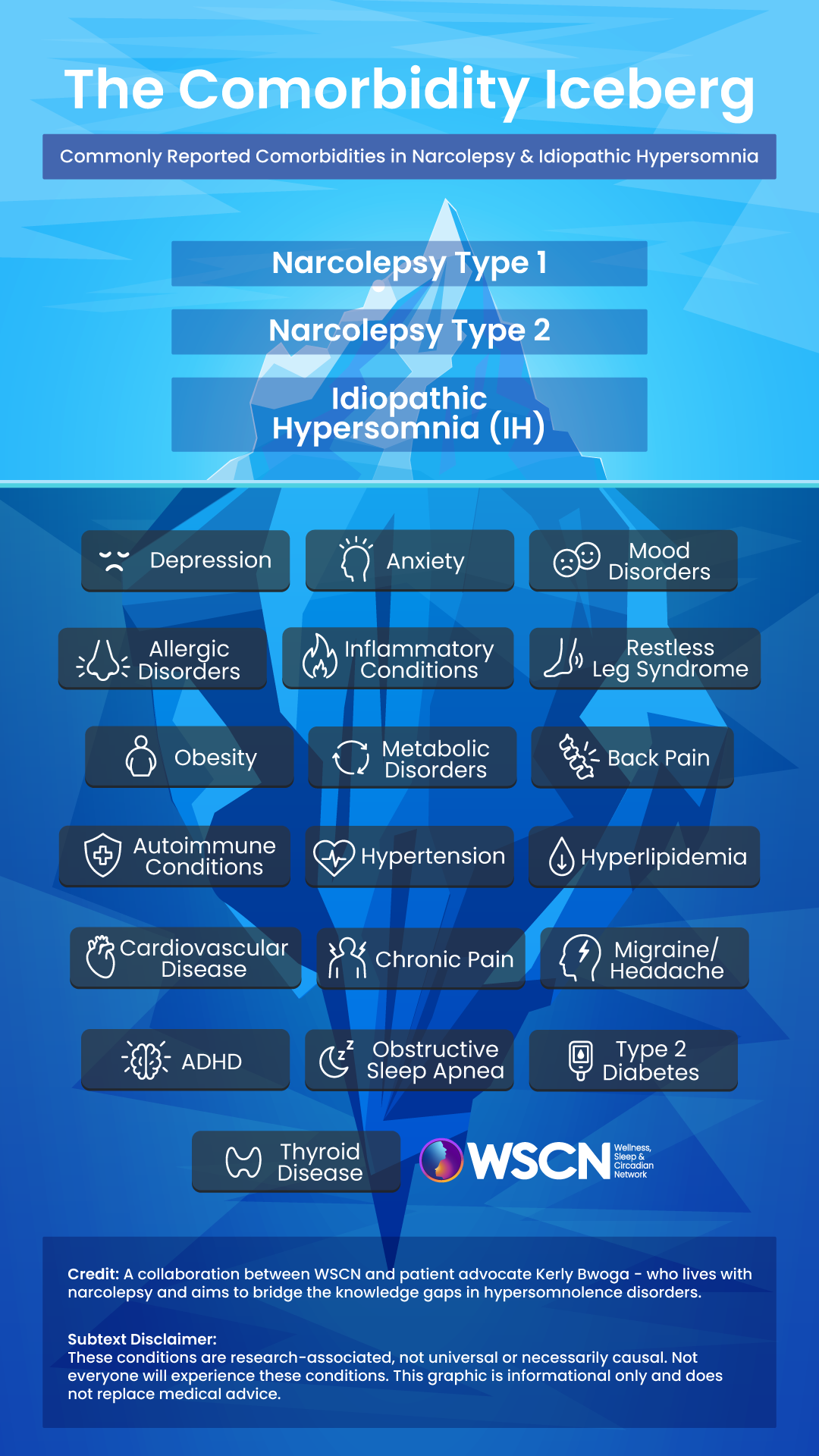
Narcolepsy can affect more than sleep and daytime alertness. Research has found that people with narcolepsy have higher rates of certain health conditions, although the reasons for these associations are not fully understood.
- Cardiovascular risk: Narcolepsy has been associated with increased cardiovascular and cardiometabolic comorbidities, including high blood pressure, heart attack, stroke, and heart failure.
- Metabolic problems: People with narcolepsy have higher reported rates of obesity, diabetes, dyslipidemia, and metabolic syndrome compared with people without narcolepsy.
- Mental health and quality of life: Ongoing excessive daytime sleepiness, disrupted nighttime sleep, and misunderstood symptoms can contribute to depression, anxiety, stigma, social isolation, and reduced quality of life.
- Safety risks: Untreated sleepiness can lead to falling asleep in unsafe ways during daily activities, including eating, working, or driving.
- Other sleep disorders and health conditions may be missed: People with narcolepsy can also have other sleep disorders, such as obstructive sleep apnea, which may add to cardiovascular and metabolic risk if not recognized and treated.
These associations do not mean that everyone with narcolepsy will develop other health problems. Appropriate treatment, regular health monitoring, and support for related conditions can help protect long-term health and quality of life.
Treatment and Management
Although narcolepsy is a lifelong condition, treatment can significantly improve daytime alertness and help manage other symptoms. Care is tailored to each person’s needs, with the goal of supporting safety, independence, and quality of life.
Treatment typically combines medication with practical adjustments to daily routines and activities.
Medication options
Several medications are available to improve wakefulness or manage specific narcolepsy symptoms. Treatment options include:
- Orexin receptor agonists: In August 2026, the FDA approved Orzeyful™ (oveporexton), the first medication that directly restores orexin signaling in adults with narcolepsy type 1. This represents an important advance because it targets the underlying biological problem rather than individual symptoms alone.
- Wake-promoting medications: Modafinil, armodafinil, solriamfetol (Sunosi®), and pitolisant (Wakix®) can improve daytime alertness through different mechanisms. Pitolisant can also help manage cataplexy.
- Traditional stimulants: Medications such as methylphenidate and amphetamine-based treatments can help people stay awake during the day.
- Oxybate medications: Sodium oxybate and related formulations can improve daytime sleepiness and help control cataplexy.
- Antidepressants: Certain antidepressants are sometimes prescribed to manage cataplexy and other REM-related symptoms, although evidence for their use varies.
Medication choices depend on the type of narcolepsy, symptoms, other health conditions, and individual response. A sleep specialist can help identify appropriate treatment and monitor its effectiveness.
Daily management strategies
Medication is often combined with changes to daily routines that help manage sleepiness and support consistent functioning.
Helpful approaches include:
- Planned naps: Short, scheduled naps can temporarily improve alertness.
- Consistent sleep routines: Maintaining regular sleep and wake times and allowing enough time for nighttime sleep.
- Planning around alertness: Scheduling demanding activities during periods when alertness is generally better.
- Managing daily habits: Limiting alcohol and other sedating substances when appropriate, and maintaining routines that support healthy sleep.
- Emotional and social support: Connecting with support groups or mental health professionals can help people manage the emotional impact of living with narcolepsy.
Safety planning
Excessive daytime sleepiness and cataplexy can create safety risks during everyday activities. People with narcolepsy may need to take additional precautions when driving, swimming, cooking, or operating machinery.
Driving safety should be discussed with a healthcare professional and follow local laws. People who cannot remain reliably alert should avoid driving or other hazardous activities until their symptoms are adequately controlled.
School and workplace accommodations
Practical accommodations can help people with narcolepsy participate more fully in education and employment. Depending on individual needs, these may include:
- Scheduled nap breaks or access to a quiet rest area
- Flexible start times or adjusted work schedules
- Breaks during long meetings or classes
- Recorded lectures, meeting notes, or additional time for assignments
- Adjustments to duties that involve safety-sensitive tasks
In the United States, people with narcolepsy may qualify for workplace protections under the Americans with Disabilities Act (ADA). Students may also be eligible for support under applicable education laws.
With appropriate treatment and accommodations, many people with narcolepsy can manage their symptoms effectively and maintain fulfilling, active lives.
Research and What We Are Still Learning
Narcolepsy research is helping scientists better understand the immune system, orexin signaling, REM sleep regulation, symptom variability, delayed diagnosis, quality of life, and new treatment approaches.
Areas of active interest include:
- Earlier recognition and diagnosis
- Better tools for measuring sleepiness and daily functioning
- The role of orexin in causing narcolepsy type 1 and treatments that target orexin pathways
- How narcolepsy affects children, teens, families, and caregivers
- Mental health and social impacts of living with narcolepsy
Research matters because narcolepsy affects every part of daily life, and people living with the condition deserve treatments and systems of care that reflect that reality.
American Academy of Sleep Medicine. (2023). International classification of sleep disorders (3rd ed., text rev.). https://aasm.org/clinical-resources/international-classification-sleep-disorders/
Hsu, C. W., Yang, Y. S., Chen, Y. B., et al. (2025). All-cause and cause-specific mortality among patients with narcolepsy. JAMA Network Open, 8(10), e2536771. https://doi.org/10.1001/jamanetworkopen.2025.36771
Jennum, P., Ibsen, R., Knudsen, S., et al. (2013). Comorbidity and mortality of narcolepsy: A controlled retro- and prospective national study. Sleep, 36(6), 835–840. https://doi.org/10.5665/sleep.2706
Kwon, Y., Gami, A. S., Javaheri, S., et al. (2024). Cardiovascular risks in people with narcolepsy: Expert panel consensus recommendations. Journal of the American Heart Association, 13(16), e035168. https://doi.org/10.1161/JAHA.124.035168
Maski, K., Trotti, L. M., Kotagal, S., et al. (2021). Treatment of central disorders of hypersomnolence: An American Academy of Sleep Medicine clinical practice guideline. Journal of Clinical Sleep Medicine, 17(9), 1881–1893. https://doi.org/10.5664/jcsm.9328
National Heart, Lung, and Blood Institute. (n.d.). Narcolepsy. https://www.nhlbi.nih.gov/health/narcolepsy
National Institute of Neurological Disorders and Stroke. (n.d.). Narcolepsy. https://www.ninds.nih.gov/health-information/disorders/narcolepsy
Scammell, T. E. (2015). Narcolepsy. The New England Journal of Medicine, 373(27), 2654–2662. https://doi.org/10.1056/NEJMra1500587
Thorpy, M. J., & Bogan, R. K. (2020). Update on the pharmacologic management of narcolepsy: Mechanisms of action and clinical implications. Sleep Medicine, 68, 97–109. https://doi.org/10.1016/j.sleep.2019.09.001
U.S. Food and Drug Administration. (2026, August 5). FDA approves first drug to treat the full range of narcolepsy type 1 symptoms. https://content.govdelivery.com/accounts/USFDA/bulletins/423c718
This article is for educational purposes only and is not intended to replace professional medical advice, diagnosis, or treatment. Speak with a qualified healthcare professional about questions or concerns related to your sleep. Read full medical disclaimer
