
Sleep & Circadian Disorders

Central Sleep Apnea

Central sleep apnea (CSA) is a sleep-related breathing disorder in which breathing repeatedly slows or stops during sleep because the brain does not consistently send signals to the muscles that control breathing.

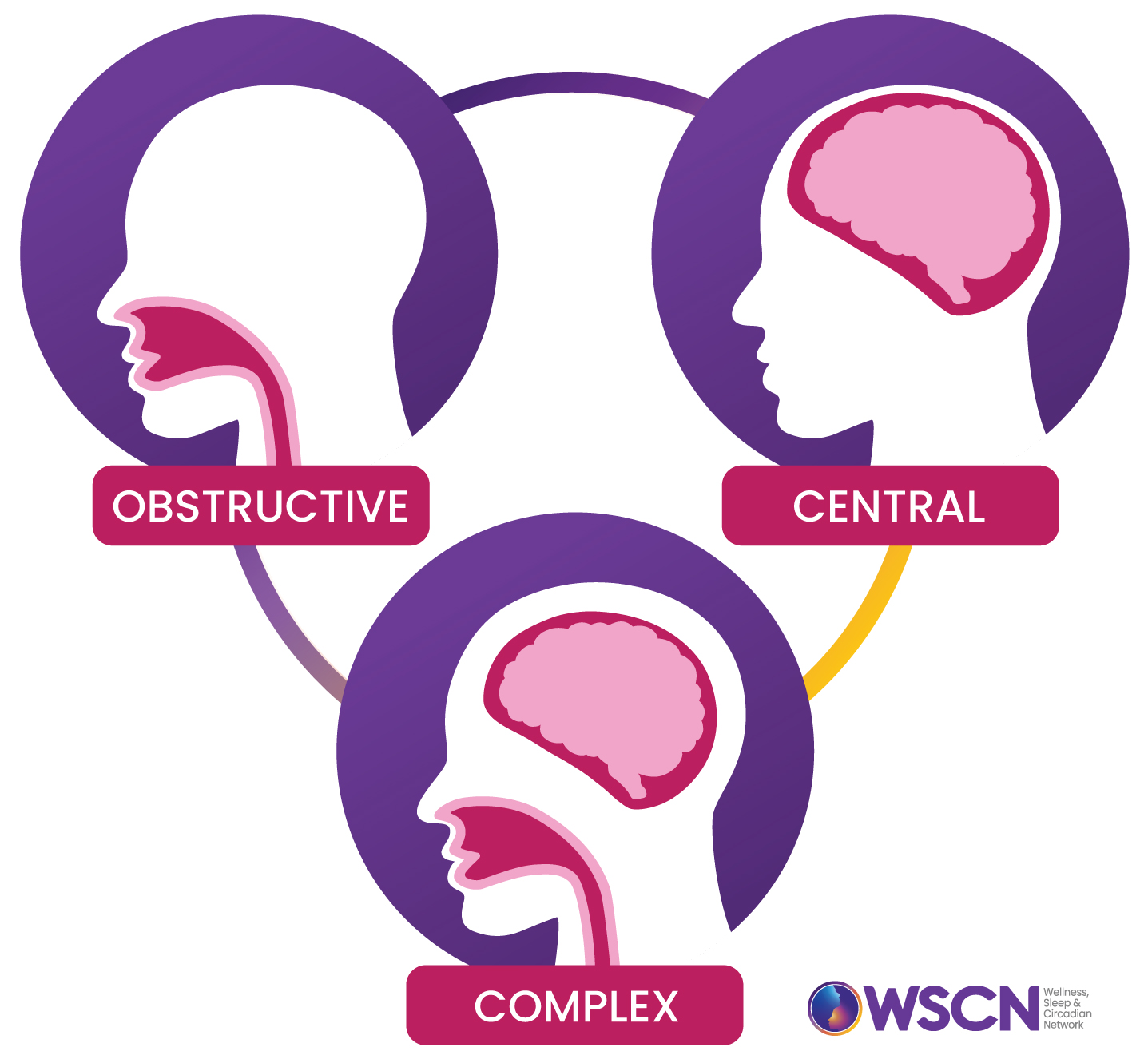
Unlike obstructive sleep apnea (OSA), where breathing is interrupted because the upper airway becomes blocked, CSA occurs when the body’s control of breathing is disrupted.

Although CSA is less common than OSA, it can affect sleep quality and daytime wellbeing. The good news is that CSA can be diagnosed and treated, with treatment tailored to its underlying cause and each person’s needs.

Overview

  • Central sleep apnea (CSA) causes repeated pauses or reductions in breathing during sleep because the brain does not consistently signal the muscles that control breathing
  • CSA is less common than obstructive sleep apnea and is often linked to other health conditions, such as heart failure or stroke. Certain medications and high altitude can also contribute
  • Common symptoms include disrupted sleep, waking short of breath, daytime sleepiness, fatigue, and difficulty concentrating
  • An overnight sleep study is usually needed to diagnose CSA and distinguish it from other sleep-related breathing disorders
  • Treatment depends on the underlying cause and may include managing other health conditions, positive airway pressure (PAP) therapy, oxygen, medications, or specialized treatments
  • Effective management can improve sleep quality and daytime wellbeing. Regular follow-up helps ensure that treatment continues to meet individual needs

About central sleep apnea

Breathing is normally regulated by the brain, which responds to changes in oxygen and carbon dioxide levels. In central sleep apnea (CSA), this control system becomes unstable or disrupted, causing breathing effort to repeatedly decrease or stop during sleep.

CSA can develop for different reasons. The main types include:

  • Primary central sleep apnea: central apneas occur without a clearly identified cause.
  • Central sleep apnea with Cheyne-Stokes breathing: breathing gradually increases and decreases in a repeating pattern, often associated with heart failure, stroke, and some other medical conditions.
  • Central sleep apnea due to a medical condition: central apneas can occur in connection with another condition affecting the heart, kidneys, brain, nervous system, or breathing control.
  • High-altitude periodic breathing: central apneas occur or worsen at high altitude, where oxygen levels are lower.
  • Central sleep apnea due to medication or substance use: this can occur with opioids and some other substances that affect breathing control.
  • Treatment-emergent central sleep apnea: central apneas appear or become more noticeable after treatment begins for obstructive sleep apnea, usually with positive airway pressure therapy.

CSA is more common in older adults and men, although it can affect anyone. Certain medical conditions, particularly heart failure and advanced kidney disease, can increase the risk. Medications such as opioids can also interfere with breathing control during sleep.

Identifying the type and underlying cause of CSA is important because treatment approaches can differ.

Central vs. obstructive vs. mixed sleep apnea
Signs and symptoms

Central sleep apnea (CSA) symptoms vary from person to person. Some people notice breathing problems during sleep, while others mainly experience daytime effects.

Nighttime Symptoms

Common nighttime signs include:

  • Breathing pauses: Repeated interruptions in breathing, often noticed by a bed partner.
  • Waking short of breath: Suddenly waking with a feeling of breathlessness or needing to catch your breath.
  • Restless sleep: Frequent awakenings or disrupted sleep, sometimes without remembering waking up.
  • Difficulty staying asleep: Waking repeatedly during the night and having trouble returning to sleep.

Daytime Symptoms

Repeated breathing interruptions can disrupt sleep and affect how we feel and function throughout the day.

Common daytime symptoms include:

  • Excessive daytime sleepiness: Feeling unusually sleepy during the day, even after spending enough time in bed.
  • Fatigue and low energy: Feeling tired or lacking energy for everyday activities.
  • Difficulty concentrating: Problems with attention, memory, or clear thinking.
  • Mood changes: Increased irritability, low mood, or reduced motivation.
  • Morning headaches: Headaches upon waking that may improve as the day progresses.
  • Reduced physical stamina: Feeling less able to exercise or complete physical activities, particularly when another health condition is present.

Symptoms alone cannot distinguish CSA from obstructive sleep apnea or other sleep disorders. If you or someone close to you notices repeated breathing pauses during sleep, speak with a healthcare professional about an evaluation.

Screening and diagnosis

Central sleep apnea should be evaluated by a qualified healthcare professional, often a sleep medicine clinician. Some people may also need care from other specialists, depending on the cause of their CSA.

Sleep testing

The main diagnostic test for central sleep apnea is polysomnography, an overnight sleep study. This test can measure breathing airflow and effort, oxygen levels, sleep stages, brain activity during sleep, heart rhythm, body position, limb movements, and awakenings and sleep fragmentation.

A sleep study can help distinguish central sleep apnea from obstructive sleep apnea and other sleep disorders. It can also show whether central and obstructive events are both present. In some cases, a second sleep study may be used to test treatment settings, such as positive airway pressure settings.

When to talk to a doctor

A person should seek an appointment with a medical professional if:

  • They experience any of the symptoms listed above
  • sleep loss is affecting their ability to drive or work safely
  • sleep loss is causing severe distress or thoughts of self-harm

How to get help

A primary care clinician is a good first step for diagnosing sleep disorders. For a list of information and questions to bring to an appointment, check out WSCN’s Preparing to meet your new healthcare provider checklist.

Red flag: Seek emergency medical care if you experience severe shortness of breath, chest pain, fainting, sudden confusion, or new weakness or difficulty speaking.

Causes, risk factors, and health implications

Central sleep apnea (CSA) can develop for several reasons, including underlying medical conditions, certain medications, and changes in breathing control. Some factors increase the likelihood of developing CSA, while others can directly trigger breathing disruptions during sleep.

Medical conditions

CSA is associated with several medical conditions, including:

  • Heart failure, atrial fibrillation, and stroke
  • Kidney disease
  • Neurological and neuromuscular disorders

Medications and substances

Opioid medications can suppress the body’s drive to breathe and increase the risk of CSA, particularly with long-term use or higher doses. Other sedating substances may also interfere with breathing during sleep. Never stop or change prescribed medications without medical guidance.

High altitude

Lower oxygen levels at high altitude can disrupt breathing control and cause repeated pauses in breathing during sleep. These changes often improve as the body adjusts to altitude or after returning to lower elevations.

Treatment-emergent CSA

Some people develop central breathing pauses after starting positive airway pressure (PAP) therapy for obstructive sleep apnea. These pauses sometimes resolve on their own, although persistent cases may require treatment adjustments.

Age and sex

CSA is more common in older adults and men, although it can affect people of any age or sex.

Treatment and management

Treatment for central sleep apnea (CSA) depends on its underlying cause, breathing patterns, symptoms, and overall health.

The goal is not simply to reduce breathing interruptions during sleep, but also to improve sleep quality and daytime wellbeing. Treatment should also address any medical conditions contributing to CSA.

Treating underlying contributors

Managing CSA often begins with identifying and treating conditions that contribute to breathing problems during sleep. This may involve improving heart failure management, addressing kidney disease, or reviewing neurological conditions.

If opioids or other medications contribute to CSA, a healthcare professional may recommend adjustments. Any changes should carefully consider why the medication was prescribed and whether alternative treatments are available. Never stop prescribed medications without medical guidance.

Positive airway pressure therapy

Positive airway pressure, or PAP, uses a machine and mask to support breathing during sleep. Options may include:

  • CPAP, or continuous positive airway pressure: provides a steady level of air pressure.
  • Bilevel PAP with a backup rate: provides different pressures for inhaling and exhaling and can deliver timed breaths if breathing pauses.
  • Adaptive servo-ventilation, or ASV: adjusts support breath-by-breath to stabilize breathing patterns.

The 2025 AASM guideline conditionally recommends CPAP and bilevel PAP with a backup rate for certain types of CSA. Bilevel PAP without a backup rate is not recommended.

Adaptive servo-ventilation (ASV) may also be considered for selected patients. However, people with heart failure and reduced ejection fraction require particular caution. In these patients, ASV should be managed by experienced centers with close monitoring and follow-up. Treatment decisions should consider the person’s symptoms, quality of life, and individual health needs.

Oxygen therapy

Low-flow oxygen may be considered for some adults with central sleep apnea due to heart failure or high altitude. Oxygen should be used only under medical guidance, especially for people with heart, lung, or neurologic conditions.

Acetazolamide

Acetazolamide is a medication that can affect breathing control and may be used in selected cases, including some forms of CSA and high-altitude periodic breathing. The AASM guideline conditionally suggests acetazolamide for several adult CSA types. This medication is not right for everyone. A clinician should review possible benefits, side effects, other medical conditions, and medication interactions.

Transvenous phrenic nerve stimulation

Transvenous phrenic nerve stimulation uses an implanted device to stimulate the nerve that helps control the diaphragm, a major breathing muscle. It may be considered for selected adults with primary CSA or CSA due to heart failure. The AASM guideline notes that because this treatment requires an invasive procedure, may not be widely available, and can be costly, other treatments may be considered first.⁠⁠

High-altitude management

If central sleep apnea is related to high altitude, management may include time for acclimatization, descent to lower altitude, oxygen, acetazolamide, or individualized travel planning. People with heart or lung disease should ask a clinician about altitude risk before travel.

Follow-up matters

Central sleep apnea treatment often requires follow-up. A plan may need adjustment if symptoms continue, mask comfort is poor, oxygen levels remain low, heart function changes, medications change, or breathing patterns evolve. Follow-up should include consideration of the person’s lived experience: sleep quality, daytime function, energy, mood, safety, and treatment burden.

Research and what we are still learning

Research into central sleep apnea continues to improve our understanding of why breathing becomes unstable during sleep and how different treatments work.

Scientists are investigating which treatments provide the greatest benefits for different types of CSA. This includes studying newer approaches, such as phrenic nerve stimulation, and their effects on sleep quality and long-term health.

An important focus is understanding how treatment affects everyday life, not just breathing patterns measured during sleep studies. This research could help make CSA care more personalized and effective.

References

American Academy of Sleep Medicine. (2026). Central sleep apnea. Sleep Education. https://sleepeducation.org/sleep-disorders/central-sleep-apnea/

Badr, M. S., Khayat, R. N., Allam, J. S., et al. (2025). Treatment of central sleep apnea in adults: An American Academy of Sleep Medicine clinical practice guideline. Journal of Clinical Sleep Medicine, 21(12), 2181–2191. https://doi.org/10.5664/jcsm.11858

Javaheri, S., McKane, S. W., Cameron, N., et al. (2019). In patients with heart failure the burden of central sleep apnea increases in the late sleep hours. Sleep, 42(1). https://doi.org/10.1093/sleep/zsy195

Haack M, Simpson N, Sethna N, et al. Sleep deficiency and chronic pain: potential underlying mechanisms and clinical implications. Neuropsychopharmacology. 2020 Jan;45(1):205-216. doi: 10.1038/s41386-019-0439-z. Epub 2019 Jun 17. PMID: 31207606; PMCID: PMC6879497. https://pmc.ncbi.nlm.nih.gov/articles/PMC6879497/

Morgenthaler, T. I., Kagramanov, V., Hanak, V., & Decker, P. A. (2006). Complex sleep apnea syndrome: Is it a unique clinical syndrome? Sleep, 29(9), 1203–1209. https://pubmed.ncbi.nlm.nih.gov/17040008/

Morgenthaler, T. I., Aurora, R. N., Brown, T., Z et al. (2012). The treatment of central sleep apnea syndromes in adults: Practice parameters with an evidence-based literature review and meta-analyses. Sleep, 35(1), 17–40. https://doi.org/10.5665/sleep.1580

Oldenburg, O., Wellmann, B., Buchholz, A., et al. (2016). Nocturnal hypoxaemia is associated with increased mortality in stable heart failure patients. European Heart Journal, 37(21), 1695–1703. https://doi.org/10.1093/eurheartj/ehv624

Randerath, W., Verbraecken, J., Andreas, S., et al. (2017). Definition, discrimination, diagnosis and treatment of central breathing disturbances during sleep. European Respiratory Journal, 49(1), 1600959. https://doi.org/10.1183/13993003.00959-2016


Medical disclaimer
This article is for educational purposes only and is not intended to replace professional medical advice, diagnosis, or treatment. Speak with a qualified healthcare professional about questions or concerns related to your sleep. Read full medical disclaimer