
Sleep & Circadian Disorders
Assessing and Diagnosing Sleep Disorders
Screening Tools
Screening tools help healthcare professionals understand sleep patterns, assess symptoms, and decide whether further testing is needed. Different tools provide different information, and not everyone needs all of them.
Clinical evaluation
A clinical evaluation is usually the first step in understanding a sleep problem. Your healthcare professional will ask about your symptoms, sleep habits, and how sleep affects your daily life. They may also review your medical history and medications and perform a physical examination.
Preparing for your appointment can help. Consider bringing information about:
- Your symptoms: What happens during the night and how you feel during the day.
- Symptom patterns: When problems started, how often they occur, and whether they are getting worse.
- Health and medications: Existing medical conditions, medications, and supplements you take.
- Daily habits: Your sleep schedule, caffeine or alcohol use, and other routines that may affect sleep.
- Sleep observations: Information from a bed partner or caregiver, or sleep patterns recorded by a wearable device.

Questionnaires
Your healthcare professional may ask you to complete a sleep questionnaire. These questionnaires have been tested by researchers to assess particular symptoms or sleep problems. They can help identify concerns and measure symptom severity, but generally cannot confirm a diagnosis on their own.
Common examples include:
- Epworth Sleepiness Scale (ESS): Assesses daytime sleepiness
- Insomnia Severity Index (ISI): Measures the severity of insomnia symptoms
- STOP-Bang: Screens for the risk of obstructive sleep apnea
- Pittsburgh Sleep Quality Index (PSQI): Assesses overall sleep quality
Other questionnaires are available for children and for specific concerns, such as circadian rhythm disorders or unusual behaviors during sleep.
Sleep diary
A sleep diary is a simple record of your sleep over one or more weeks. It usually includes when you go to bed, when you wake up, nighttime awakenings, and daytime naps.
Recording these details helps reveal patterns that may not be obvious from memory alone. Your healthcare professional may provide a diary or template to complete.

Actigraphy
Actigraphy uses a small, wrist-worn device to monitor movement over several days or weeks. The device uses activity patterns to estimate when you are asleep or awake.
Actigraphy can help healthcare professionals identify irregular sleep schedules and assess certain sleep or circadian rhythm disorders.
Unlike a clinical sleep study, actigraphy does not directly measure brain activity. It provides estimates rather than precise measurements of sleep and is different from most consumer sleep trackers.
Diagnostic Tests
Based on what the medical history, physical exam, questionnaires, actigraphy, and/or sleep diary show, the physician will recommend tests that can help provide a diagnosis. In some cases, a sleep disorder is diagnosed by ruling out other possible causes of a person’s symptoms.
Sleep study
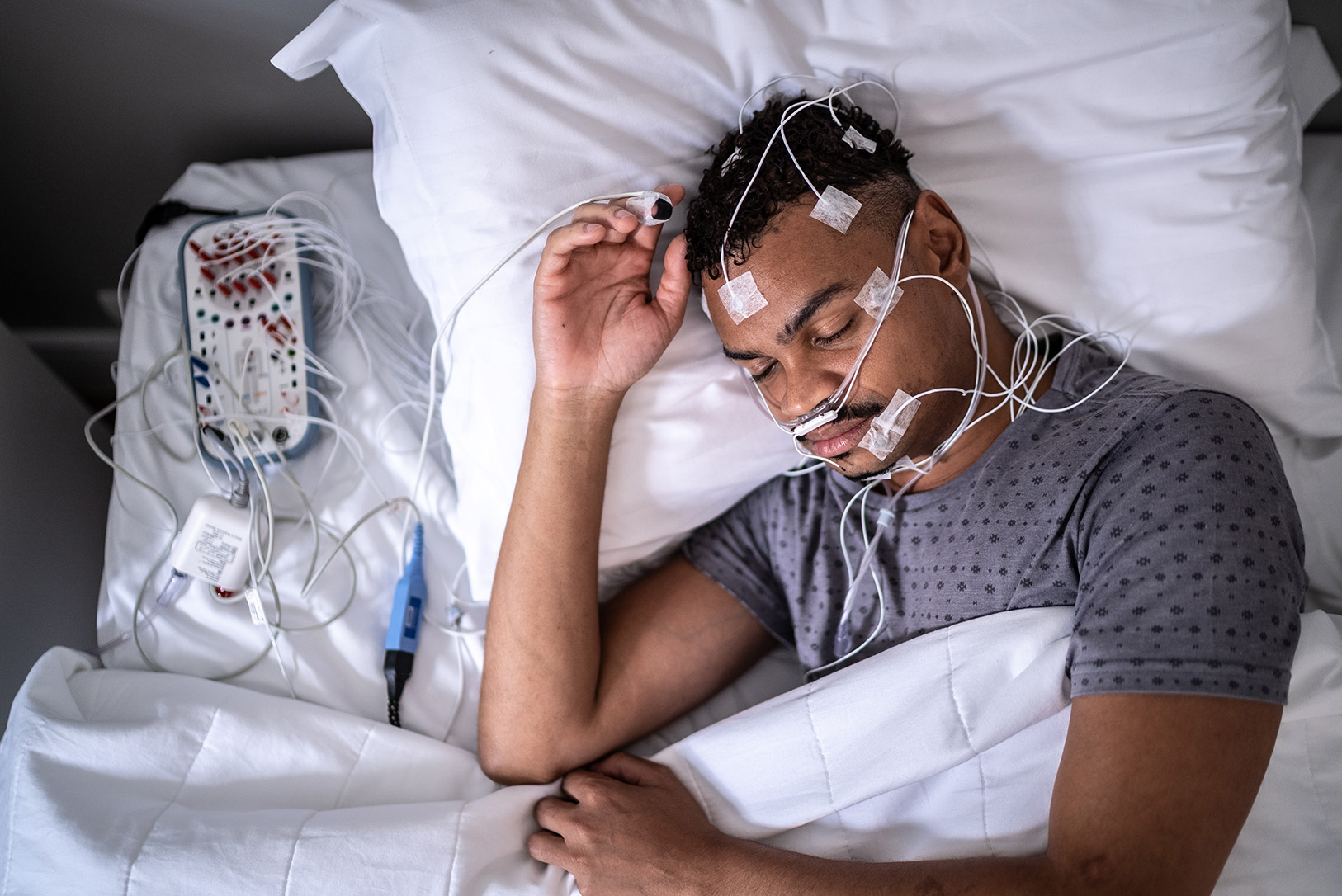
An overnight sleep study, called polysomnography, provides a detailed picture of what happens while you sleep. It is usually performed at a sleep center, where small sensors are placed on your body to record brain activity, breathing, oxygen levels, heart rhythm, and movements.
The results can help diagnose conditions such as sleep apnea and certain sleep-related movement disorders. Sleep studies can also identify unusual behaviors during sleep and changes in sleep stages.
Home sleep apnea test
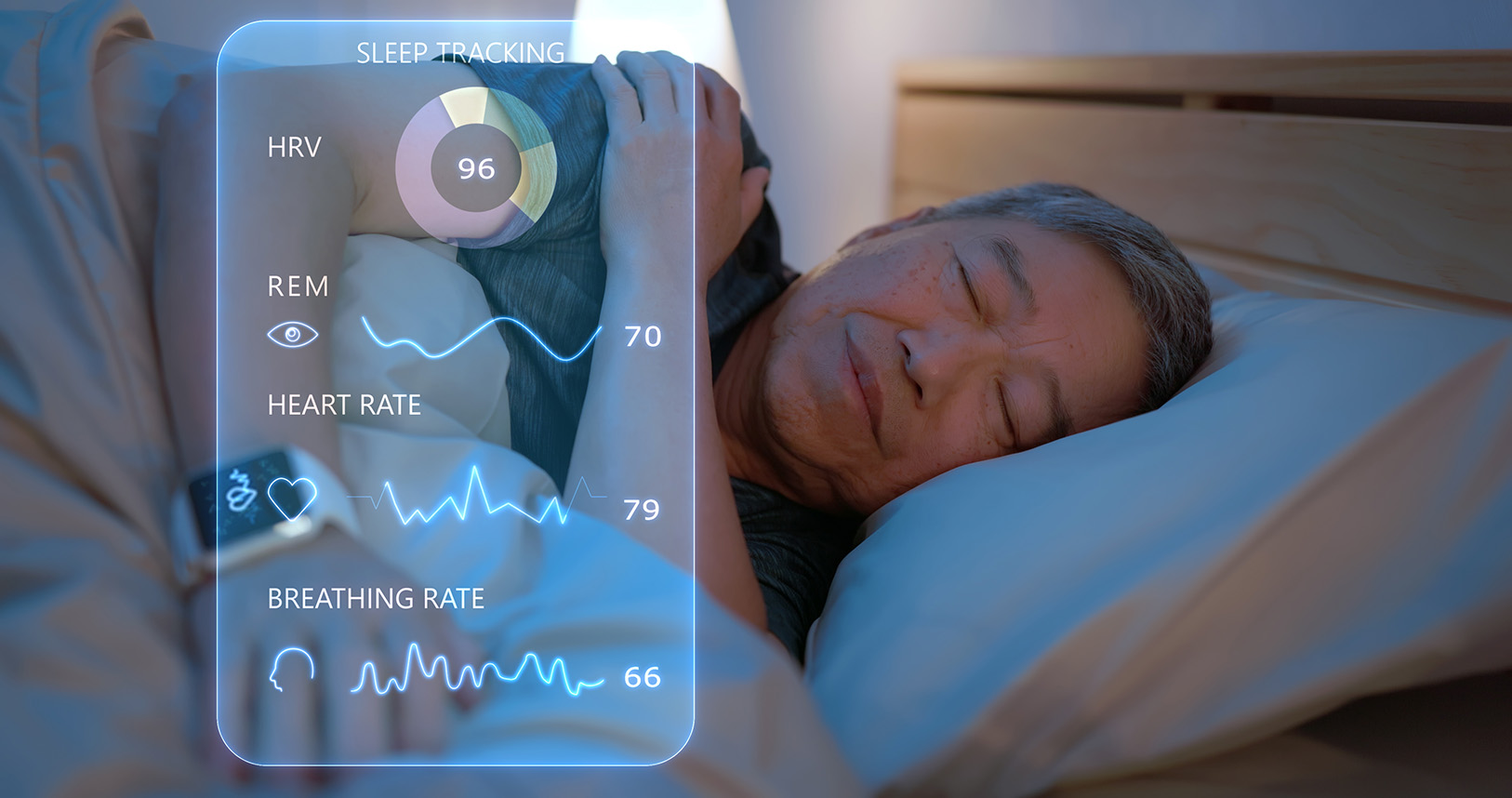
Some adults with suspected obstructive sleep apnea can complete a simplified test at home rather than spending the night at a sleep center.
A home sleep apnea test uses sensors to monitor breathing, oxygen levels, and other signals while you sleep. It is less comprehensive than an overnight sleep study and cannot assess most other sleep disorders.
If the results are unclear or do not show sleep apnea despite ongoing concerns, an overnight sleep study may still be needed.
Multiple sleep latency test (MSLT)
The multiple sleep latency test (MSLT) is generally used when narcolepsy or idiopathic hypersomnia is suspected. The test measures how quickly someone falls asleep during scheduled daytime naps, and whether rapid eye movement sleep appears unusually early. It is usually conducted the day after a sleep study is performed.
Other Tests
Depending on the suspected sleep disorder, a clinician may request blood tests, carbon dioxide monitoring, heart or lung testing, imaging, genetic testing, or referral to another specialist. Results from all screenings and diagnostic tests should be interpreted together with a person’s individual symptoms and goals.
American Academy of Sleep Medicine. (2023). *International classification of sleep disorders* (3rd ed., text rev.). https://aasm.org/clinical-resources/international-classification-sleep-disorders/
Kapur, V. K., Auckley, D. H., Chowdhuri, S., et al. (2017). Clinical practice guideline for diagnostic testing for adult obstructive sleep apnea: An American Academy of Sleep Medicine clinical practice guideline. *Journal of Clinical Sleep Medicine, 13*(3), 479–504. https://doi.org/10.5664/jcsm.6506
Krahn, L. E., Arand, D. L., Avidan, A. Y., et al. (2021). Recommended protocols for the Multiple Sleep Latency Test and Maintenance of Wakefulness Test in adults: Guidance from the American Academy of Sleep Medicine. *Journal of Clinical Sleep Medicine, 17*(12), 2489–2498. https://doi.org/10.5664/jcsm.9620
Maski, K., Trotti, L. M., Kotagal, S., et al. (2024). Recommended protocols for the Multiple Sleep Latency Test and Maintenance of Wakefulness Test in children: Guidance from the American Academy of Sleep Medicine. *Journal of Clinical Sleep Medicine, 20*(3), 469–484. https://pubmed.ncbi.nlm.nih.gov/38149645/
Smith, M. T., McCrae, C. S., Cheung, J., et al. (2018). Use of actigraphy for the evaluation of sleep disorders and circadian rhythm sleep-wake disorders: An American Academy of Sleep Medicine clinical practice guideline. *Journal of Clinical Sleep Medicine, 14*(7), 1231–1237. https://doi.org/10.5664/jcsm.7230