
Sleep & Circadian Disorders

Periodic Limb Movement Disorder (PLMD)

Periodic limb movement disorder (PLMD) is a sleep-related movement disorder involving repeated, involuntary movements of the legs and sometimes the arms during sleep. These movements can disrupt sleep without the person realizing it, leaving them feeling unrested or tired during the day.

Occasional limb movements during sleep are common, particularly as people get older, and do not necessarily indicate a disorder. PLMD is diagnosed when frequent movements are associated with significant sleep problems or daytime difficulties that cannot be better explained by another condition.

Overview

  • PLMD involves repeated limb movements during sleep plus meaningful sleep disturbance or daytime impairment
  • The movements are usually involuntary and often involve the legs, such as ankle, toe, knee, or hip movements
  • A sleep study is needed to document periodic limb movements and evaluate whether another sleep disorder is present
  • PLMD is a diagnosis of exclusion, meaning other causes of the movements and symptoms must be considered first
  • PLMD is related to, but distinct from restless legs syndrome
  • Treatment focuses on identifying contributors, managing related conditions, improving sleep quality, and individualizing care with a qualified clinician

About periodic limb movement disorder

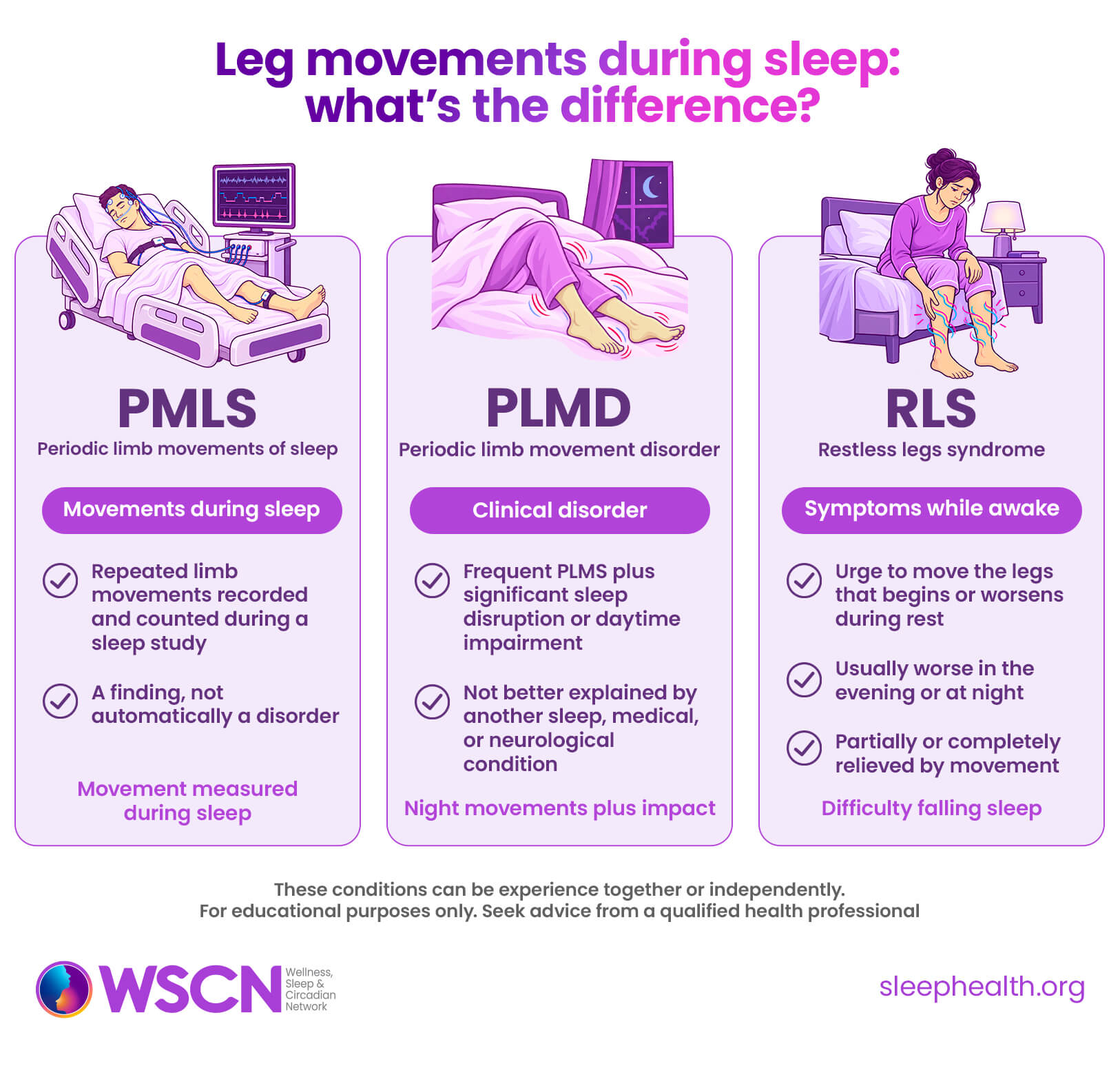
Periodic limb movements of sleep (PLMS) are repeated, involuntary movements that usually affect the legs. They often involve brief movements of the toes, ankles, or knees and can occur in regular patterns throughout the night.

PLMS are relatively common, especially in older adults, and do not necessarily indicate a sleep disorder. They are considered part of PLMD when they occur frequently, cause significant sleep difficulties or daytime problems, and cannot be better explained by another condition.

PLMD is different from restless legs syndrome (RLS). People with RLS experience an urge to move their legs while awake, often accompanied by uncomfortable sensations that worsen during rest or in the evening. Movement usually provides relief. Although many people with RLS also experience PLMS, the two conditions are not the same.
Signs and symptoms

Periodic limb movements usually happen without the person being aware of them. A bed partner may notice repeated kicking, jerking, or twitching during sleep, while others only discover these movements during a sleep study.

Although the movements occur at night, disrupted sleep can affect how someone feels and functions throughout the day.

Nighttime signs

A person or bed partner may notice:

  • Repeated leg or foot movements during sleep
  • Restless or disrupted sleep
  • Frequent brief awakenings
  • Bed covers that are kicked loose
  • Difficulty staying asleep
  • Sleep that feels light or unrefreshing

Daytime symptoms

Daytime effects may include:

  • Sleepiness or dozing unintentionally
  • Fatigue or low energy
  • Difficulty with concentration or memory
  • Irritability or low mood
  • Reduced work performance
  • Concern about driving or safety-sensitive tasks
  • Bed partner complaints

It is important to distinguish sleepiness from fatigue. Sleepiness means a tendency to doze or fall asleep. Fatigue means low energy or reduced capacity, even without a strong drive to sleep.

Screening and diagnosis

Periodic limb movement disorder (PLMD) is diagnosed through an overnight sleep study called polysomnography. This test records limb movements during sleep and helps identify other sleep disorders, such as obstructive sleep apnea, that could explain the symptoms.

Because periodic limb movements are common, their presence alone does not mean someone has PLMD. A healthcare professional will also consider sleep difficulties, daytime symptoms, medications, and other health conditions before making a diagnosis.

When to visit a doctor

If a person experiences the symptoms described above, or a bed partner’s sleep is suffering, it is recommended to make an appointment with a primary care physician or sleep specialist. They can conduct preliminary screenings and recommend next steps for diagnosis. 

It can be helpful to prepare information for an initial visit. Try using WSCN’s Preparing to meet your new health care provider checklist.

It can also be helpful to make a note of:

  • Restless legs symptoms while awake
  • Medications and supplements
  • Caffeine, alcohol, nicotine, or other substances use
  • Kidney disease, diabetes, neuropathy, Parkinson’s disease, pregnancy history, pain, or other medical conditions
  • Bed partner observations and/or videos

When to seek urgent medical attention

It is usually fine to wait a few weeks for an appointment to talk about sleep issues. 

Red flag: The following symptoms may be dangerous, and should receive prompt medical attention:

  • New or worsening depression, hopelessness, or thoughts of self-harm
  • Falling asleep while driving or during safety-sensitive tasks

Questions to ask your doctor

Questions to ask may include:

  • Do my symptoms suggest PLMD, restless legs syndrome, sleep apnea, or another condition?
  • Do I need a sleep study?
  • Could my medications or supplements be contributing?
  • Should iron studies or other lab tests be checked?

Risk factors and contributors

Periodic limb movements during sleep (PLMS) become more common with age and may occur alongside other sleep disorders or medical conditions. However, having these movements does not necessarily mean someone has periodic limb movement disorder (PLMD).

Factors associated with PLMS include:

  • Age: Periodic limb movements become more common in older adults.
  • Other sleep disorders: PLMS frequently occur in people with restless legs syndrome and may also accompany sleep apnea or other sleep disorders.
  • Medical conditions: Kidney disease, diabetes, neuropathy, and certain neurological conditions may be associated with limb movements during sleep.
  • Iron levels: Low iron stores are particularly relevant to restless legs syndrome and may warrant assessment when leg movement symptoms occur.
  • Medications and substances: Certain antidepressants, antihistamines, and other medications may contribute to limb movements. Caffeine, alcohol, and nicotine can also worsen sleep symptoms in some people.

Identifying these factors can help healthcare professionals determine whether the movements are related to another condition and guide appropriate treatment.

Long-term health implications

The long-term health effects of periodic limb movement disorder (PLMD) are not yet fully understood. However, ongoing sleep disruption can affect daytime functioning and quality of life.

  • Cardiovascular health: Periodic limb movements during sleep (PLMS) can be accompanied by changes in heart rate and blood pressure. Some studies have linked these movements with cardiovascular risk, although a direct causal relationship has not been established.
  • Mental and cognitive health: Persistent sleep disruption can contribute to mood changes, difficulties with concentration, and reduced daytime alertness.
  • Daily functioning and relationships: Poor sleep can affect work performance and safety. Repeated limb movements may also disturb a bed partner’s sleep and affect relationships.

Recognizing persistent symptoms and identifying other conditions that may be contributing can help people receive appropriate care and improve their sleep and wellbeing.

Treatment and management

Treatment for periodic limb movement disorder (PLMD) focuses on improving sleep quality and addressing factors that may contribute to the movements. Because evidence for specific PLMD treatments remains limited, care is tailored to each person’s symptoms and medical history.

A healthcare professional may recommend:

  • Treating related conditions: Addressing sleep apnea, restless legs syndrome, or other medical conditions that may contribute to sleep disruption.
  • Reviewing medications and iron levels: Identifying medications that may worsen limb movements and checking iron levels when appropriate.
  • Adjusting daily habits: Limiting caffeine, alcohol, or nicotine when they affect sleep, and maintaining a regular sleep schedule.
  • Considering medication: In selected cases, medication may be discussed, although evidence for treating PLMD specifically remains limited.

Follow-up can help determine whether treatment is improving sleep and daytime functioning, rather than focusing only on the number of limb movements recorded during sleep.

Bed partner considerations

Repeated limb movements during sleep can disturb a bed partner, even when the person experiencing them is unaware. Over time, disrupted sleep can affect both partners’ wellbeing and daily functioning.

Practical adjustments, such as using separate blankets, choosing a mattress that reduces movement transfer, or occasionally sleeping separately, can help protect everyone’s sleep. Taking a bed partner’s observations seriously can also help identify symptoms that deserve medical attention

Research and what we are still learning

Researchers are still investigating why periodic limb movements during sleep (PLMS) cause significant sleep problems in some people but not others. Another important question is whether these movements contribute directly to health problems, particularly cardiovascular disease, or occur alongside other underlying conditions.

Research is also focused on identifying more effective treatments for periodic limb movement disorder (PLMD). The goal is not simply to reduce limb movements, but to improve sleep quality, daytime functioning, and overall quality of life.

References

American Academy of Sleep Medicine. (2023). International classification of sleep disorders (3rd ed., text rev.). American Academy of Sleep Medicine. https://shop.aasm.org/products/icsd-3-text-revision-print

Drakatos, P., Olaithe, M., Verma, D., et al. (2021). Periodic limb movements during sleep: A narrative review. Journal of Thoracic Disease, 13(11), 6476–6494. https://doi.org/10.21037/jtd-21-1353

Koo, B. B., Blackwell, T., Ancoli-Israel, S., et al. (2011). Association of incident cardiovascular disease with periodic limb movements during sleep in older men: Outcomes of Sleep Disorders in Older Men (MrOS) Study. Circulation, 124(11), 1223–1231. https://doi.org/10.1161/CIRCULATIONAHA.111.038968

Seifen, C., Herrmann, M., Pordzik, J., et al. (2024). Periodic limb movements in patients with suspected obstructive sleep apnea without comorbid conditions. Frontiers in Medicine, 11, Article 1378410. https://doi.org/10.3389/fmed.2024.1378410

Winkelman, J. W., Berkowski, J. A., DelRosso, L. M., et al. (2025). Treatment of restless legs syndrome and periodic limb movement disorder: An American Academy of Sleep Medicine clinical practice guideline. Journal of Clinical Sleep Medicine, 21(1), 137–152. https://doi.org/10.5664/jcsm.11390


Medical disclaimer
This article is for educational purposes only and is not intended to replace professional medical advice, diagnosis, or treatment. Speak with a qualified healthcare professional about questions or concerns related to your sleep. Read full medical disclaimer