
Sleep & Circadian Disorders

Nightmare Disorder

Nightmares are vivid, disturbing dreams that can wake us from sleep and leave us feeling frightened or upset. They often involve threatening situations and are usually remembered clearly after waking.

Occasional nightmares are common, especially during periods of stress. However, when nightmares happen repeatedly and cause significant distress, disrupt sleep, or interfere with daily life, they may be a sign of nightmare disorder.

Nightmare disorder is a recognized and treatable sleep condition. Understanding what contributes to recurring nightmares can help people find appropriate treatment and regain confidence in their sleep.

Overview

  • Nightmare disorder is a type of parasomnia involving recurring, distressing dreams that interfere with sleep or daily life
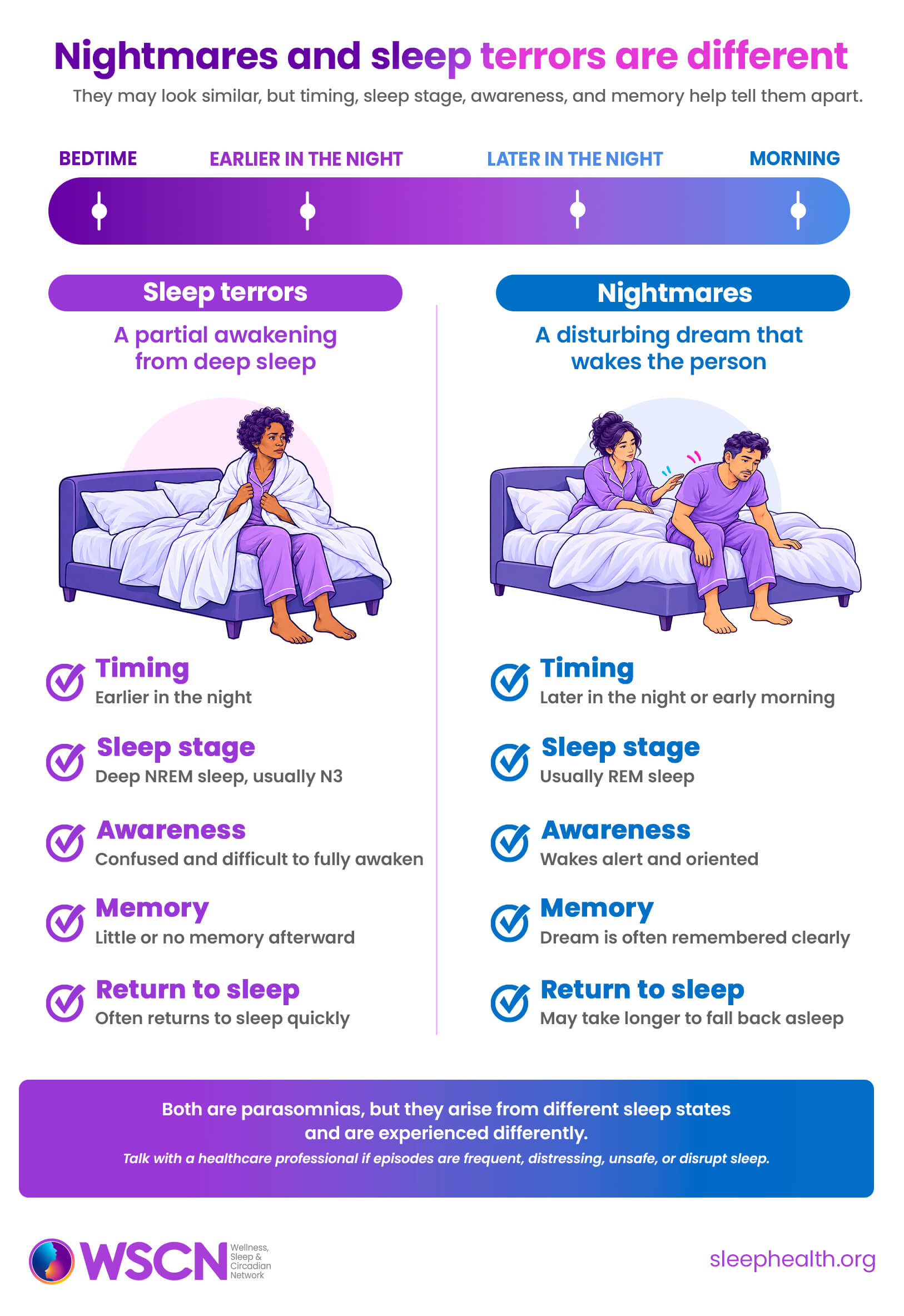
  • Nightmares usually occur during rapid eye movement (REM) sleep, often later in the night
  • People typically wake up alert and remember their nightmares clearly, unlike sleep terrors, which often involve confusion and little memory afterward
  • Frequent nightmares can disrupt sleep and lead to anxiety about bedtime, fatigue, or difficulty concentrating during the day
  • Stress, traumatic experiences, mental health conditions, and certain medications can contribute to recurring nightmares
  • Effective treatments are available, including imagery rehearsal therapy (IRT), which helps people change and rehearse the storyline of recurring nightmares

About nightmare disorder

Nightmare disorder is a type of parasomnia, a group of sleep disorders involving unusual experiences or behaviors during sleep.

Nightmares usually occur during rapid eye movement (REM) sleep, the stage when most vivid dreaming takes place. They often happen later in the night or early in the morning, when REM sleep periods become longer.

Unlike sleep terrors, which typically occur during deep sleep, nightmares usually wake a person fully. People are generally alert after waking and can clearly remember what they dreamed. Sleep terrors, on the other hand, often leave people confused, with little or no memory of the episode.

Nightmares are particularly common in children, but they can affect people of any age. Frequent nightmares are also more common among people experiencing high levels of stress or living with conditions such as post-traumatic stress disorder (PTSD), depression, or anxiety. Read more about parasomnias in children here.
Signs and symptoms

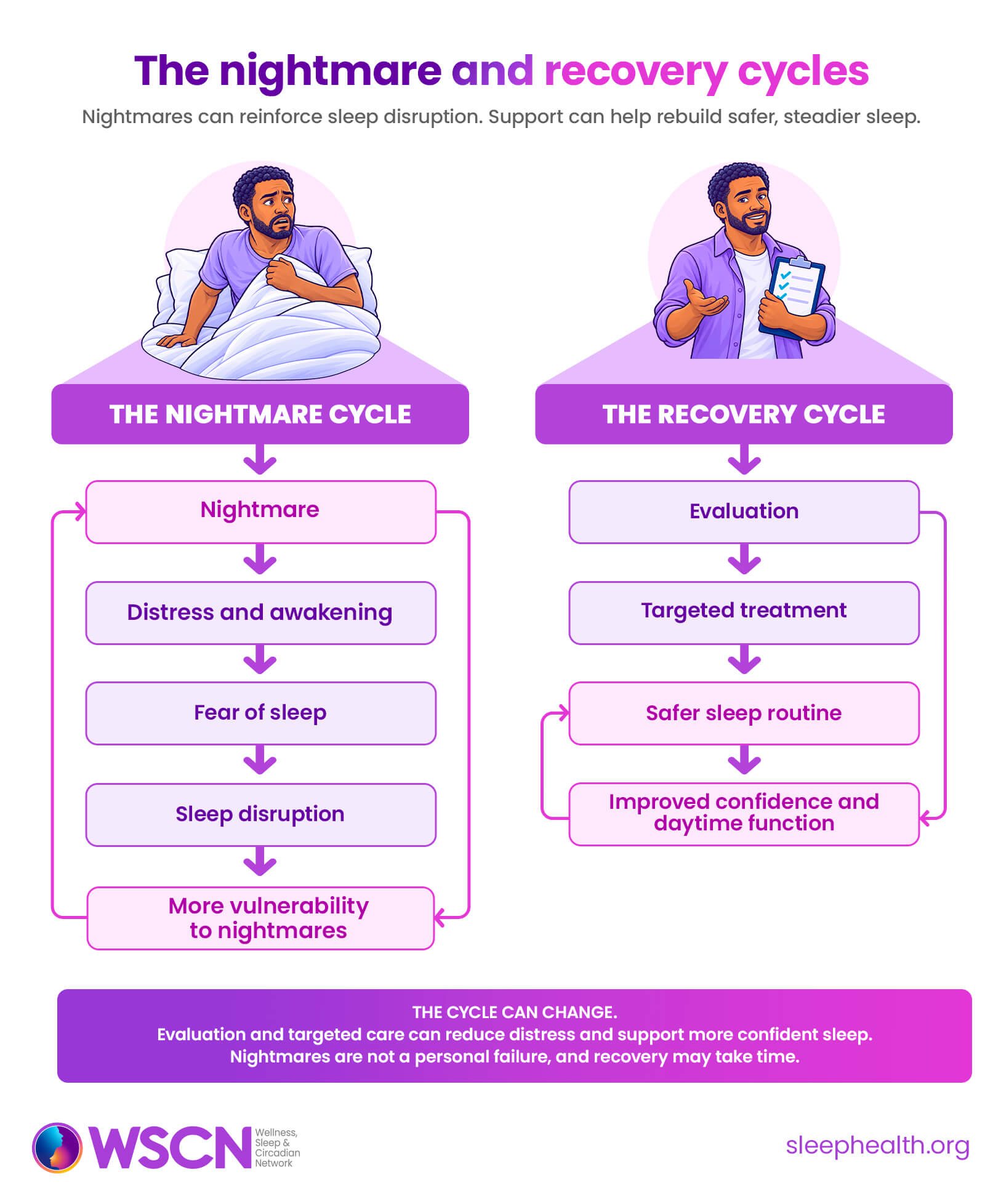
Nightmare disorder can affect both sleep and daily life. Repeated nightmares may cause distress after waking and make it difficult to return to sleep. Over time, some people develop anxiety about bedtime or begin avoiding sleep because they fear another nightmare.

Nighttime symptoms

A person may experience:

  • Repeated disturbing dreams that wake them from sleep
  • Clear memory of the dream after waking
  • Fear, sadness, anger, guilt, shame, or distress after the nightmare
  • Difficulty returning to sleep / insomnia
  • Avoiding sleep because of fear of another nightmare
  • Disrupted sleep for a bed partner or household member

Daytime symptoms

Daytime effects may include:

  • Fatigue or daytime sleepiness
  • Difficulty concentrating or remembering information
  • Irritability, anxiety, or low mood
  • Reduced performance at work, school, or during daily activities
  • Worry about the next night’s sleep
  • Avoidance of reminders associated with distressing dreams or traumatic experiences

Symptoms vary from person to person. Some people experience nightmares occasionally, while others have frequent episodes that significantly affect their sleep and quality of life.

Screening and diagnosis

Nightmare disorder is usually diagnosed based on a person’s symptoms and medical history. A healthcare professional will ask how often nightmares occur, what happens when the person wakes up, and how the experiences affect sleep and daily life.

An assessment may include:

  • Nightmare patterns: How frequently nightmares occur, how distressing they are, and whether they involve recurring themes or traumatic experiences.
  • Sleep habits: Sleep schedules, difficulty returning to sleep, and any fear or avoidance of bedtime.
  • Mental health: Symptoms of stress, anxiety, depression, or post-traumatic stress disorder (PTSD).
  • Medications and substances: Reviewing medications or substances that might contribute to nightmares.
  • Other sleep disorders: Checking for conditions such as sleep apnea, sleep terrors, or REM sleep behavior disorder that may require a different approach.

A sleep study is not usually needed to diagnose nightmare disorder. However, it may be recommended if another sleep disorder is suspected or the episodes involve unusual behaviors.

When to talk with a healthcare professional

Talk with a healthcare professional if nightmares occur frequently, cause significant distress, or interfere with sleep or daily activities. A primary care clinician is a good place to start and can recommend further evaluation or treatment.

How to prepare for an appointment

You can prepare for your appointment by noting how often nightmares occur and how they affect you. WSCN’s Preparing to meet your new healthcare provider checklist may also help.

Causes, risk factors, and health implications

Causes and risk factors

Nightmare disorder does not always have a single identifiable cause. Several factors can contribute to recurring nightmares or make existing symptoms worse.

  • Stress and trauma: Acute stress, traumatic experiences, PTSD, grief, and chronic threat or insecurity can increase nightmares.
  • Mental health factors: Depression, anxiety, panic symptoms, substance use disorders, and emotional distress may contribute.
  • Sleep disruption: Insomnia, irregular sleep timing, insufficient sleep, and fragmented sleep can make nightmares more likely or harder to recover from.
  • Medications and substances: Some medications and withdrawal from alcohol, sedatives, or other substances may trigger or worsen nightmares.
  • Medical and neurological factors: Pain, illness, fever, neurodegenerative conditions, and other health changes may be relevant in some adults.
  • Environmental factors: Unsafe sleep environments, nighttime noise, caregiving interruptions, or sleeping in a place associated with danger may increase distress.

Identifying potential contributing factors can help healthcare professionals recommend appropriate treatment and support better sleep.

Long-term health implications

Frequent nightmares can affect more than sleep. When they persist, ongoing distress and sleep disruption can influence mental health, daily functioning, and quality of life.

  • Mental health: Frequent nightmares are associated with anxiety, depression, and post-traumatic stress disorder (PTSD). Research has also linked persistent nightmares with an increased risk of suicidal thoughts, although the relationship is complex and does not establish direct causation.
  • Sleep health: Repeated awakenings and fear of further nightmares can contribute to chronic insomnia and ongoing sleep difficulties.
  • Daily functioning and safety: Poor sleep can affect alertness and concentration, making everyday activities more difficult and increasing safety concerns, particularly when driving.
  • Relationships and quality of life: Persistent nightmares can affect emotional wellbeing and relationships. They may also disrupt a bed partner’s sleep.

Recognizing and treating nightmare disorder can help reduce distress, improve sleep, and support better quality of life.
Treatment and management

Nightmare disorder is treatable. The best approach depends on how often nightmares occur, how much distress they cause, and whether other health conditions are contributing.

Nightmare-Focused Therapy

Imagery rehearsal therapy (IRT) is an established treatment for recurring nightmares. During therapy, a person changes the storyline or ending of a disturbing dream while awake, then practices imagining the new version. Over time, this can help reduce the frequency and distress of nightmares.

Other psychological approaches include cognitive behavioral therapy (CBT) and treatments that help people process traumatic experiences. Treatment for insomnia or post-traumatic stress disorder (PTSD) may also be helpful when these conditions occur alongside nightmares.

Medication

Medication may be considered when nightmares cause significant distress, particularly when they are related to PTSD.

Prazosin is sometimes prescribed for PTSD-related nightmares and can reduce their frequency or severity in some people. However, treatment responses vary, and medications may cause side effects. A healthcare professional can help determine whether medication is appropriate.

Treating Related Conditions

Addressing conditions such as PTSD, anxiety, depression, or insomnia may also help reduce nightmares. Reviewing medications and substance use can identify other factors that may be contributing to disturbed sleep.

Do not stop or change prescribed medications without medical guidance.

Living With Nightmare Disorder

Alongside treatment, small practical steps can help make nights feel more manageable. A calming bedtime routine and a comfortable sleeping environment may support better sleep. Having a plan for what to do after waking from a nightmare can also help reduce distress.

Talking with a trusted person or bed partner about what you are experiencing may provide additional support.

With appropriate care, many people can reduce the impact of nightmares and regain confidence in their sleep.

Research and what we are still learning

Researchers are studying which nightmare treatments work best for different groups of adults, including people with PTSD, mental health conditions, other sleep disorders, or high stress. There is also growing interest in how nightmare treatment affects daytime outcomes such as mood, safety, relationships, and quality of life.

More research is needed on personalized treatment, digital delivery of nightmare therapies, combined treatment for nightmares and insomnia, and how to support people who have difficulty using mental imagery.

References

Casement, M. D., & Swanson, L. M. (2012). A meta-analysis of imagery rehearsal for post-trauma nightmares: Effects on nightmare frequency, sleep quality, and posttraumatic stress. Clinical Psychology Review, 32(6), 566–574. https://doi.org/10.1016/j.cpr.2012.06.002

Hansen, K., Höfling, V., Kröner-Borowik, T., et al. (2013). Efficacy of psychological interventions aiming to reduce chronic nightmares: A meta-analysis. Clinical Psychology Review, 33(1), 146–155. https://doi.org/10.1016/j.cpr.2012.10.012

Morgenthaler, T. I., Auerbach, S., Casey, K. R., et al. (2018). Position paper for the treatment of nightmare disorder in adults: An American Academy of Sleep Medicine position paper. Journal of Clinical Sleep Medicine, 14(6), 1041–1055. https://doi.org/10.5664/jcsm.7178

Pruiksma, K. E., Miller, K. E., Davis, J. L., et al. (2025). An expert consensus statement for implementing cognitive behavioral therapy for nightmares in adults. Behavioral Sleep Medicine, 23(2), 153–171. https://doi.org/10.1080/15402002.2024.2437634

Seda, G., Sanchez-Ortuno, M. M., Welsh, C. H., et al. (2015). Comparative meta-analysis of prazosin and imagery rehearsal therapy for nightmare frequency, sleep quality, and posttraumatic stress. Journal of Clinical Sleep Medicine, 11(1), 11–22. https://pubmed.ncbi.nlm.nih.gov/25325592/


Medical disclaimer
This article is for educational purposes only and is not intended to replace professional medical advice, diagnosis, or treatment. Speak with a qualified healthcare professional about questions or concerns related to your sleep. Read full medical disclaimer