
News
Living with idiopathic hypersomnia: a diagnosis, early learnings, and building community
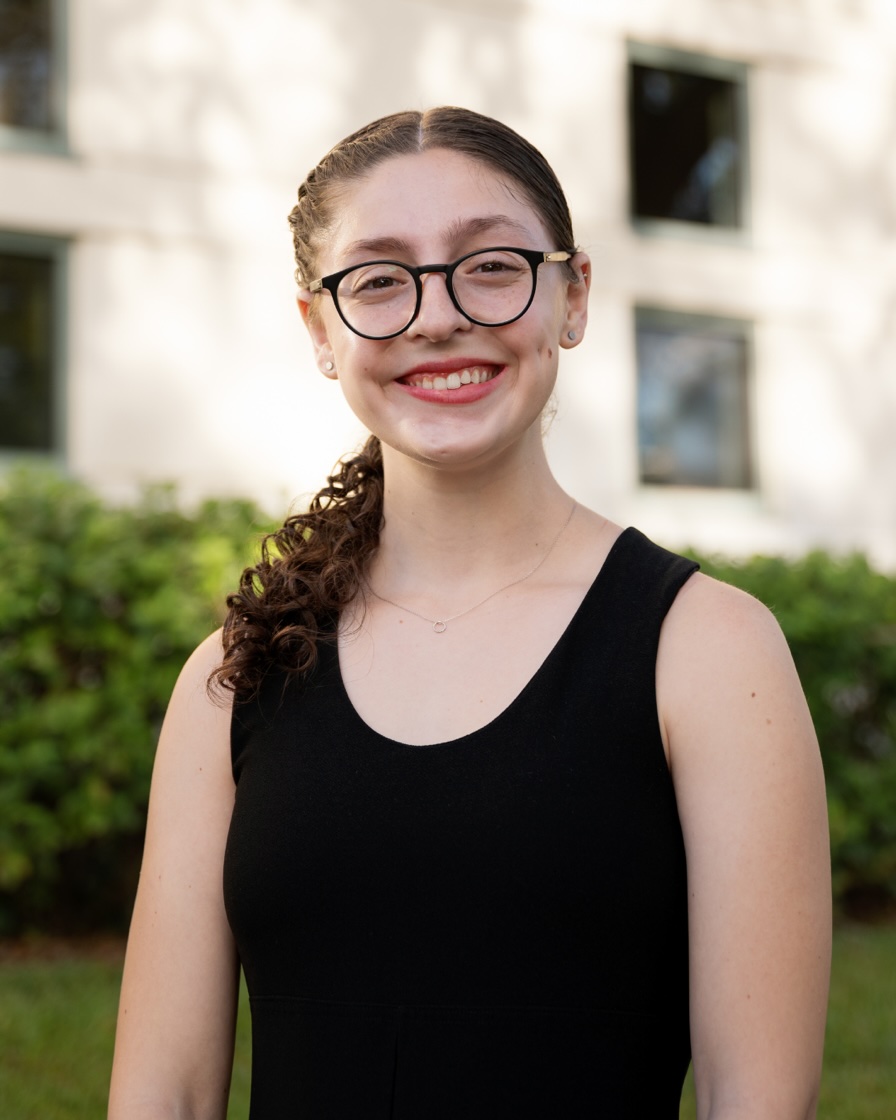
An interview with Katie Kellerman, founder of Young Adults with Hypersomnia Disorders Support Group.
Where it all began
Katie Kellerman was a straight-A student with a busy extracurricular list, close friends, and big plans for the future when idiopathic hypersomnia (IH) abruptly changed the shape of her life. Diagnosed in 2018 during her freshman year of high school, Katie describes the dramatic shift: “It completely changed my world. Everything I loved got taken away. I loved school, I loved learning, I was dancing competitively and running cross country. I loved seeing my friends.” Almost overnight, the life she knew narrowed into sleeping long hours, struggling to stay awake, and attending doctor’s appointments. School became particularly difficult. After being found asleep in unsafe places like locker rooms and staircases, she was removed from regular classes and placed on an abbreviated schedule and workload with tutoring — an experience she remembers as isolating and demeaning.
The social impact was painful. Katie says it was hard to maintain friendships when she was often physically absent. Even when she was present in person she was often unable to follow conversations or match the group energy. “It’s hard to be friends with a sick girl that’s never there,” she reflected. That loss became part of a larger reckoning: wondering whether the future she had imagined was still possible.
Advocacy is key
Advocacy became essential. Katie’s parents both worked in healthcare, and her mother stepped in early when Katie could not advocate for herself. At a time when there was little accessible information about idiopathic hypersomnia, Katie’s mother created a practical fact sheet for teachers: what IH is, how it showed up for Katie, what to expect, and what not to do. Each year, she met with Katie’s teachers to explain the diagnosis and practical adjustments they could make. Accommodations included extended time on assignments and in exams, and a scheduled free block in the guidance counselor’s office after lunch for rest. Flexible attendance options were also included. As Katie stabilised on medication, she gradually took over that role herself, carrying the practice into college by briefing professors at the start of each semester.
That early education made a difference. Katie found that teachers and professors were generally more understanding when they understood that sleeping in class or missing class was not laziness, disinterest, or a choice.
Still, not every experience was positive. In college, one professor pushed back when Katie needed to miss class for a sleep study that had been booked months in advance, questioning Katie’s commitment to her studies. This story highlights a recurring theme: there is often a gap between what people observe and what is actually happening inside someone’s body. Absence, fatigue, and sleeping through activities is interpreted as laziness or disinterest from the outside. But the reality is that people with IH want to show up and participate, and are limited by their condition.
From pediatric to adult medicine: a bumpy transition
The transition from pediatric to adult medicine brought another major challenge. Katie’s pediatric sleep doctors had been encouraging and collaborative, helping her travel to Thailand at 16 and supporting her goal of attending college out of state. Adult care felt starkly different. At one point, she was told she would need to drop out of college and return home to receive medication, or stay at college without it. For Katie, that was not an option: without medication, she was not functional or safe to attend campus life, risking falling asleep in unsafe places, or even experiencing physical injury without constant supervision. Conversely, Katie was not willing to return home for medication access, only to then miss out on getting an education. She has since found more collaborative providers, but the experience showed her how much misunderstanding and stigma can exist even within specialist medicine.
Building community connection
That sense of being misunderstood also shaped Katie’s community-building work. When she was preparing for college, she searched online support groups for advice from people with IH. Most groups she found were geared toward older adults discussing disability applications, or parenting with IH. The information was valid, but it did not answer her questions as a young person trying to build an independent life. At her first Hypersomnia Foundation BeyondSleepy conference in Texas, she met other young adults who were falling into the same information gaps. “I found my voice, and I decided right then and there there’s this gap, I’m going to fix it”.
Katie went home, researched platforms, and chose GroupMe because it was free, accessible across devices, familiar to college students, and easy to use. She started a grassroots group: The Young Adults with Hypersomnia Disorders Support Group. It is designed so members can contribute as much or as little as they have energy for. Its value lies in peer-to-peer lived experience: practical tips, accommodations that do not appear in clinical handouts, and the reassurance of not being alone. As Katie explains “we all have our little tips and tricks that we use to get through each day and to make each day a little bit more survivable”.
Her own daily life is full of these adaptations. Katie now works 12-hour nursing shifts — something she once thought might be impossible — by carefully structuring her week. Mondays are “rebound days,” reserved entirely for recovery. She shops at low-traffic times, uses Loop noise-cancelling earbuds to reduce sensory drain, relies on sticky notes in fixed places, keeps belongings in consistent spots, uses a pill box to manage daily doses, and carries medication discreetly in a keychain pill holder when out and about. For Katie, managing IH means constantly calculating energy: what a task will cost, what is left in the tank, and when she is moving into the “red zone.”
How the perception of IH needs to change
Katie wishes doctors understood that IH is not simply “sleeping too much.” It includes brain fog, memory issues, attention problems, fatigue, and the feeling of “walking through quicksand” every day. She wants clinicians to recognise that these symptoms affect every part of life — not just sleep schedules, but school, work, relationships, memory, independence, and safety. For Katie, good care means being met with curiosity and collaboration rather than suspicion or dismissal: a provider who asks what is and is not working, explains decisions clearly, and understands that fighting for medication changes or refills can be exhausting in itself.
She also resonated with the idea that IH is often experienced less as a nighttime disorder and more as a daytime one: Katie often feels okay when asleep, almost normal, whilst the daytime waking hours are where the struggle happens.
That shift in framing matters. When conditions like IH are described only as sleep disorders, people often assume the problem begins and ends at night — or worse, that someone who sleeps, naps, or misses class is lazy, unmotivated, or making a choice. But Katie’s experience shows that the real burden often lives in the daytime: in the brain fog, memory lapses, sensory overwhelm, lost friendships, missed opportunities, medication barriers, and constant energy calculations required to get through ordinary tasks.
Framing these conditions as 24-hour conditions, not just sleep disorders could help families, teachers, employers, and clinicians see the full picture sooner. It could reduce stigma by separating symptoms from character, improve diagnosis by helping people recognise patterns beyond “being tired,” and support better quality of life by encouraging accommodations that make wakeful hours safer, more manageable, and more meaningful.
Looking to the future – a message for young people
For a young person newly diagnosed with IH, narcolepsy, Kleine-Levin Syndrome, or another hypersomnolence disorder, Katie’s message is simple: you are not alone. Other people have been through the long search for answers, the fear of diagnosis, the trial and error of medications, and the uncertainty about what life might look like next. Community may not always be loud or easy to find, but it exists — and within it are people who understand, who can share practical wisdom, and who can help carry hope when everything feels overwhelming.
If she could wave a magic wand, Katie would choose universal awareness: for IH to be as widely understood as heart disease or cancer, with treatments as numerous and accessible. Yet despite all IH has taken from her, Katie says she is grateful for the lessons and wisdom it has taught her. She is stronger, more compassionate, a better advocate, and more in tune with herself — and now, through her voice and community, she is helping others feel less alone.
Connecting with support
You can find Young Adults with Hypersomnia Disorders Support Group online and via the app GroupMe here: