

SEC Section: Across The Body

Pregnancy

Sleep often changes from the first trimester through the final weeks before birth. Hormonal shifts can increase sleepiness, while later physical changes such as discomfort, fetal movement, reflux and frequent urination can make sleep more fragmented.

These changes are common, but persistent sleep problems should not simply be accepted as part of pregnancy. Insomnia, restless legs syndrome and sleep-disordered breathing may need specific assessment or treatment. Poor sleep is also associated with lower quality of life during pregnancy.

Pregnancy is closely linked to the body’s circadian system. Maternal hormones such as melatonin follow a 24-hour pattern, and melatonin can cross the placenta, helping provide the developing fetus with information about day and night. Researchers are also studying how sleep timing, sleep regularity and light exposure at night may relate to sleep and health during pregnancy.

Looking across the full 24 hours can help identify realistic ways to support sleep as pregnancy changes.

Overview

  • Sleep changes are common during pregnancy, particularly increased sleepiness early on and more disrupted sleep later 
  • Insomnia, restless legs syndrome and sleep apnea can also occur and may need assessment or treatment 
  • Sleep timing and regularity, work schedules and nighttime light exposure may also affect sleep and circadian health during pregnancy
  • There is no perfect schedule. Looking across the full day and night can help identify realistic opportunities to support sleep and circadian alignment

ON THIS PAGE

Why pregnancy can affect sleep and circadian rhythm

Pregnancy can change not only how much you sleep but also when you feel sleepy, when you are most alert, and how stable your sleep schedule is from day to day. These changes can begin early in pregnancy and continue to shift as pregnancy progresses.

For some women, increased daytime sleepiness can lead to earlier bedtimes or more napping. Later in pregnancy, repeated nighttime awakenings can break up sleep and may lead to more daytime sleep. Evening or rotating work shifts can make sleep timing less regular, while bright light at night can make it harder for the body to prepare for sleep.

The important point is not whether someone is naturally an “early bird” or a “night owl.” It is whether sleep, light and daily routines are becoming increasingly out of sync as pregnancy changes daily life, and identifying opportunities for support.

Why sleep and circadian health matter during pregnancy

Sleep affects more than just how rested you feel. During pregnancy, poor sleep can worsen fatigue and affect mood, concentration, and day-to-day wellbeing. It is also linked to lower quality of life, particularly later in pregnancy.

Sleep and circadian health may also be connected with some pregnancy complications. Research has looked particularly at:

  • Gestational diabetes. Short or disrupted sleep, irregular sleep timing and evening shift work have all been linked with higher risk in some studies. 
  • Mood and emotional wellbeing. Disturbed sleep and less stable daily rhythms have been associated with more symptoms of depression and anxiety during pregnancy and after birth. 
  • Preterm birth and hypertensive disorders. Some studies have found associations with poor sleep or circadian disruption, although the findings are not consistent enough to say that sleep problems directly cause these complications. 

Sleep during pregnancy and your baby

Sleep during pregnancy may also be connected with how a baby sleeps and develops after birth.

Some studies have found that women who had more sleep problems during pregnancy were more likely to have babies with sleep difficulties. Later or more irregular sleep during pregnancy has also been linked to differences in infant behavior. These findings are still preliminary and do not show that a mother’s sleep pattern directly causes these changes. 

The message is not that pregnant women need a perfect sleep schedule. Many factors shape a child’s health and development. Instead, the findings give another reason to take ongoing sleep problems seriously and support good sleep where possible.

OWN ALL 24 HOURS: Looking across the full day and night

Pregnancy can shift sleep and energy across the whole day. Daytime sleepiness, naps, disrupted nights, work schedules and changing routines can all affect when you sleep and how rested you feel.

Looking across the full 24 hours can help you see what may be making sleep easier or harder. The goal is not a perfect routine, but one that works with your pregnancy. A simple sleep or 24-hour diary can help show how naps, work schedules, evening light or changing bedtimes may be affecting your health and your pregnancy experience.

What you can change, and what can be treated

Some sleep disruption is normal during pregnancy, especially later on. Focus on what is making sleep difficult and what can realistically be changed.

Keeping sleep and wake times reasonably consistent can help, while still allowing for naps and changing energy levels. Daytime light and regular physical activity may also support a steadier day-night rhythm.

Focussing on supporting the body during pregnancy can help improve comfort during sleep. Using extra pillows and cushions can make a big difference.

Persistent insomnia does not have to be accepted as part of pregnancy. CBT-I can be used during pregnancy, and sleep disorders such as restless legs syndrome and sleep-disordered breathing may need specific assessment and treatment. Speaking with a doctor if these concerns arise is always appropriate.

Making sleep more comfortable during pregnancy

Small changes to the sleep environment can help as the body changes. A pillow between the knees, behind the back or under the abdomen may make side-sleeping more comfortable. Regular pillows work as well as specially shaped pregnancy pillows for this purpose. Some people also find that lighter pajamas, breathable bed linen and a cooler bedroom help if pregnancy makes them feel warmer at night.

From 28 weeks onward, try to go to sleep on your side. You do not need to stay in one position all night, and there is no evidence that the left side is safer than the right. If you wake on your back, simply turn back onto your side and go back to sleep

Safety first: Check before taking something for sleep

Pregnancy can change which medications and supplements are appropriate. Some sleep products and herbal supplements have not been well studied during pregnancy, and the quality and amount of active ingredients in supplements can vary.

Before starting a sleep medication, melatonin or another sleep-related supplement, check with your pregnancy care team. They can help you weigh the possible benefits and risks and choose an option that is appropriate for you.

When to talk with a healthcare professional

Talk with your care team if sleep problems persist, regularly affect daytime function or remain disruptive despite changes to your routine.

It is especially worth discussing symptoms such as loud snoring, choking or gasping during sleep, witnessed breathing pauses, a persistent urge to move the legs, severe daytime sleepiness, or ongoing anxiety, low mood, or other changes in emotional wellbeing.

References


Medical disclaimer
This article is for educational purposes only and is not intended to replace professional medical advice, diagnosis, or treatment. Speak with a qualified healthcare professional about questions or concerns related to your sleep. Read full medical disclaimer


Continue reading

Women’s Health

Women’s health, sleep, and circadian rhythms are closely connected throughout life. Reproductive hormones can influence both sleep and the body’s internal 24-hour timing system, but hormones are only part of the picture. Health conditions and symptoms can also affect sleep. Daily schedules, work, and caregiving can shift when sleep is possible.

Sleep and circadian patterns can begin to change after puberty and may shift across the menstrual cycle. Pregnancy and menopause bring further changes. Women are more likely than men to experience insomnia, while some sleep disorders become more common or present differently at certain stages of life.

Looking across the full 24-hour day can reveal patterns in sleep timing and regularity that might otherwise go unnoticed. Changes in daytime activity or symptoms can provide additional clues for how to help you optimize your wellbeing.

Overview

  • Sleep and circadian rhythms can change across the menstrual cycle, although the pattern varies considerably between women. 
  • Women experience insomnia more often than men, and some sleep disorders may become more common or present differently at certain stages of life. 
  • Pregnancy and menopause bring distinct changes that can affect sleep, circadian rhythms, and daily routines. 
  • Circadian rhythms help regulate reproductive hormone timing, while reproductive hormones can also influence the circadian system.
  • Sleep timing and regularity can provide useful information beyond sleep duration alone. 
  • Looking across the full 24-hour day can help identify patterns worth discussing with a healthcare professional.

ON THIS PAGE

How women’s biology can influence sleep and circadian rhythms

Sleep and circadian rhythms are regulated by several interacting systems in the brain and body. Reproductive hormones are part of that picture. Estrogen and progesterone can affect brain regions involved in sleep and wakefulness. They can also influence body temperature, breathing during sleep, and aspects of the body’s internal 24-hour timing system.

Because estrogen and progesterone change across the menstrual cycle and during major reproductive transitions, their effects on sleep and circadian timing can change too. The pattern is highly individual.

Biology is only one influence. Menstrual symptoms and pain can interfere with sleep. Mood or other health conditions may also play a role. Medications can affect sleep or alertness. This combination of biological and everyday influences means that the same life stage can affect two women very differently.

How sleep and circadian rhythms can change across a woman’s life

Puberty and the menstrual cycle

After puberty, reproductive hormone cycling adds another source of variation in sleep and circadian physiology. Across the menstrual cycle, changes in estrogen and progesterone can affect sleep stages and body temperature. Body temperature is typically higher after ovulation, with a smaller nighttime decline. However, controlled studies have not found consistent evidence that the timing of the body clock itself shifts across the menstrual cycle.

Some women notice changes in sleep around the days before menstruation or during the first days of bleeding. Menstrual symptoms can contribute. Pain, headaches, mood changes, PMS (premenstrual syndrome), or PMDD (premenstrual dysphoric disorder) may all make sleep more difficult. Irregular or heavy periods have also been associated with poorer sleep in some studies.

However, there is no single menstrual-cycle sleep pattern. In women without significant menstrual symptoms, objective measures such as sleep duration and sleep continuity often change relatively little across the cycle. This helps explain why one woman may notice a clear monthly pattern while another does not.

Sleep timing and regularity matter

How long a woman sleeps is only one part of sleep and circadian health. When sleep occurs and how consistent that timing is from day to day may also be relevant.

Light and darkness are the strongest signals that synchronize the circadian system. Sleep-wake timing and daily routines can also reinforce the pattern. Research suggests that women may, on average, have somewhat earlier or more stable rest-activity rhythms than men, although research on sex-specific circadian differences is still limited.

Research suggests that sleep health is not only about how many hours a woman sleeps. When she sleeps and how consistent that timing is may also play a role. In a study of nearly 1,200 women with an average age of 65, researchers used wrist monitors to measure sleep over about a week. Women with more irregular sleep timing reported lower psychological well-being and more symptoms of depression and anxiety. These associations remained even after researchers accounted for sleep duration and time awake during the night. 

The study also found differences in sleep timing and regularity among racial and ethnic groups. This suggests that healthy sleep timing is unlikely to be defined by one universal clock time. Individual biology, daily schedules, and social or environmental factors can all influence when sleep normally occurs.

Common sleep problems in women

Some sleep problems are more common in women. Others can become more prominent or present differently at certain life stages.

Insomnia

Insomnia involves persistent difficulty falling asleep or staying asleep. It can also involve waking earlier than intended and being unable to return to sleep. For insomnia to become a disorder, the sleep problem also affects how someone functions during the day.

Women experience insomnia more often than men. Hormonal changes may contribute at certain life stages, but persistent insomnia should not automatically be attributed to hormones. Other factors may be involved, or a separate insomnia disorder may be present.

Obstructive sleep apnea

Obstructive sleep apnea (OSA) causes repeated narrowing or closing of the airway during sleep. This can interrupt sleep and reduce oxygen levels.

OSA is more common in men before menopause, but the difference between men and women becomes much smaller after menopause. Women with OSA may also be less likely to fit the stereotypical picture of obvious snoring and pronounced daytime sleepiness. They may instead report insomnia or fatigue. Poor sleep quality and frequent nighttime urination can also occur. Some commonly used OSA screening questionnaires are also less sensitive in women. Together, these factors can contribute to OSA being overlooked.

Restless legs syndrome

Restless legs syndrome (RLS) causes an uncomfortable urge to move the legs that is usually worse during rest and in the evening or at night. It occurs more often in women than men and can become particularly common during pregnancy.

A persistent sleep problem can therefore be a sleep disorder in its own right rather than simply a consequence of hormones, stress or a particular stage of life.

OWN ALL 24 HOURS

Looking across the full 24 hours can help reveal patterns that may be affecting sleep and circadian health. Sleep is not separate from the rest of the day. A difficult night may lead to more napping or less activity the next day, while symptoms, medications, work, or caregiving can shift the timing of sleep and wakefulness. Sleep problems do not have to be accepted as an unavoidable part of menstruation, pregnancy, menopause, or aging. There are often times during the day that can be adjusted to better support sleep and daily rhythms. Understanding your own pattern can help identify where changes may be useful and when a sleep problem warrants further attention. Useful questions include:

  • Does sleep change at a particular point in the menstrual cycle? 
  • Have bedtime and wake time become less regular? 
  • Has daytime napping or sleepiness increased? 
  • Do symptoms tend to become worse at a particular time? 
  • Has daylight exposure or physical activity changed? 
  • Have work, caregiving, or medication schedules shifted? 

The goal is not to create a perfect schedule. It is to create a daily pattern that works for you and supports healthy sleep and circadian rhythms. Tracking what changes across the day and night can help you see where adjustments may be possible and give you clearer information to discuss with a healthcare professional. 

What to track and discuss with your care team

A short record can make sleep concerns easier to discuss. Useful things to track include:

  • Bedtime and wake time
  • Night wakings
  • Naps and daytime sleepiness
  • Menstrual-cycle timing, if relevant
  • Pain, mood changes or other symptoms
  • Snoring, gasping or witnessed pauses in breathing
  • Restless or uncomfortable legs at night
  • Medication timing
  • Major changes in work, caregiving, daylight exposure or activity

Tracking cannot diagnose a sleep or hormonal condition, but it can help a healthcare professional see how symptoms fit together across the full day and night. Bringing this information to an appointment can help focus the discussion on what may be contributing and whether further assessment is needed. Women do not have to wait until poor sleep becomes severe before raising it as a health concern.

References


Medical disclaimer
This article is for educational purposes only and is not intended to replace professional medical advice, diagnosis, or treatment. Speak with a qualified healthcare professional about questions or concerns related to your sleep. Read full medical disclaimer

Continue reading

Parkinson’s Disease

Parkinson’s disease is a progressive neurological condition that affects movement and causes a range of non-movement symptoms. Sleep problems are common and may begin early in the condition. Poor sleep can reduce daytime alertness and affect mood. It may also make thinking more difficult and disrupt the sleep of care partners.

This page explains how Parkinson’s disease can affect sleep and wakefulness, what may contribute to these changes, and when to seek support.

Overview

  • Parkinson’s disease can make sleep lighter and more fragmented, and nighttime movement symptoms may also make it difficult to turn over or get comfortable.
  • Common concerns include insomnia, acting out dreams, restless legs, frequent nighttime urination, and excessive daytime sleepiness.
  • Parkinson’s medications may improve sleep by controlling nighttime symptoms, but some can also cause vivid dreams, insomnia, or daytime drowsiness.
  • Discuss dream enactment, sudden sleep episodes, loud snoring, or persistent sleep problems with the care team.
  • Changes in sleep can be informative for the progression of disease in neuromuscular disorders and may introduce an opportunity for treatment changes.

ON THIS PAGE

Why Sleep and Parkinson’s Disease Are Biologically Connected

Parkinson’s disease is a progressive neurological condition that involves the loss of brain cells that produce dopamine. Reduced dopamine contributes to slowness and stiffness of body movements and may also cause tremor. Parkinson’s can affect other brain systems involved in mood and thinking. It can also affect digestion and blood pressure. Sleep problems are another common non-movement symptom.

Sleep and wakefulness depend on several brain regions and chemical messengers. Parkinson’s disease affects dopamine-producing neurons, but it can also involve other brain systems that regulate alertness and the transitions between sleep stages. These changes can make sleep lighter and more fragmented and may also contribute to excessive daytime sleepiness.

Parkinson’s may also affect circadian timing, which helps coordinate sleep and alertness across the 24-hour day. Changes in this system may affect when a person feels sleepy or alert.

Symptoms can further interrupt sleep. Stiffness, tremor, pain, muscle cramps, urinary urgency, or difficulty turning in bed may cause repeated waking. Symptoms may become more noticeable overnight as medication effects wear off. Anxiety or depression can also make it harder to return to sleep.

Medication adds another layer. Parkinson’s medicines may improve sleep by reducing nighttime movement symptoms. Some can also cause insomnia, vivid dreams, daytime drowsiness, or sudden sleep episodes. The effect depends on the medicine, dose, and timing and individual characteristics.

Parkinson’s disease is also closely linked with REM sleep behavior disorder. During normal REM sleep, most muscles are temporarily relaxed. In REM sleep behavior disorder, this protection is reduced, so a person may talk, shout, kick, or act out dreams. It can begin years before daytime movement symptoms appear.

Researchers are still studying how sleep and circadian rhythms are connected with Parkinson’s disease. Long-term studies show that 80% to 90% of people with isolated REM sleep behavior disorder (RBD) eventually develop Parkinson’s disease or a related neurodegenerative condition (Antelmi et al., 2025). This suggests that brain changes affecting sleep can begin many years before movement symptoms appear. Researchers are also investigating whether ongoing sleep and circadian disruption may contribute to disease progression, but this relationship is not yet fully understood.

Poor sleep alone does not mean that a person has Parkinson’s disease, and improving sleep has not been shown to prevent or reverse the condition. However, healthy sleep supports brain health and remains an important part of overall wellbeing. 

How Parkinson’s Disease Affects Daytime and Nighttime Routines

Parkinson’s disease can affect sleep, movement, and alertness across the full 24-hour day. Patterns vary from person to person, and several sleep problems may occur together. 

Frequent nighttime waking

Difficulty staying asleep is more common than difficulty falling asleep. A person may wake repeatedly or remain awake for long periods. Pain, anxiety, or medication effects may contribute. Urinary urgency and frequent nighttime urination can also cause repeated waking, and neuromuscular symptoms like stiffness and tremor may make trips to the bathroom less safe.

Difficulty moving in bed

Stiffness and slowed movement can make it difficult to turn over or adjust position. Tremor, cramps, or painful muscle tightening may also interrupt sleep. These symptoms may become more noticeable as Parkinson’s medication wears off overnight and can be especially difficult in the early morning. Getting out of bed to use the bathroom may also take longer and increase the risk of falls. 

Restless legs and nighttime discomfort

Some people experience an uncomfortable urge to move their legs when resting, especially in the evening. Movement may provide temporary relief. However, Parkinson’s-related stiffness, leg cramps, or difficulty moving in bed can cause similar symptoms, so clinical assessment may be needed.

Acting out dreams

Due to REM sleep disturbances, a person may act out their dreams. The movements may be mild, but forceful movements can injure the person or someone sharing the bed. A caregiver may notice these behaviors even when the person with Parkinson’s does not remember them.

Daytime sleepiness and fatigue

A person may struggle to stay awake during quiet activities or need more daytime naps. Fatigue may feel like physical or mental exhaustion without a strong urge to sleep. Poor nighttime sleep can contribute to both problems. Parkinson’s-related brain changes and medication effects may also play a role. Some medicines can cause sudden sleep episodes, which can make driving unsafe.

Caregiver sleep disruption

Repeated waking and assistance with nighttime mobility can disturb a care partner’s sleep. Dream enactment may also make sharing a bed unsafe. Over time, disrupted sleep can affect the caregiver’s health and ability to provide support.

24-Hour View: Circadian Rhythm and Care in Parkinson’s Disease

Sleep, movement, medication effects, and alertness can change across the full 24-hour day. Looking at when symptoms occur may help distinguish medication wearing off from a sleep disorder or a change in circadian rhythm. A sleep and symptom diary can help the care team identify patterns and plan more individualized support.

How to Support Sleep and Nighttime Safety for People With Parkinson’s Disease

The most useful approach depends on what is disturbing sleep. Support may involve changes to daily routines or better control of nighttime Parkinson’s symptoms. A medication review or assessment for a separate sleep disorder may also be needed.

Support a consistent day-night pattern

Try to keep wake time reasonably consistent and seek natural light in the morning or during the day. Suitable physical activity can support sleep and may reduce long periods of inactivity. Regular meal times and a predictable daily routine can also help reinforce the difference between day and night.

Plan daytime rest carefully

A short nap may help when daytime sleepiness or fatigue is significant. However, long naps or naps taken after 3 p.m. can make it harder to sleep at night. Track whether naps improve daytime function or are followed by more nighttime waking.

Improve comfort and nighttime mobility

Keep the route between the bed and bathroom clear and use enough lighting to reduce fall risk. Bedding that is easier to move in may help with turning. Discuss recurrent stiffness, tremor, pain, or muscle cramping with the Parkinson’s care team, especially if symptoms worsen overnight or early in the morning.

Reduce injury from acting out dreams

Remove sharp or breakable objects from around the bed. Padding nearby hard surfaces may reduce injury if the person falls. If dream enactment is forceful, temporarily separating sleeping arrangements may reduce injury risk until the problem is assessed. These safety steps do not replace clinical assessment.

Review medication effects and timing

Record when Parkinson’s medicines are taken and when symptoms occur. Note whether stiffness or tremor returns as a dose wears off. Also track new vivid dreams, insomnia, hallucinations, or daytime drowsiness after a medication change. Do not stop or alter Parkinson’s medication without speaking to the prescribing clinician.

Keep a sleep and symptom record

A sleep diary can record bedtime, wake time, nighttime waking, daytime energy, and naps. It can also include nighttime movements, bathroom visits, and medication timing. Note any changes in symptoms. Caregiver observations may also reveal dream enactment, breathing problems, or events the person does not remember.

Include caregiver needs

Repeated waking, help with nighttime mobility, and concern about falls can disrupt caregiver sleep. Dream enactment may also create a risk of injury. Nighttime plans should consider caregiver rest and whether additional support is needed.

Other Causes of Sleep Problems in Parkinson’s Disease

Not every sleep problem is caused directly by Parkinson’s disease or means the condition is progressing. Pain, urinary problems, mood changes, or medication effects may also disrupt sleep. A separate sleep disorder, such as sleep apnea, can occur alongside Parkinson’s disease. Symptoms can overlap, so clinical assessment may be needed to distinguish restless legs syndrome from stiffness, cramps, or difficulty moving in bed.

When Sleep Changes in People with Parkinson’s Disease Need Clinical Review

Sleep and circadian patterns can provide useful clues about neurological health. Changes in sleep may sometimes reflect changes in an underlying neurological condition before daytime symptoms become more obvious. This is especially relevant in Parkinson’s disease, where sleep and circadian disruption are common and may occur alongside changes in movement, alertness, and daily function.

Contact the care team when sleep problems persist or begin to affect daytime function. Discuss dream enactment, especially when movements are forceful or create a risk of injury.

Review daytime sleepiness if a person struggles to stay awake during normal activities. Sudden sleep episodes or drowsiness while driving should prompt the person to stop driving and contact the care team. Report worsening sleepiness promptly after a medication change.

Seek advice when stiffness, tremor, pain, or muscle cramping repeatedly interrupts sleep. Discuss difficulty turning in bed or reaching the bathroom safely. Loud snoring, choking, gasping, or pauses in breathing may indicate sleep apnea.

The clinician may review medication timing and look for nighttime Parkinson’s symptoms. A referral to a sleep specialist or sleep study may be recommended when REM sleep behavior disorder, sleep apnea, or another sleep disorder is suspected.

For a fuller list of neurological sleep warning signs, see Sleep, circadian, brain and neurological conditions.

References


Medical disclaimer
This article is for educational purposes only and is not intended to replace professional medical advice, diagnosis, or treatment. Speak with a qualified healthcare professional about questions or concerns related to your sleep. Read full medical disclaimer
Continue reading

Alzheimer’s Disease

Alzheimer’s disease is the leading cause of dementia, impacting memory, cognition, behavior, and daily activities. Sleep changes in people with Alzheimer’s disease are also common and can have a major impact on the person living with the condition and their caregivers.

This page explains how Alzheimer’s disease can disrupt sleep and circadian rhythm and how families can support safer, more predictable days and nights.

Overview

  • Alzheimer’s disease can make sleep lighter, more fragmented, and less aligned with day and night.
  • Common concerns include nighttime waking, daytime napping, evening confusion, wandering, and sleep disruption for caregivers.
  • Consistent daytime cues and nighttime safety planning may help make routines more predictable.
  • Sleep apnea and other sleep disorders can occur alongside Alzheimer’s disease and may need separate assessment.
  • Changes in sleep can be informative for the progression of disease in neurological disorders and may introduce an opportunity for treatment changes and lifestyle optimization.

ON THIS PAGE

Why Sleep, Circadian Rhythm and Alzheimer’s Disease Are Biologically Connected

Alzheimer’s disease is a progressive neurological condition and the leading cause of dementia. It damages brain cells and networks involved in memory and thinking. Over time, it can also affect behavior, daily functioning, and the brain systems that regulate sleep and circadian timing.

Sleep is an active biological process that supports memory formation and the coordination of brain networks. Both deep sleep and REM sleep contribute to how the brain processes and stores information.

During deep non-REM sleep, recently learned information is reinforced and integrated with existing memories. REM sleep appears to support emotional processing and some forms of learning. These sleep-dependent functions are especially relevant in Alzheimer’s disease because the condition affects many of the same brain networks involved in memory and thinking.

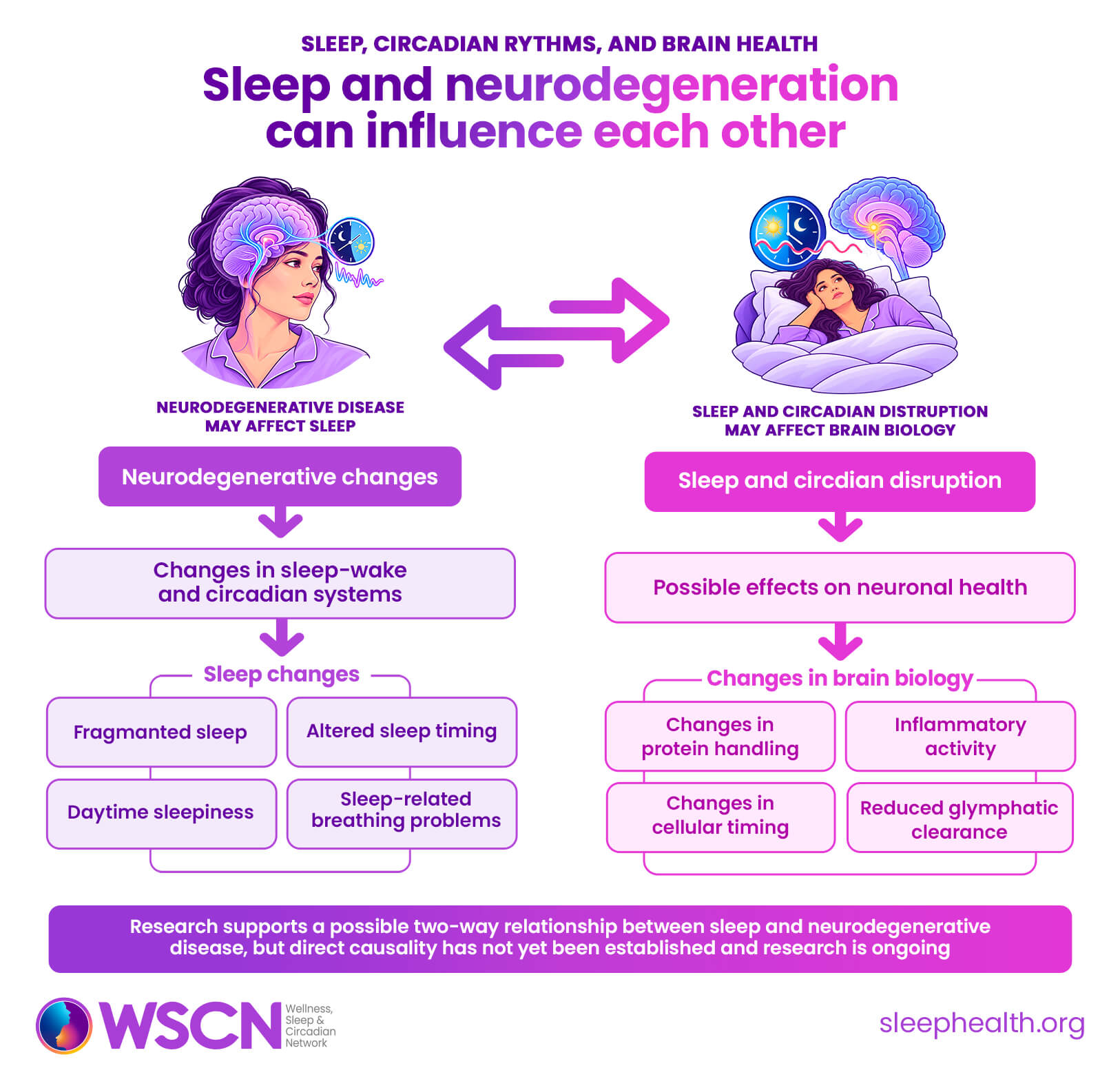
Deep sleep also supports the brain’s glymphatic system. This clearance network uses the movement of fluid around brain cells to remove metabolic waste, including soluble amyloid beta and tau proteins. Fragmented sleep may make the glymphatic clearance  process less efficient. Longer periods of wakefulness may also increase the release of these proteins. Over time, an imbalance between production and clearance of these proteins may contribute to abnormal accumulation in the brain.

Alzheimer-related changes can then affect the systems that control sleep. Tau pathology can involve wake-promoting neurons in the locus coeruleus, a brainstem region that helps maintain alertness and supports transitions between sleep and wakefulness. Changes can also occur in the suprachiasmatic nucleus, which serves as the brain’s main circadian clock. Damage in these regions may weaken the signals that keep daytime activity and nighttime sleep aligned.

This may create a self-reinforcing cycle. Sleep disruption can interfere with protein clearance, while damage to sleep-wake and circadian systems can further fragment sleep. The exact direction and strength of these relationships are still being studied. Poor sleep does not mean a person has Alzheimer’s disease, and improving sleep has not been shown to prevent or reverse the condition.

How Alzheimer’s Disease Affects Daytime and Nighttime Routines

Alzheimer’s disease can affect the brain systems that regulate sleep, wakefulness, and circadian timing. The changes vary from person to person and may affect behavior, safety, and caregiver sleep.

Frequent nighttime waking

Sleep may become lighter and more broken. A person may wake repeatedly or remain awake for long periods during the night.

Daytime sleepiness or long naps

Poor nighttime sleep and changes in the body clock can shift more sleep into the daytime. Long or late naps may then make nighttime sleep more difficult.

Evening confusion or restlessness

Some people become more confused, anxious, or unsettled later in the day. This pattern is often called sundowning, although it does not occur in everyone and may have more than one cause.

Disorientation and nighttime safety

Memory and orientation changes can make nighttime waking confusing. A person may not recognize where they are, understand the time of day, or remember why they got out of bed. This can increase the risk of falls, wandering, or leaving the home.

Caregiver sleep disruption

Repeated waking and the need to monitor nighttime safety can affect caregivers’ sleep, health, and ability to continue providing care.

24-Hour View: Circadian Rhythm and Care in Alzheimer’s Disease

Sleep, behavior, activity, and caregiving are connected across the full 24-hour day. Looking at the overall pattern, rather than nighttime sleep alone, can help families and care teams plan more consistent routines and recognize meaningful changes.

How to Support Circadian Rhythm, Sleep, and Nighttime Safety for People with Alzheimer’s Disease

The best approach depends on what is disturbing sleep. Strategies should be adapted to the person’s abilities, preferences, usual routines, and stage of Alzheimer’s disease.

Supporting a clearer day-night pattern

A reasonably consistent wake time, exposure to daylight, regular meals, and suitable daytime activity can help reinforce the difference between day and night. Keeping the daytime active and predictable may also reduce long periods of inactivity and support sleepiness at bedtime.

Planning daytime rest

Daytime rest may be helpful, especially after a poor night. However, long naps or naps taken after 3 p.m. can make it harder to sleep at night. Notice whether the timing or length of naps is followed by more nighttime waking or evening restlessness.

Making the nighttime environment safer

Keep walking routes clear, reduce fall hazards, and make the bathroom easy to find. Familiar surroundings and soft lighting can reduce confusion after waking. A calm, reassuring approach may also help if the person is frightened or disoriented.

Checking for discomfort 

Pain, constipation, urinary symptoms, breathing problems, hunger, thirst, or feeling too hot or cold can all disturb sleep. Because a person with Alzheimer’s disease may have difficulty explaining what is wrong, changes in movement, facial expression, behavior, or appetite may provide important clues.

Reviewing medications

Medication timing and side effects should be reviewed with the care team, particularly when sleep or behavior changes after a medicine is started or adjusted. Some medicines may contribute to confusion, balance problems, vivid dreams, nighttime alertness, or daytime drowsiness.

Including caregiver needs

Nighttime care plans should also consider caregiver sleep, health, and ability to provide safe care. Repeated waking and supervision can become difficult to manage over time. Families may need support from clinicians, home-care services, respite programs, or community dementia organizations.

Other causes of sleep problems in Alzheimer’s disease

It is important to recognize that some sleep problems may not be directly caused by Alzheimer’s disease.  Physical discomfort, illness, emotional distress, medication changes, and separate sleep disorders such as sleep apnea can also disrupt sleep. Changes in the home or care setting can also play a role. This is especially important when the person has difficulty communicating pain, urinary symptoms, constipation, or other sources of discomfort.

When Sleep Changes in People with Alzheimer’s Disease Need Clinical Review

Sleep and circadian patterns can provide useful clues about neurological health. Changes in sleep may sometimes reflect changes in an underlying neurological condition before daytime symptoms become more obvious. This is especially relevant in Alzheimer’s disease, where sleep and circadian disruption are common and may occur alongside changes in cognition and daily function.

In some neuromuscular disorders, changes in sleep or nighttime breathing may provide an early sign that the condition is changing and could prompt treatment review before daytime symptoms worsen.

Contact the care team when sleep or behavior changes suddenly or becomes harder to manage. This includes new wandering or falls, sleeping much of the day and staying awake much of the night, sudden increase in daytime napping or sleepiness, or situations in which nighttime care is no longer safe.

A sudden increase in confusion may be caused by infection, pain, dehydration, constipation, medication side effects, or another medical condition rather than Alzheimer’s progression. Sudden confusion with fever or another major change in health requires prompt medical evaluation. Loud snoring, gasping, or pauses in breathing should also be discussed, as these may indicate sleep apnea, which can be assessed and treated separately.

For a fuller list of neurological sleep warning signs, see sleep & circadian, the brain, and neurological conditions.

References


Medical disclaimer
This article is for educational purposes only and is not intended to replace professional medical advice, diagnosis, or treatment. Speak with a qualified healthcare professional about questions or concerns related to your sleep. Read full medical disclaimer

Continue reading

Brain and Nervous System Health

Sleep and circadian regulation are essential to brain health. The brain and nervous system help regulate sleep and wakefulness, as well as movement, breathing, pain, mood, memory, and thinking. Changes in sleep, circadian rhythm, and daily alertness can provide valuable clues and insights about neurological health.

The relationship works both ways. Neurological conditions can make people more vulnerable to sleep, wake, and circadian rhythm disorders. In turn, these disorders can affect quality of life and make neurological conditions harder to control. They can also contribute to disease progression and, depending on the condition, increase the risk of serious complications or death. Recognizing and addressing these problems is therefore an important part of neurological care, with the potential to improve health and well-being across all 24 hours.

This page is designed to help patients and caregivers recognize patterns and prepare for a more focused conversation with a physician. It is not meant to diagnose neurological or sleep disorders.

Overview

  • The brain and nervous system play a central role in sleep, circadian rhythm, alertness, memory, mood, and daily function.
  • Neurological conditions can disturb sleep in many ways, including through symptoms, medication effects, breathing changes, or changes in the sleep-wake cycle.
  • The relationship works both ways. Poor sleep can make neurological symptoms harder to manage.
  • Each neurological condition has its own sleep pattern and needs specific guidance.
  • Sleep and circadian patterns can provide useful clinical clues and are worth discussing as part of neurological care.
  • Tracking sleep and symptoms across the full day and night can help patients, caregivers, and clinicians identify useful patterns.

ON THIS PAGE

How Sleep and the Nervous System Are Connected

Sleep is an active brain process, not simply a period of rest. The brain and nervous system help control sleep timing and the transitions between sleep and wakefulness. Different sleep stages support different functions. Non-REM sleep helps strengthen memories, while REM sleep contributes to emotional processing and some forms of learning. Deep sleep is also linked with processes that help maintain brain health, including the clearance of metabolic waste.

Several related functions can affect sleep and daily life:

  • Sleep and wakefulness: Brain systems help control alertness, sleepiness, and transitions between sleep and waking.
  • Circadian rhythm: The body clock helps coordinate sleep timing with light, activity, hormones, body temperature, and daily routine.
  • Movement and comfort: Changes in movement, stiffness, pain, or restlessness can make it harder to fall asleep or stay asleep.
  • Breathing and safety: Some neurological conditions can affect breathing during sleep, nighttime awareness, or safety overnight.
  • Memory, mood, and thinking: Sleep and brain function are closely linked, so disrupted sleep can affect cognition, mood, and daytime performance.

These connections help explain why neurological conditions can affect both sleep and daytime life.

How Neurological Conditions Can Affect Sleep and Circadian Rhythm

Neurological conditions can disturb sleep in different ways. Because the causes vary, it helps to look at the specific condition, the sleep concern, and how symptoms change across the day and night.

Common reasons sleep may be disrupted include:

  • Changes in the sleep-wake cycle: A person may feel sleepy during the day, wide awake at night, or have trouble keeping a regular sleep schedule due to changes in the parts of the brain that regulate circadian rhythm.
  • Involuntary movement or discomfort: Tremor, stiffness, spasms, restless legs, pain, headaches, or bladder symptoms can make sleep harder.
  • Seizures or unusual nighttime events: Some seizures happen during sleep or around waking and may be noticed through injuries, confusion, or caregiver observations.
  • Confusion or safety concerns: Nighttime confusion, wandering, or reduced awareness can affect both sleep and safety.
  • Medication effects: Some neurological medications can affect sleep, dreams, alertness, or daytime sleepiness.
  • Disrupted routines: Hospital care, surgery, injury, rehabilitation, or changes in daily activity can affect sleep timing.

Note: Sleep problems in people with neurological conditions may have more than one cause. Stress, pain, medications, sleep apnea, insomnia, depression, anxiety, and changes in routine can overlap. Sleep and circadian disorders can also be overlooked when problems are attributed only to the neurological condition. A careful assessment can help identify what is contributing to the problem.

How Poor Sleep Can Affect Brain Function and Neurological Symptoms

Poor sleep does not usually cause neurological symptoms on its own, but it can make existing symptoms harder to manage. When sleep is poor, it can affect memory, concentration, mood, pain control, balance, fatigue, and daytime alertness. It may also make headaches, migraines, seizure control, or recovery after stroke, brain injury, or surgery more difficult for some people.

These effects can also place more strain on caregivers. Tracking changes across the day and night can help patients, caregivers, and clinicians see whether sleep is contributing to symptoms and whether further evaluation and treatment are needed.

Note: Fatigue and sleepiness are not the same. Sleepiness means a tendency to fall asleep. Fatigue means low energy or exhaustion, even when a person may not fall asleep easily. Both can occur in neurological conditions.

24-Hour View: Circadian Rhythm and Whole-Day Health

Sleep and the circadian rhythm are part of the same 24-hour cycle. How a person sleeps at night can shape how they feel the next day. The day also shapes the night, because daily routines and symptoms can influence how easily the body settles into sleep.

For people living with neurological conditions, this whole-day view can be especially useful. Looking at daytime changes alongside what happens overnight can help identify patterns, recognize treatable problems, and support better health across all 24 hours. 

Neurological Sleep Concerns That May Need Medical Attention

Sleep changes are common in many neurological conditions, but some symptoms should be discussed with a clinician promptly. This is especially important when sleep problems are new, getting worse, or affecting safety.

Patients or caregivers should seek medical advice for:

  • Acting out dreams, kicking, punching, or falling out of bed, especially if it causes injury or occurs with movement, memory, or balance changes
  • New nighttime confusion, wandering, or unsafe behavior
  • Possible seizures during sleep
  • Waking with unexplained injuries, tongue biting, or loss of bladder control
  • Sudden severe headache or new neurological symptoms
  • Severe daytime sleepiness, drowsy driving, or falls
  • Sleep changes after starting or changing neurological medication
  • Loud snoring, gasping, or breathing pauses, especially with stroke, dementia, Parkinson’s disease, or major daytime sleepiness

A clinician can help identify what may be contributing to the symptoms. This may begin with a review of the neurological condition and any recent medication changes. Further evaluation may focus on a possible sleep or circadian disorder and, when appropriate, include a sleep study.

Sudden symptoms such as facial drooping, weakness on one side, trouble speaking, loss of consciousness, or the worst headache of a person’s life should be treated as urgent medical concerns rather than routine sleep problems. If you or someone with you is experiencing these symptoms, call emergency services immediately. 

Related Condition: Sleep Apnea

Sleep apnea is not a neurological condition, but it can be important when neurological symptoms and sleep problems overlap. It can contribute to daytime sleepiness, problems with thinking or mood, high blood pressure, and slower recovery after stroke. It may also be worth considering in people with dementia, Parkinson’s disease, or other neurological conditions who have sleep concerns.

Learn more

What to Track Before an Appointment

Sleep concerns are easier to discuss when patients and caregivers can describe what is happening across the full day and night. A short record can help a clinician see patterns. This can help clinicians determine what type of assessment or treatment may be most helpful.

Useful things to track include:

  • Bedtime and wake time 
  • Night wakings 
  • Daytime sleepiness or naps 
  • Falls, confusion, wandering, or unsafe nighttime behavior 
  • Possible seizures during sleep 
  • Dream enactment or unusual movements 
  • Headaches or pain on waking 
  • Breathing pauses, choking, gasping, or loud snoring 
  • Medication timing and recent medication changes 
  • Caregiver observations
  • Relevant changes in activity, meals, caffeine, or alcohol      

It can also help to write down questions or concerns before the appointment. Taking notes during the visit can make it easier to remember next steps, especially if the clinician recommends medication changes, a neurological assessment, a sleep study, or other support. 

References


Medical disclaimer
This article is for educational purposes only and is not intended to replace professional medical advice, diagnosis, or treatment. Speak with a qualified healthcare professional about questions or concerns related to your sleep. Read full medical disclaimer

Continue reading