
Sleep & Circadian Health
Sleep, Circadian, and Performance
The definition of performance looks and feels different for every person, but good performance always depends on how well the brain and body have recovered, and how well they are timed to the demands of the day. A championship race, a final exam, a board meeting, and a night of parenting a newborn all draw on the same foundations. Sleep provides recovery, circadian rhythm provides timing. When there is optimal alignment across these body rhythms and the tasks at hand, our performance is better. On the other hand, performance can be negatively impacted when sleep is poor or when our circadian rhythm is not matched to a task.
Overview
- Sleep and circadian rhythm are core pillars of physical and mental performance, alongside preparation, nutrition and exercise
- The brain and body complete much of their recovery, learning, and adaptation during sleep, so rest is part of training/preparing rather than time away from it
- Aligned circadian rhythms support reaction time, speed, endurance, power, learning, decision making, and emotional regulation
- Performance naturally varies across the day, which raises practical questions about the best times for racing, exams, and important meetings
- Protecting sleep matters at every level, from elite sport to classrooms, workplaces, and family life.
- Training, in the context of this page, can refer to any type of preparation for an important task: training for a race, studying for an exam, preparing a work presentation, or making a big family decision
What does sleep do for performance?
Sleep is an active biological state in which the brain and body carry out essential work. During deep non-REM sleep, the body supports physical repair, immune function, and energy regulation, and releases growth hormone that helps tissues recover after hard training. During REM sleep, the brain processes and stores what was learned during the day and supports emotional processing.
In this sense, sleep is when adaptation to the stresses of training is made. An athlete who trains hard but sleeps little gains less from each session. A student who studies hard into the night but cuts sleep loses much of the benefit, because memory consolidation happens largely during sleep. Sleep is not the end of training; it is the step that converts effort into progress.
Can better sleep improve performance?
Physical and athletic performance
Research suggests that it can. In a study of collegiate basketball players, athletes who extended their nightly sleep toward ten hours for several weeks ran faster timed sprints, improved free throw and three point shooting accuracy by roughly nine percent, and reported better games with less fatigue. The improvements appeared within weeks, which makes sleep one of the most accessible performance tools available.
Sleep loss works in the opposite direction. A recent meta-analysis of experimental studies found that insufficient sleep measurably reduced endurance, explosive power, maximum strength, speed, and skill control in athletes, increased the sense of effort during exercise, and was linked with higher injury risk. Even moderate sleep restriction weakens attention, working memory, and judgment, which matters in meetings, classrooms, and driving as much as on the field.
Mental and emotional performance
The same pattern holds for learning, problem solving, and emotional work. In a study of preschool children, an afternoon nap after a memory game helped children remember what they had learned later that day and the next morning, while children who stayed awake forgot more. In a college study, students who slept 8 hours or more before a final exam did better than those who slept 7.9 hours or less, even when controlling for pre-final grades.
In a study of problem solving, participants who slept on a number puzzle were more than twice as likely to discover a hidden rule that made the puzzle easier to solve. Sleep supports insight as well as memory.
Sleep also protects emotional performance. Healthy adults restricted to five hours of sleep for five nights showed increased emotional reactivity. A meta-analysis covering more than fifty years of experiments found that sleep loss consistently worsens mood, heightens anxiety, and weakens the ability to regulate emotion. Steady sleep supports the emotional control and clear thinking that exams, meetings, relationships, and parenting depend on.
What is the best time of day for athletic performance?
Circadian rhythm shapes how the body performs across the day. In studies of elite athletes, physical performance is generally lowest in the early morning and highest in the late afternoon and early evening, and the gap between an athlete’s biological best and worst times of day can reach twenty six percent. A sprinter scheduled to race at seven in the morning is not competing in the same body as one racing at three in the afternoon, because body temperature, muscle function, and alertness all follow a daily rhythm that naturally varies.
There is no single best time for everyone. Each person has a chronotype, a natural tendency toward earlier or later body clock timing, and personal performance peaks shift accordingly. Evening types face a particular disadvantage in early morning competitions, and morning types lose their edge in late evening events. Understanding these timing natural patterns can help a person understand when performance is best – and use this to take ownership of all 24 hours. This could mean planning an important meeting during times of peak alertness, or signing up for sports events that start at a time when the body is primed for athletic outputs.
Is there an optimal time for exams or important meetings?
Timing effects also appear in mental work. An analysis of results from all children attending Danish public schools found that standardized test performance decreased for every hour later in the day, while a twenty to thirty minute break improved average scores. Mental fatigue builds across the day, and thoughtful scheduling can partly offset it.
Sleep habits matter as much as clock time. Research that tracked college students for several months with sleep monitors found that on-going positive sleep duration, consistency, and quality were all associated with better grades. For important exams and meetings, arriving rested matters more than last-minute extra preparation.
When a broken night matters: the Tour de France example
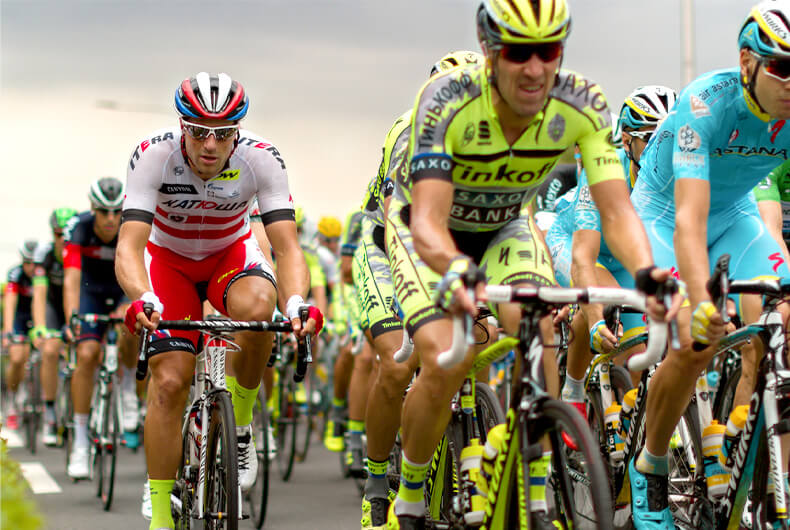
The stakes of a broken night reached a wide audience during the 2026 Tour de France. Race leader Tadej Pogacar and his main rival Jonas Vingegaard were woken in the early hours for doping controls: Vingegaard at 2 am and Pogacar at 5 am. Vingegaard said he could not return to sleep after the test. He crashed heavily on the first Alpine stage that same day, broke his collarbone, and left the race. Pogacar described the 2am test as inhuman and suggested that the broken night might have contributed to the crash.
The causes of a crash are never certain, and no evidence established the disrupted sleep as the direct cause. The case nevertheless raised a fair question. When sleep loss is known to slow reaction time and raise injury risk, should testing and other demanding protocols be scheduled with more respect for circadian timing and for the safety importance of sleep? The same question applies to shift work, on-call schedules, and any system that asks people to perform after fragmented sleep.
Sleep and circadian rhythm as pillars of performance
When performance problems deserve attention
Occasional poor sleep is normal. Persistent loud snoring, breathing pauses during sleep, extreme daytime sleepiness, long-standing trouble falling or staying asleep, or performance that stays below expectations despite enough time in bed may signal a sleep or circadian disorder. These conditions are common, evaluation is straightforward, and treatment can make a measurable difference. Speaking with a primary care practitioner or sports physician can be an excellent first step to taking ownership of health across all 24 hours.
Charest, J., & Grandner, M. A. (2020). Sleep and athletic performance: Impacts on physical performance, mental performance, injury risk and recovery, and mental health. Sleep Medicine Clinics, 15(1), 41–57. https://doi.org/10.1016/j.jsmc.2019.11.005
Facer-Childs, E. R., & Brandstaetter, R. (2015). The impact of circadian phenotype and time since awakening on diurnal performance in athletes. Current Biology, 25(4), 518–522. https://doi.org/10.1016/j.cub.2014.12.036
Kong, Y., Yu, B., Guan, G., Wang, Y., & He, H. (2025). Effects of sleep deprivation on sports performance and perceived exertion in athletes and non-athletes: A systematic review and meta-analysis. Frontiers in Physiology, 16, 1544286. https://doi.org/10.3389/fphys.2025.1544286
Kurdziel, L., Duclos, K., & Spencer, R. M. C. (2013). Sleep spindles in midday naps enhance learning in preschool children. Proceedings of the National Academy of Sciences, 110(43), 17267–17272. https://doi.org/10.1073/pnas.1306418110
Mah, C. D., Mah, K. E., Kezirian, E. J., & Dement, W. C. (2011). The effects of sleep extension on the athletic performance of collegiate basketball players. Sleep, 34(7), 943–950. https://pmc.ncbi.nlm.nih.gov/articles/PMC3119836/
Okano, K., Kaczmarzyk, J. R., Dave, N., Gabrieli, J. D. E., & Grossman, J. C. (2019). Sleep quality, duration, and consistency are associated with better academic performance in college students. npj Science of Learning, 4, 16. https://doi.org/10.1038/s41539-019-0055-z
Palmer, C. A., Bower, J. L., Cho, K. W., Clementi, M. A., Lau, S., Oosterhoff, B., & Alfano, C. A. (2024). Sleep loss and emotion: A systematic review and meta-analysis of over 50 years of experimental research. Psychological Bulletin, 150(4), 440–463. https://doi.org/10.1037/bul0000410
Scullin, M. K. (2019). The eight hour sleep challenge during final exams week. Teaching of Psychology, 46(1), 55–63. https://doi.org/10.1177/0098628318816142
Sievertsen, H. H., Gino, F., & Piovesan, M. (2016). Cognitive fatigue influences students’ performance on standardized tests. Proceedings of the National Academy of Sciences, 113(10), 2621–2624. https://doi.org/10.1073/pnas.1516947113
Tempesta, D., Salfi, F., De Gennaro, L., & Ferrara, M. (2020). The impact of five nights of sleep restriction on emotional reactivity. Journal of Sleep Research, 29(5), e13022. https://doi.org/10.1111/jsr.13022
Wagner, U., Gais, S., Haider, H., Verleger, R., & Born, J. (2004). Sleep inspires insight. Nature, 427(6972), 352–355. https://doi.org/10.1038/nature02223
This article is for educational purposes only and is not intended to replace professional medical advice, diagnosis, or treatment. Speak with a qualified healthcare professional about questions or concerns related to your sleep. Read full medical disclaimer
