
Personal learnings from SLEEP and #BeyondSleepy 2026

A Reflection By Rachel Nesmith

Resilience and hope

Attending the Hypersomnia Foundation’s Beyond Sleepy Conference and SLEEP 2026 in Baltimore, Maryland, was more than just an educational experience for me. As someone living with severe, full-spectrum Type 1 narcolepsy with cataplexy, it was a reminder that while this disease impacts every aspect of my life, I am not fighting it alone. The conferences gave me hope, strengthened my resilience, and allowed me to see firsthand how rapidly the field of sleep medicine is advancing.

One of the most exciting things I learned was about the new orexin agonist medications currently moving through the pipeline toward FDA approval. For decades, narcolepsy treatment has largely focused on managing symptoms. We have relied on stimulants, wake-promoting medications, nighttime treatments, antidepressants, and lifestyle modifications to help us function. While these treatments can be life-changing, they do not address the root cause of narcolepsy.

For people like me who have Type 1 narcolepsy, the loss of orexin-producing neurons in the brain is the underlying problem. Hearing researchers and physicians discuss medications designed to replace or mimic orexin felt revolutionary. For the first time, I could envision a future where treatment may target the biological cause of the disease rather than simply helping us cope with its symptoms. Listening to presentations about these emerging therapies gave me hope not only for myself but also for future generations diagnosed with narcolepsy.
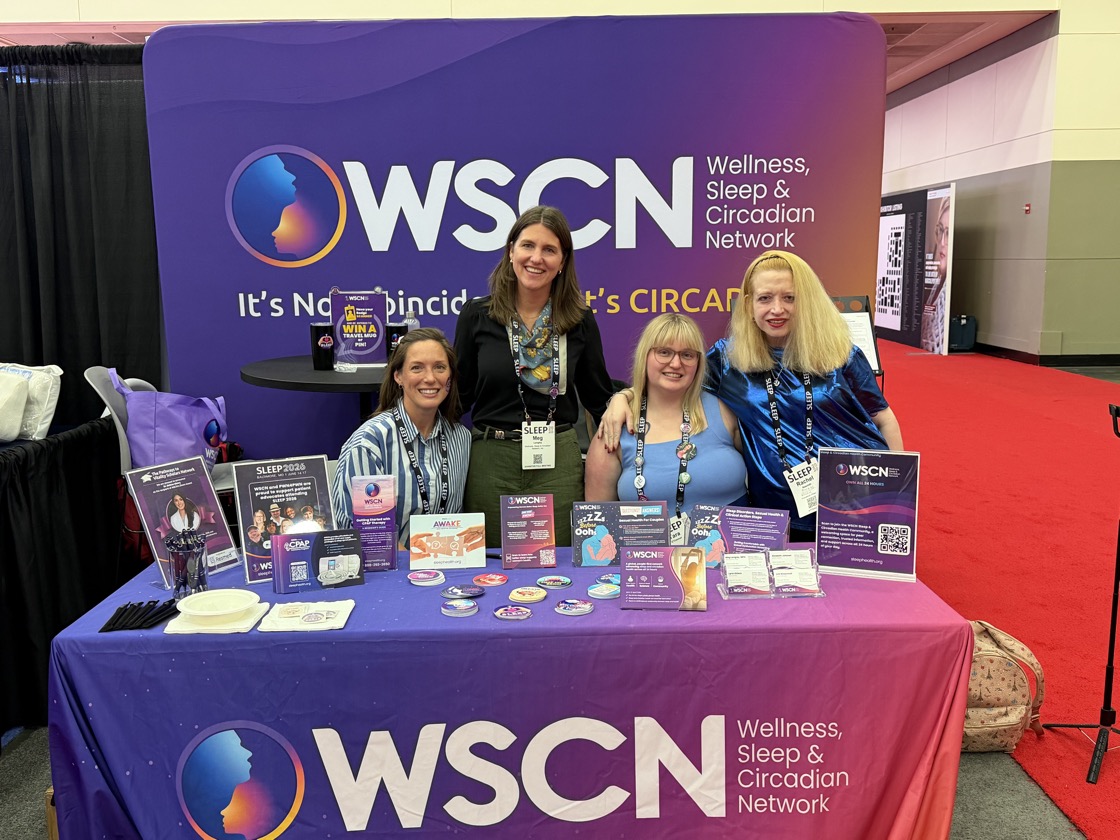
Rachel (right) at the WSCN booth at SLEEP 2026.
Lessons and the silver lining

The conferences also reminded me that even as science advances, living with narcolepsy remains incredibly challenging. During my trip, I experienced one of those difficult reminders in a very public way. I suffered a sleep attack and fell, hitting my head. It was frightening and embarrassing. Moments like these highlight the reality that narcolepsy is not simply “being sleepy.” Sleep attacks can happen suddenly and without warning. They can lead to injuries, lost opportunities, and disruptions that most people never have to think about.

Yet as I reflected on that incident, I realized how far I have come. Years ago, an event like that might have sent me home feeling defeated. Instead, I got back up, received the care I needed, and continued participating in the conference. That is resilience. Living with narcolepsy has taught me that resilience is not about avoiding setbacks. It is about finding a way forward despite them.

Strength in community

Another lesson reinforced throughout the week was the importance of community. At Beyond Sleepy and SLEEP 2026, I met patients, caregivers, researchers, clinicians, and advocates who understand the challenges of sleep disorders. There is something powerful about being surrounded by people who do not need an explanation for what cataplexy feels like or why excessive daytime sleepiness can be so disabling. These conversations reminded me that every person in the sleep community contributes to progress.

I was inspired by fellow patients who shared stories of perseverance despite tremendous obstacles. Some were students working toward degrees while managing debilitating symptoms. Others were parents balancing family responsibilities with chronic illness. Many were advocates dedicating their time and energy to improving awareness and advancing research. Their stories reminded me that strength comes in many forms.

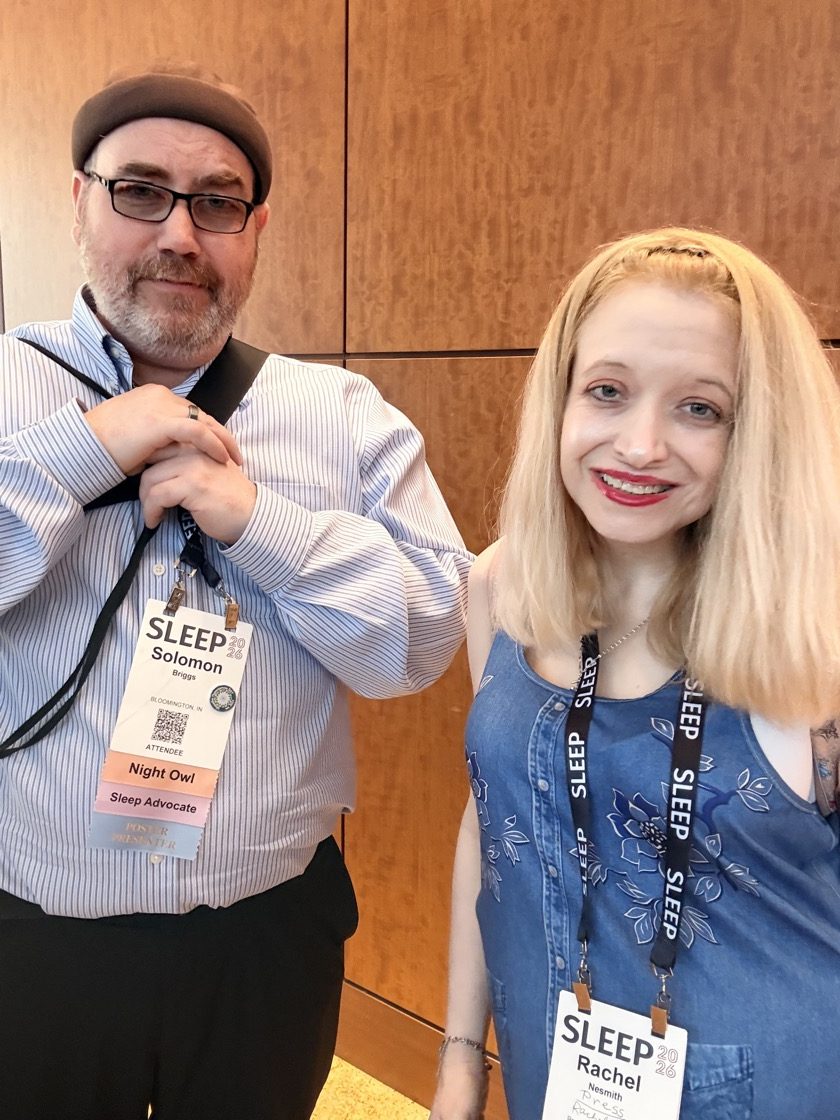
Rachel with friend and patient advocate Sol Briggs.
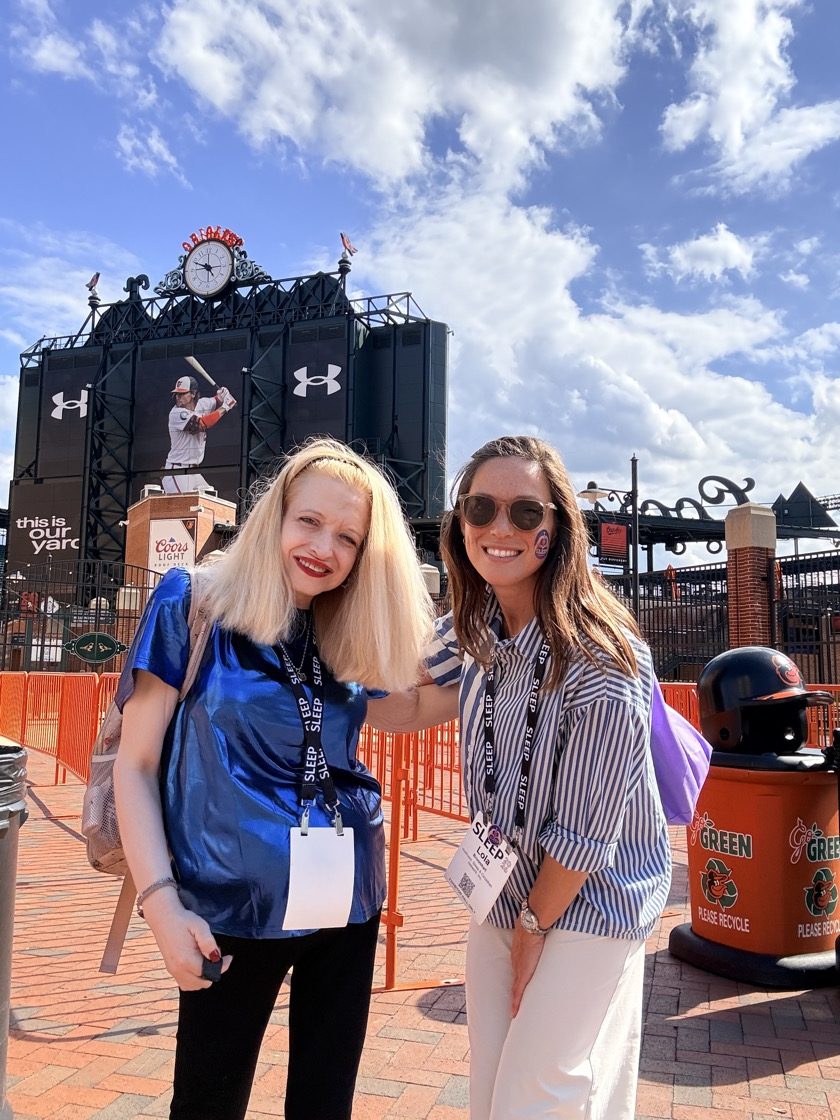
Rachel with WSCN Program Manager Lola Broomhall, getting some sun between conference events.

Reflections upon living with narcolepsy

The conferences also gave me an opportunity to reflect on my own journey. This year, I reached an important milestone by losing 70 pounds through participation in a clinical trial. Becoming healthier has not cured my narcolepsy, but it has improved my overall well-being and given me greater confidence. Losing weight required commitment, patience, and persistence—qualities that living with narcolepsy has forced me to develop over many years.

My journey has never been easy. Narcolepsy and cataplexy interrupt my plans, affect my independence, and create challenges that most people cannot see. There are days when overwhelming sleepiness makes even simple tasks difficult. There are moments when cataplexy steals control of my muscles without warning. There are times when I feel frustrated by the limitations imposed by a condition I did not choose.

Despite those challenges, I continue to work hard to build a meaningful life. I advocate for the narcolepsy community. I support others who are navigating their own diagnoses. I share my story so that people better understand what it means to live with this disease. Every obstacle I overcome becomes an opportunity to help someone else feel less alone.

Essential takeaways

As I left Baltimore, I carried home more than conference materials and notes. I carried hope. Hope from the scientific breakthroughs that are bringing us closer to better treatments. Hope from the dedicated researchers and clinicians working tirelessly to improve patient outcomes. Hope from the incredible people in the sleep disorder community who demonstrate courage every day.

Most importantly, I carried a renewed appreciation for my own resilience. Narcolepsy may knock me down—sometimes literally—but it has never kept me down. Whether I am recovering from a sleep attack, adapting to unexpected symptoms, or pursuing new goals, I continue moving forward.

Beyond Sleepy and SLEEP 2026 reminded me that progress is happening. The future of narcolepsy treatment is brighter than ever, and the strength of our community is undeniable. While my journey with narcolepsy continues, I left Baltimore feeling empowered, encouraged, and optimistic about what lies ahead.

Being a WSCN Patient Advocate

“WSCN’s generous support made it possible for me to attend #BeyondSleepy and SLEEP 2026, where I learned about promising new treatments and ensured the patient voice was heard. Their investment gave me hope, knowledge, and the opportunity to advocate for better care for everyone living with narcolepsy”.
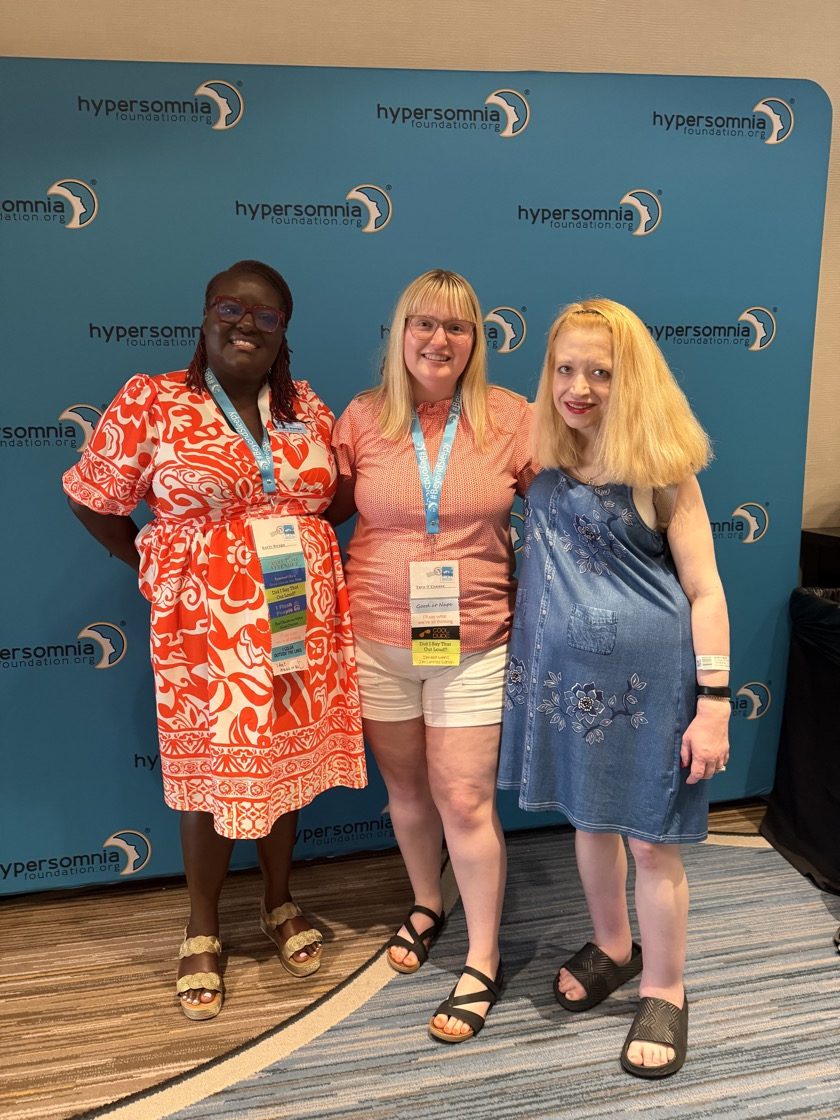
Rachel Nesmith (right) attending with other WSCN Patient Advocates Kerly Bwoga and Tara O’Connor.

WSCN’s Pathways to Vitality Scholars Network is a global scholarship and fellowship initiative designed to empower emerging and established voices in wellness, sleep, and circadian health. This program bridges the gaps between knowledge and access, science and practice, day and night, local and global, helping individuals expand their learning, share their insights, and lead transformative change in health and wellbeing.

To find out more and apply for a scholarship, visit our Pathways to Vitality Scholars Network page.