
Sleep & Circadian Disorders

Insomnia

Insomnia is a sleep disorder in which a person has ongoing difficulty falling asleep, staying asleep, or waking too early, even when there is enough opportunity to sleep. Although insomnia is experienced primarily at night, its effects extend across the entire 24 hours. It can affect daytime energy, mood, concentration, and overall quality of life.

This page focuses on adult insomnia. Children and teens can also experience insomnia, but causes, assessment, and treatment approaches may differ. See Insomnia in Children and Teens.

Overview

  • Insomnia involves ongoing difficulty falling asleep, staying asleep, or waking too early, along with daytime distress or difficulties functioning
  • Chronic insomnia typically occurs at least three nights per week for three months or longer
  • Insomnia can affect daytime energy, mood, concentration, and the ability to carry out everyday activities
  • Insomnia can have several contributing factors, including stress, other health conditions, medications, and disrupted sleep schedules
  • Cognitive behavioral therapy for insomnia (CBT-I) is the recommended first-line treatment for adults with chronic insomnia
  • Sleep medications can help some people, but treatment should be tailored to individual needs and discussed with a healthcare professional

Understanding insomnia

Most adults experience occasional sleep difficulties because of stress, illness, travel, or changes in their daily routines. Insomnia disorder is different. It involves persistent sleep difficulties that cause distress or interfere with everyday life.

Insomnia can take several forms:

  • Sleep-onset insomnia: Difficulty falling asleep
  • Sleep-maintenance insomnia: Difficulty staying asleep
  • Early-morning awakening: Waking earlier than intended and being unable to return to sleep
  • Non-restorative sleep: Sleep that does not feel refreshing, even when the person spends enough time in bed

Insomnia can be short-term or chronic. Short-term insomnia often occurs during stressful periods or changes in circumstances and may last days or weeks. Chronic insomnia typically occurs at least three nights per week for three months or longer and affects daytime functioning.

Insomnia can affect adults of any age, although it is more common in women and older adults. People experiencing chronic pain, mental health conditions, or ongoing stress are also at greater risk.

Signs and symptoms

Insomnia affects more than nighttime sleep. Its effects can extend throughout the day, influencing how we feel and function.

Nighttime symptoms

A person may notice:

  • Difficulty falling asleep, sometimes lying awake for long periods
  • Waking frequently during the night
  • Waking too early and being unable to return to sleep
  • Feeling tense or frustrated in bed, often accompanied by racing thoughts or worries about sleep
  • Sleep that feels light, disrupted, or unrefreshing

Daytime symptoms

Insomnia can also affect daily life. Common symptoms include:

  • Fatigue or low energy
  • Daytime sleepiness, including unintentionally dozing off
  • Irritability, anxiety, or low mood
  • Difficulty concentrating, remembering information, or making decisions
  • Reduced motivation or difficulty performing everyday activities
  • Headaches or physical tension
  • Increased caffeine use or changes in napping habits
  • Greater risk of errors or difficulties staying alert while driving

It is useful to distinguish sleepiness from fatigue. Sleepiness means a tendency to doze or fall asleep. Fatigue means low energy or reduced capacity, even without a strong drive to sleep. A person with insomnia may experience one or both.

Understanding the Insomnia Loop

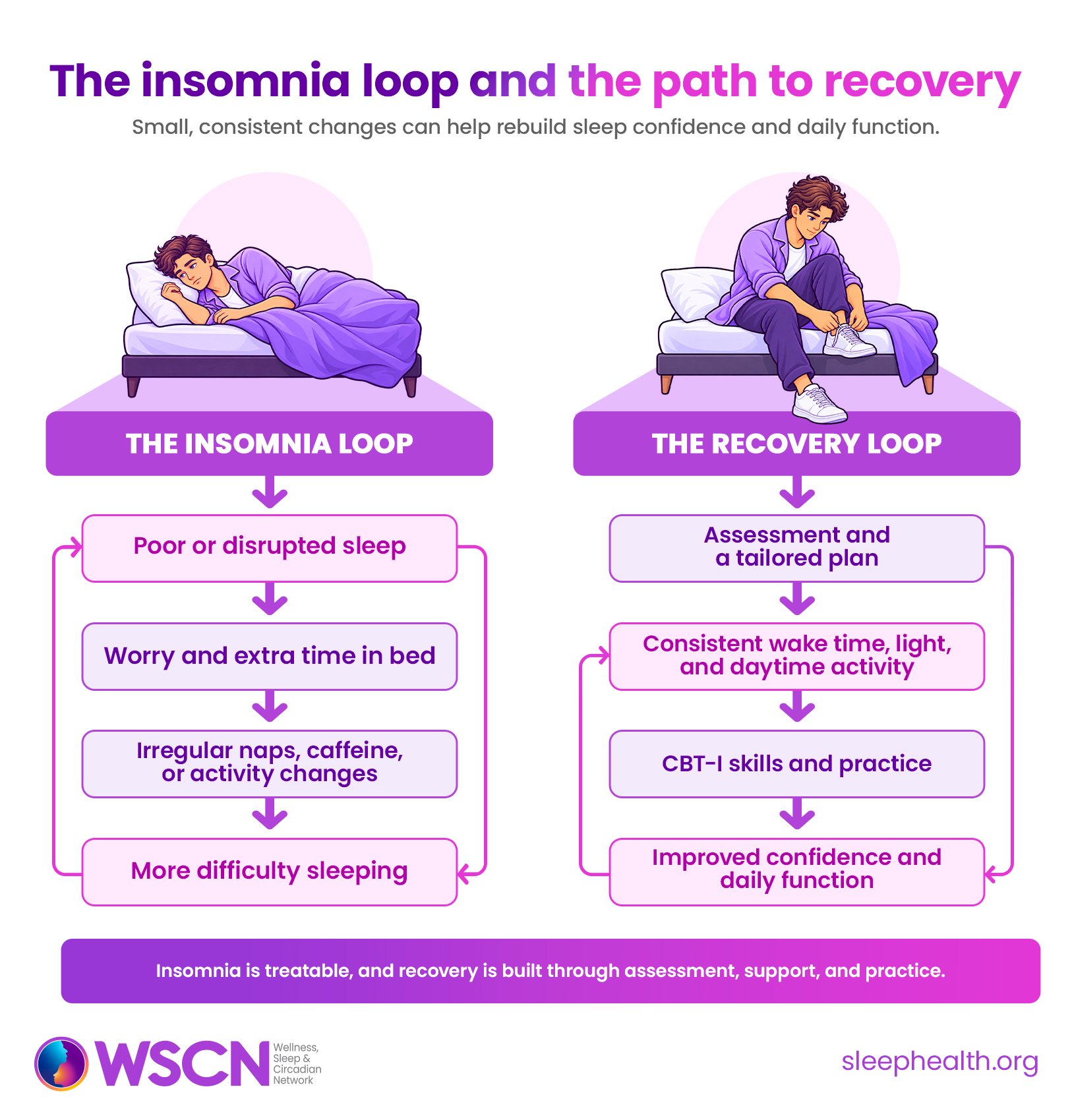
Over time, insomnia can become a self-reinforcing loop. Spending more time in bed trying to sleep, taking irregular naps, or worrying about another sleepless night can make it harder to sleep well.

Sleep also follows the body’s internal clock, or circadian rhythm. Irregular schedules, inconsistent wake times, and evening light exposure can interfere with this natural timing and make sleep difficulties harder to resolve.

Breaking this cycle does not mean trying harder to sleep. Small, consistent changes to daily routines, combined with effective treatment, can help rebuild healthier sleep patterns and confidence in sleep.
Screening and diagnosis

Insomnia is usually diagnosed by reviewing a person’s sleep history, symptoms, and how sleep difficulties affect everyday life. A healthcare professional will also look for factors that may be contributing to the problem.

Before an appointment, it can help to keep track of:

  • Sleep patterns: Bedtimes, wake times, how long it takes to fall asleep, nighttime awakenings, and naps
  • Daily habits: Caffeine and alcohol use, exercise, and light exposure
  • Health and wellbeing: Stress, mood, pain, daytime fatigue, and other symptoms that affect sleep
  • Medical history: Existing health conditions, medications, and any treatments already tried

A sleep diary covering one to two weeks can help identify patterns and provide useful information for diagnosis.

How insomnia is diagnosed

A healthcare professional may use several tools to assess insomnia, including:

  • Sleep diaries: Records of sleep patterns over one to two weeks
  • Questionnaires: Tools such as the Insomnia Severity Index to assess symptoms and their impact
  • Actigraphy: A wearable device that tracks movement and activity to help estimate sleep patterns
  • Medical review: Assessment of medications, health conditions, and other factors that could affect sleep

An overnight sleep study is not usually necessary to diagnose insomnia. However, it may be recommended if symptoms suggest another sleep disorder, such as sleep apnea or a sleep-related movement disorder.

When to talk with a healthcare professional

Talk with a healthcare professional if sleep difficulties persist, cause distress, or interfere with your daily life. You do not need to know what is causing your sleep problems before seeking help.

If you are too sleepy to drive or work safely, avoid these activities and seek prompt medical advice. If sleep problems are accompanied by thoughts of self-harm, seek immediate professional or emergency support.

Red Flag: Seek urgent medical care if symptoms or sleep loss are affecting a person’s ability to drive or work safely, or is causing severe distress or thoughts of self-harm.

What to bring to a doctor’s visit

A primary care physician is a good place to start for a sleep disorder evaluation. They can conduct preliminary screenings and recommend next steps for diagnosis. It can be helpful to bring information to an initial visit: try using WSCN’s Preparing to meet your new healthcare provider checklist.

Causes, risk factors, and health implications

Causes and risk factors

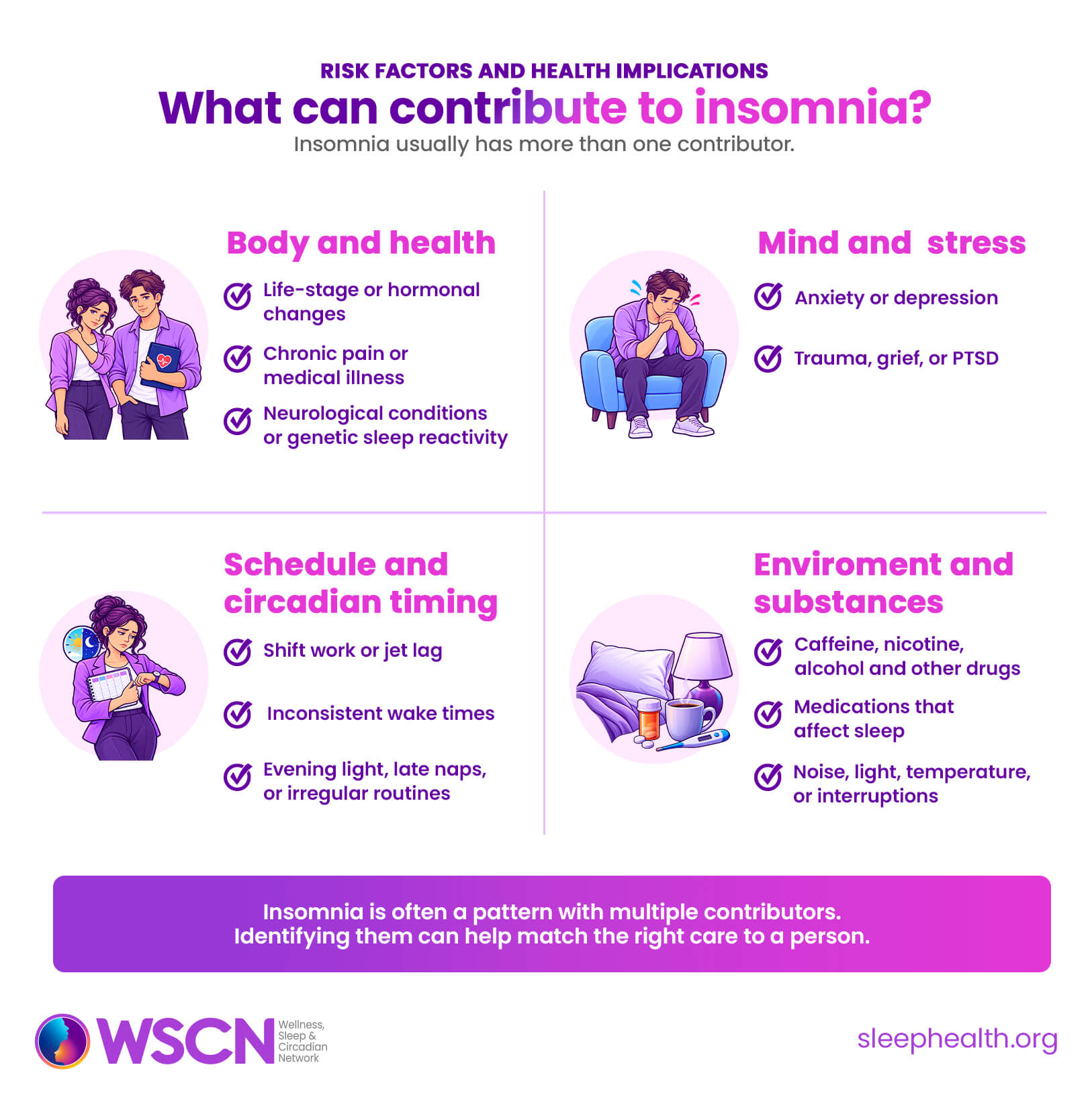
There is no one cause for insomnia, and it usually has more than one contributor.

  • Biological and life-stage factors may include age, sex hormones, pregnancy, perimenopause, menopause, chronic pain, medical illness, neurological conditions, and genetic or temperament differences in sleep reactivity
  • Mental health and stress factors may include anxiety, depression, trauma, grief, caregiving stress, work stress, PTSD, or a period of heightened alertness that does not switch off easily at night
  • Schedule and circadian factors may include shift work, jet lag, inconsistent wake times, evening light exposure, long or late naps, and irregular daily routines
  • Medication and substance factors may include caffeine, nicotine, alcohol, some antidepressants, stimulants, corticosteroids, decongestants, and other recreational drugs and medications that can affect sleep
  • Sleep environment and behavior factors may include noise, light, temperature, bed partner disruption, caregiving interruptions, spending long periods awake in bed, or using the bed for wakeful activities like TV

These factors are not personal failures. Identifying contributing factors helps match the treatment plan to the person.
Long-term health implications

Chronic insomnia can affect more than sleep and daytime wellbeing. Research has linked persistent insomnia to several long-term health concerns, although these relationships are complex and do not necessarily mean that insomnia directly causes these conditions.

Heart and blood vessel health: Chronic insomnia is associated with a higher risk of high blood pressure, cardiovascular disease, and stroke. Disrupted sleep can also affect the body’s stress response and blood pressure regulation.

Metabolic health: Persistent insomnia has been linked to changes in how the body regulates blood sugar and responds to insulin. Research has also found associations with an increased risk of type 2 diabetes.

Mental health: Insomnia is closely connected with depression and anxiety. The relationship works in both directions: insomnia can increase the risk of mental health problems, while depression and anxiety can make sleep difficulties worse.

Pain and inflammation: Poor sleep can increase sensitivity to pain and make existing chronic pain conditions harder to manage. Researchers are also studying how persistent sleep disruption affects inflammation.

Immune and overall health: Ongoing sleep disruption can affect immune function and recovery from illness. Insomnia can also reduce quality of life by making it harder to maintain relationships and participate in everyday activities.

These associations do not mean that everyone with insomnia will develop other health problems. However, they highlight why persistent insomnia deserves attention and effective treatment as part of overall health and wellbeing.

Treatment and management

Insomnia is treatable, and effective care can improve both nighttime sleep and daytime wellbeing. The best approach depends on a person’s symptoms, medical history, and individual needs.

Cognitive behavioral therapy for insomnia

Cognitive behavioral therapy for insomnia (CBT-I) is the recommended first-line treatment for adults with chronic insomnia. It helps people identify and change patterns of thinking and behavior that can keep sleep difficulties going.

CBT-I typically includes several approaches:

  • Sleep education: Understanding how sleep works and what influences it
  • Stimulus control: Helping the brain reconnect being in bed with sleeping rather than lying awake
  • Sleep restriction or sleep compression: Carefully adjusting time spent in bed to strengthen the natural drive to sleep
  • Cognitive strategies: Addressing worries and unhelpful thoughts about sleep

You can read more in our guide to CBT-I here.

Sleep medications

Prescription or over-the-counter sleep medications may be appropriate for some adults, especially for short-term situations or when insomnia is severe. Medication may reduce symptoms, but it does not always address the learned, behavioral, circadian, or medical contributors that keep insomnia going. Some people benefit from medication combined with CBT-I or another structured plan. Medication should always be discussed with and used as directed by a qualified healthcare provider.

Treating contributing conditions

If insomnia is related to pain, menopause symptoms, depression, anxiety, sleep apnea, restless legs syndrome, medication effects, or shift work, those factors may need direct treatment with the appropriate healthcare provider. For many adults, insomnia improves most when both the insomnia pattern and the contributing condition are addressed.

Research and what we are still learning

Researchers continue to study why insomnia develops and persists, and why some treatments work better for certain people than others. This includes identifying different biological patterns of insomnia and improving treatment for people who also have medical or mental health conditions.

Another important area of research is understanding how chronic insomnia affects long-term health, including cardiovascular and metabolic health. Researchers are also exploring how behavioral treatments and medications can be used most effectively and safely.

Improving access to effective treatment is another priority. Digital CBT-I programs and other approaches to delivering care are being studied as ways to help more people receive treatment, particularly those who have limited access to trained sleep specialists.

References

Edinger, J. D., Arnedt, J. T., Bertisch, S. M., et al. (2021). Behavioral and psychological treatments for chronic insomnia disorder in adults: An American Academy of Sleep Medicine clinical practice guideline. Journal of Clinical Sleep Medicine, 17(2), 255–262. https://doi.org/10.5664/jcsm.8986

Kim, J. W., Jain, A. B., & Khullar, A. (2025). Insomnia and cardiometabolic health: Bridging the gap between sleep deficit and disease prevention. Canadian Journal of Diabetes, 49(5–6), 342–350. https://doi.org/10.1016/j.jcjd.2025.04.008

Perlis, M. L., Posner, D., Riemann, D., et al. (2022). Insomnia. The Lancet, 400(10357), 1047–1060. https://doi.org/10.1016/S0140-6736(22)00879-0

Qaseem, A., Kansagara, D., Forciea, M. A., et al. (2016). Management of chronic insomnia disorder in adults: A clinical practice guideline from the American College of Physicians. Annals of Internal Medicine, 165(2), 125–133. https://doi.org/10.7326/M15-2175

Riemann, D., Espie, C. A., Altena, E., et al. (2023). The European Insomnia Guideline: An update on the diagnosis and treatment of insomnia 2023. Journal of Sleep Research, 32(6), e14035. https://doi.org/10.1111/jsr.14035

Simon, L., Steinmetz, L., Feige, B., et al. (2023). Comparative efficacy of onsite, digital, and other settings for cognitive behavioral therapy for insomnia: A systematic review and network meta-analysis. Scientific Reports, 13, Article 1929. https://doi.org/10.1038/s41598-023-28853-0

Sweetman, A. M., Lack, L. C., Catcheside, P. G., et al. (2017). Developing a successful treatment for co-morbid insomnia and sleep apnoea. Sleep Medicine Reviews, 33, 28–38. https://doi.org/10.1016/j.smrv.2016.04.004

van Straten, A., van der Zweerde, T., Kleiboer, A., et al. (2018). Cognitive and behavioral therapies in the treatment of insomnia: A meta-analysis. Sleep Medicine Reviews, 38, 3–16. https://doi.org/10.1016/j.smrv.2017.02.001

Zhang, X., Sun, Y., Ye, S., et al. (2024). Associations between insomnia and cardiovascular diseases: A meta-review and meta-analysis of observational and Mendelian randomization studies. Journal of Clinical Sleep Medicine, 20(12), 1975–1984. https://doi.org/10.5664/jcsm.11326


Medical disclaimer
This article is for educational purposes only and is not intended to replace professional medical advice, diagnosis, or treatment. Speak with a qualified healthcare professional about questions or concerns related to your sleep. Read full medical disclaimer