SEC Section: Sleep & Circadian Health

Wearable Sleep Tech

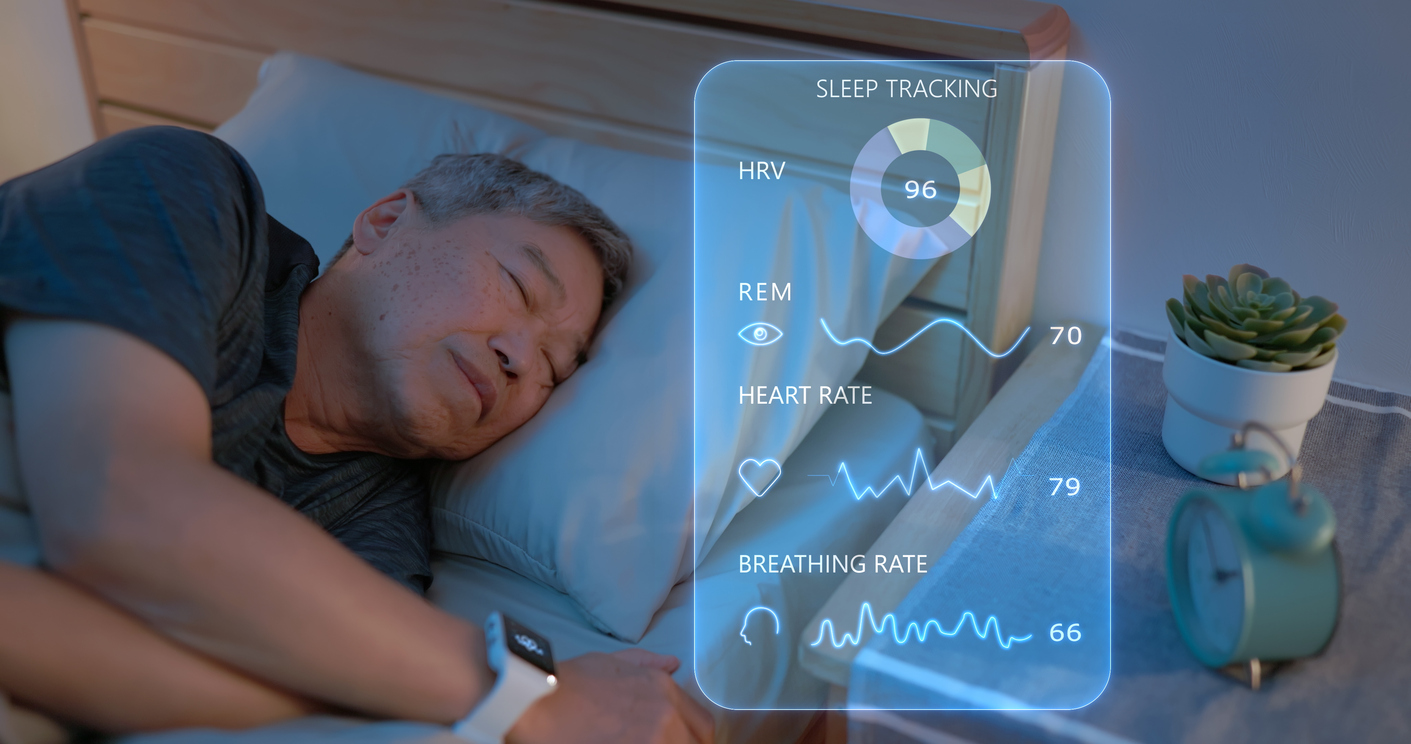
Smartwatches, rings, and bedside sleep trackers offer new ways to understand our sleep patterns and how they relate to our health. While these technologies can provide useful insights, they also have limitations. A sleep score, for example, cannot tell us everything about how well we sleep.

Understanding what sleep trackers can and cannot measure can help us make better use of the information they provide and support healthier sleep habits across all 24 hours.

Overview

  • Wearables estimate sleep indirectly from movement, heart rate and blood oxygen levels
  • Wearables detect sleep well but are less reliable for detecting wakefulness and specific sleep stages
  • Accuracy of wearables is assessed against polysomnography, known as the “gold standard” for assessing and diagnosing sleep disorders
  • Consumer wearables are most useful for revealing personal patterns and trends but cannot yet diagnose a sleep disorder 
  • Including your wearable device data in conversations with your health professional can add value and important insights about your wellbeing

Benefits of sleep trackers

Sleep trackers can help us better understand our sleep habits and identify opportunities for improvement. Some of the most useful benefits include:

  • Understanding sleep patterns: See when you typically fall asleep and wake up, how much sleep you get, and whether your schedule is consistent.
  • Recognizing what affects sleep: Explore how factors such as exercise, caffeine, alcohol, or stress relate to your sleep patterns.
  • Making positive changes: Use longer-term trends to see whether adjustments to your sleep routine are making a difference.
  • Supporting medical conversations: Share sleep patterns and concerns with a healthcare professional to help guide further assessment.

Sleep trackers also have limitations. Focusing too much on nightly scores can create unnecessary worry about sleep, sometimes called orthosomnia. A good sleep score does not necessarily mean someone is sleeping well, and trackers cannot reliably identify or rule out sleep disorders.

Types of wearable sleep technology

Sleep trackers use sensors to collect information about movement, heart rate, and sometimes skin temperature or blood oxygen levels. They use this information to estimate when we sleep and wake, how long we sleep, and sometimes our sleep stages.

Several types of devices are available:

  • Smartwatches and fitness bands: Devices such as Apple Watch, Fitbit, and Garmin track movement and heart rate to estimate sleep duration, timing, and sleep stages.
  • Smart rings: Devices such as Oura, Samsung Galaxy Ring, and Ultrahuman track similar signals through sensors worn on a finger. Some people find rings more comfortable to wear at night.
  • Clinical actigraphy devices: These wrist-worn devices primarily measure movement and are used by healthcare professionals to assess sleep-wake patterns over time, often alongside a sleep diary.
  • Bed and bedside trackers: Under-mattress sensors, bedside devices, and some smartphone apps estimate sleep without requiring a wearable device. They may use movement, breathing patterns, or sound, although accuracy varies.

All these devices estimate sleep using information collected by their sensors. They do not measure sleep in the same way as a clinical sleep study, which records brain activity and other physiological signals.

Bed and bedside sleep trackers

Some trackers, sometimes called “nearables,” measure sleep without touching the body. Like wearable devices they use clever algorithms to estimate sleep and awake times based on the biometric information they capture. Commonly used nearables include: 

  • Under-mattress pads: Pads often measure breathing, heart rate, and movement.
  • Bedside devices: These devices use low-energy radar or sound waves to sense breathing and movement.
  • Smart mattresses and phone apps: Some mattresses can estimate sleep from built-in sensors, sound, or motion, which then connect to an app/

Nearables may suit people who prefer not to wear a device overnight, but bed partners or pets may affect readings, and accuracy varies widely. 

How to make the most of your sleep tracker

Sleep trackers are most useful when they help you understand your habits and make informed decisions about your sleep. Here are some practical ways to use them:

  • Focus on sleep duration and timing: Pay attention to how much sleep you get and when you typically fall asleep and wake up.
  • Look for patterns over time: Compare several weeks of data rather than focusing on a single night’s results.
  • Connect sleep with daily habits: Notice whether changes in exercise, caffeine intake, or bedtime routines seem to affect your sleep.
  • Consider how you feel: Compare your tracker data with how rested and alert you feel during the day. A low sleep score does not always mean you slept poorly.
  • Make small adjustments: Use what you learn to develop sleep habits that work for your daily life rather than aiming for perfect scores.

If you have ongoing sleep difficulties or excessive daytime sleepiness, share your concerns and relevant tracking data with a healthcare professional. A tracker can provide useful context but cannot replace a medical evaluation.

What does a sleep score mean?

Many sleep trackers provide a nightly sleep score that summarizes different aspects of sleep in a single number. Depending on the device, this may include sleep duration, sleep timing, nighttime awakenings, and estimated sleep stages. Some devices also consider heart rate and other physiological signals.

Each manufacturer uses its own algorithm to calculate the score, so a score of 85 on one device does not necessarily mean the same thing as 85 on another.

Sleep scores can help identify patterns over time, but they do not provide a complete picture of sleep quality. For example:

  • A late night: Your score may drop after staying out late because you slept fewer hours than usual.
  • Afternoon caffeine: A coffee late in the day might make it harder to fall asleep, which could affect your score.
  • Illness or stress: Changes in sleep duration or nighttime awakenings may be reflected in your score.
  • A good score but poor sleep: Your tracker may report a high score even though you woke up feeling tired or unrefreshed.

Rather than focusing on individual scores, look for patterns across several nights or weeks. Consider how the results compare with how rested and alert you feel during the day.

Your experience of sleep is just as valuable as the numbers on your device. Sleep scores can provide useful feedback, but they are not a definitive measure of sleep health.

How accurate are sleep wearables and trackers?

Sleep wearables are assessed for performance against the “gold standard” of polysomnography (clinical sleep studies). Researchers will look at whether a device is able to correctly measure when person is asleep or awake compared to a clinical sleep study done at the same time.

There are four terms that can help you understand a device’s performance:

  • Sensitivity describes how well a device correctly identifies periods when a person is asleep
  • Specificity describes how well a device correctly identifies periods of awakeness
  • Accuracy describes how close a device is compared to a reliable reference measurement
  • Validity concerns whether a device actually measures what it claims to measure

Many wearable devices are good at identifying when someone is asleep, but less reliable at detecting periods of wakefulness. Because they rely on movement and other indirect signals, they may mistake lying quietly awake for being asleep.

Accuracy varies greatly. Some devices are highly accurate when used in particular groups of people but this accuracy changes when applied to different populations. For example – wearables are often quite accurate when measuring sleep in healthy individuals, but this accuracy reduces for people living with a sleep disorder. Device quality and individual factors also influence how accurate a device is.

Validity describes whether a device measures what it claims to measure. Consumer sleep trackers use signals such as movement and heart rate to estimate sleep, while polysomnography (a clinical sleep study) records brain activity, eye movements, and muscle activity to identify sleep stages.

Although some wearables produce results that closely match clinical sleep studies, this does not mean all their measurements are equally reliable. For example, a device may estimate total sleep time reasonably well but be less accurate at identifying specific sleep stages.

Validity also depends on how and in whom a device is tested. A tracker that performs well in healthy adults may be less reliable in people with sleep disorders. This is why consumer sleep data can provide useful insights but should not replace clinical testing when a sleep disorder is suspected.

Looking to the future of wearable technology

Sleep trackers are evolving quickly, with improved hardware and increasing algorithmic accuracy. Some consumer devices now have FDA-approved features that can suggest the presence of sleep disorders like sleep apnea. Actigraphy now has established applications in evaluating insomnia, insufficient sleep and circadian rhythm sleep-wake disorders.

In the near future, it is likely that wearable consumer devices may be able to reach a level of accuracy and validity that will allow them to collect and interpret medical-grade information. This means they could move from being personal health devices to clinical assessment tools. Take-home testing could mean better access to assessments and diagnosis for people living with a sleep disorder by bypassing the long wait times often associated with clinical sleep studies and other testing.

As technology progresses, wearables offer an opportunity for more personalized medicine. By gathering a person’s data over longer periods of time, wearables can build a fuller picture of their sleep and activity patterns. This information can help a trained health professional assess the patient and tailor treatment options to the individual’s needs.

It is an exciting time for technology in medicine, and wearable technology will continue to evolve in ways that help us understand health and wellbeing more deeply.
References


Medical disclaimer
This article is for educational purposes only and is not intended to replace professional medical advice, diagnosis, or treatment. Speak with a qualified healthcare professional about questions or concerns related to your sleep. Read full medical disclaimer


Continue reading

Napping

A nap can support alertness, mood, and learning. It can also make nighttime sleep harder when its timing or length does not fit a person’s needs. Napping is best understood by looking across all 24 hours: how much someone sleeps, when sleep happens, and whether they can stay alert and function during the day.

Overview

  • Naps reduce sleep pressure and can improve alertness, mood, and some aspects of memory
  • For adults seeking a brief refresh, about 10–20 minutes of sleep is a practical starting point
  • Early afternoon often works well for people who sleep at night; late or long naps may interfere with bedtime
  • Naps are normal in early childhood and may be useful during demanding study periods, pregnancy, postpartum caregiving, or recovery from illness
  • A sudden or substantial increase in napping, or difficulty staying awake despite adequate sleep deserves medical attention

What is a nap, and why can it feel refreshing?

A nap is a short period of sleep outside a person’s main sleep block. During waking hours, the biological need for sleep increases the longer a person is awake. This is called sleep pressure. Adenosine, a chemical involved in brain activity and energy use, helps create this pressure.

During sleep adenosine is broken down and cleared from the brain, which is why a nap can feel refreshing and reduce sleepiness. Naps can also support memory processing. Whilst a nap can temporarily improve energy and alertness, it does not completely “reset” the brain or replace all the functions of a full sleep period. Their effectiveness depends on prior sleep, nap length, sleep stages, and timing.

How long should a nap be?

There is no single ideal nap length for every person or purpose. Studies distinguish time asleep from time set aside for a nap, which includes falling asleep.

  • About 10–20 minutes: A useful starting point for adults wanting improved alertness with less likelihood of prolonged grogginess.
  • Around 30 minutes: May improve mood and learning, but can also cause temporary grogginess after waking.
  • Longer naps: Can provide additional sleep and support memory, particularly after sleep loss. However, a 90-minute nap does not guarantee a complete sleep cycle or that you will wake feeling refreshed.

After waking from a nap, some people experience temporary grogginess and slower thinking. This is called sleep inertia. It can be stronger after longer naps, so allow time to become fully alert before driving or doing anything that requires close attention.

Who may benefit, and when?

People who feel rested and alert during the day may not need naps. For others, napping can be helpful, depending on their sleep needs and daily schedule.

Napping can be especially relevant during:

  • Infancy and early childhood: Naps are part of normal sleep development and can support learning. Adult nap-length advice does not apply to young children.
  • Heavy study demands: Planned naps may support learning and memory in adolescents and young adults. They should not become a reason to routinely shorten nighttime sleep.
  • Pregnancy and postpartum caregiving: Increased sleepiness and interrupted nights can make daytime sleep useful. Practical support from others may create protected sleep opportunities.
  • Illness or recovery: Additional sleep may be needed temporarily. However, persistent or disproportionate sleepiness should not automatically be attributed to illness or recovery.
  • Shift work: Planned naps may help manage sleepiness, but timing requires a different approach from the usual early-afternoon advice.
  • Older adulthood: A brief nap can fit a healthy routine. Increasingly long, frequent, or unplanned naps warrant attention rather than being dismissed as normal aging.
  • Living with a sleep disorder: Planned naps may be part of a clinical management strategy for people living with narcolepsy, idiopathic hypersomnia, Kleine-Levin Syndrome, or other chronic sleep disorder.

When can naps become unhelpful?

Long or late naps can make it harder to fall asleep at bedtime, particularly for people with insomnia. Frequent napping can also make sleep schedules less predictable.

Naps can help us recover from occasional sleep loss, but they cannot fully replace regularly getting enough sleep. If you are receiving treatment for insomnia, your healthcare professional may recommend limiting naps as part of your treatment plan.

When napping could be a red flag

An unexpected increase in napping can sometimes signal an underlying health problem. Talk with a healthcare professional if you suddenly need more sleep than usual, frequently fall asleep without intending to, or remain very sleepy despite getting enough sleep.

Possible causes include medication side effects, sleep disorders such as sleep apnea, and other medical conditions. Changes in napping accompanied by memory or behavioral problems also deserve attention, particularly in older adults.

Seek urgent medical help if sudden sleepiness occurs with confusion, new weakness, or difficulty speaking, or if someone is unusually difficult to wake. Do not drive if you are struggling to stay awake.

References


Medical disclaimer
This article is for educational purposes only and is not intended to replace professional medical advice, diagnosis, or treatment. Speak with a qualified healthcare professional about questions or concerns related to your sleep. Read full medical disclaimer

Continue reading

Caffeine, Alcohol, Nicotine, and Other Substances

Caffeine, alcohol, nicotine, cannabis, and other substances can affect how we sleep and how alert we feel throughout the day. Some help us stay awake, while others make it easier to fall asleep. However, they can also change how long we sleep, disrupt our sleep quality, or interfere with our natural sleep-wake rhythms.

Understanding these effects can help us make more informed choices about what we consume and when. Even small changes in our habits can help protect sleep and support our health and wellbeing across all 24 hours.

Overview

  • Caffeine improves alertness but can interfere with sleep, especially when consumed in larger amounts or too close to bedtime
  • Nicotine is a stimulant that can make sleep lighter and more disrupted
  • Alcohol may help people fall asleep faster, but it can interfere with normal sleep stages and reduce sleep quality
  • Cannabis can make some people feel sleepy, but evidence for its effectiveness as a sleep treatment remains uncertain
  • Opioids and stimulant drugs can disrupt sleep in different ways. Opioids can also affect breathing during sleep
  • Timing, dose, and individual differences matter. Understanding how substances affect your sleep can help you make informed choices
  • Getting help: A healthcare professional can help if substance use is affecting your sleep or is difficult to control

Substances and safety

Substances can affect more than sleep. Some carry risks of dependence, interact with medications, or worsen existing health conditions. Some substances are available without restrictions, others are restricted to adults aged 21 or older, and some require a prescription or are illegal. Laws vary between countries and regions, and legal status does not necessarily mean a substance is safe.

Some substances can also cause withdrawal symptoms when use is reduced or stopped. If you are concerned about your substance use, a healthcare professional can help you find appropriate support.

Combining substances can increase their risks, particularly when alcohol, opioids, or other sedating drugs are used together. Using one substance to counteract the effects of another, such as taking a sleep aid after using stimulants, can also be dangerous. These combinations can affect breathing, alertness, and overall health, even when the individual substances are legally available or prescribed.

In the United States, free and confidential support is available through the SAMHSA National Helpline at 1-800-662-HELP (4357). For help quitting nicotine, call 1-800-QUIT-NOW (1-800-784-8669).

Caffeine

Caffeine is found in coffee, tea, energy drinks, and many other products. It helps us feel more alert by blocking adenosine, a chemical in the brain that builds up while we are awake and makes us feel sleepy.

However, caffeine can remain active in the body for many hours. Consuming it too close to bedtime can make it harder to fall asleep, shorten sleep, and reduce deep sleep. Research suggests that higher doses can affect sleep even when consumed up to 12 hours before bedtime. People do not always notice these changes in their sleep.

The effects depend on how much caffeine we consume, when we consume it, and how sensitive we are to it. There is no need for most people to give up coffee or tea, but limiting caffeine later in the day can help protect sleep. If you need an afternoon energy boost, try a short walk, natural daylight, or a caffeine-free drink.

Nicotine

Nicotine is a stimulant found in cigarettes, vapes, and other tobacco and nicotine products. Although smoking can feel relaxing, nicotine can interfere with sleep. Research has linked regular nicotine use with more light sleep, less deep sleep, and more time spent awake during the night. This can leave people feeling less rested, even if they do not notice a significant change in their sleep quality.

Nicotine cravings can also interrupt sleep, while cutting back or quitting may temporarily cause sleep difficulties as the body adjusts to withdrawal. These symptoms generally improve over time. A healthcare professional can help manage withdrawal symptoms and provide support for quitting.

Alcohol

Many people drink alcohol to relax or help them fall asleep. Alcohol can make us feel sleepy and, particularly at higher amounts, shorten the time it takes to fall asleep. However, falling asleep faster does not necessarily mean sleeping better.

Research shows that even moderate amounts of alcohol can reduce and delay REM sleep, an important stage involved in memory and emotional processing. These effects tend to increase with the amount consumed. Alcohol can also disrupt sleep later in the night as its effects wear off.

If alcohol is part of your evening routine, consider replacing it with a non-alcoholic drink or finding other ways to unwind before bed. If you regularly rely on alcohol to fall asleep, a healthcare professional can help you explore alternatives and improve your sleep.

Cannabis

Cannabis, also known as marijuana, is commonly used to help with sleep. Many people report that it helps them relax, fall asleep faster, or sleep more comfortably, particularly when pain or anxiety makes sleeping difficult. Some clinical studies have also found improvements in sleep quality, although results vary between products and individuals.

Cannabis contains several active compounds, including THC (tetrahydrocannabinol) and CBD (cannabidiol), which affect the body differently.

THC is the main intoxicating compound in cannabis. It can cause drowsiness and help some people fall asleep. However, its effects on sleep stages are less clear. Some studies have found reductions in REM sleep, while others have reported little or no change. The effects appear to depend partly on the dose and product used.

CBD does not cause the intoxication associated with THC. Some people use it to promote relaxation or manage symptoms such as anxiety and pain that interfere with sleep. However, research has not consistently shown that CBD alone improves sleep.

Although cannabis may offer sleep benefits for some people, it is not yet an established treatment for insomnia. Studies have produced mixed results, and more research is needed to understand its long-term effects. Regular use can also lead to dependence, and reducing or stopping cannabis may temporarily cause difficulty sleeping, vivid dreams, or changes in REM sleep.

If you are considering cannabis for sleep, talk with a healthcare professional about its potential benefits, risks, and interactions with other medications.

Opioids

Opioids are powerful medications used to treat certain types of pain. They include prescription medicines such as morphine and oxycodone, as well as illicit opioids such as heroin. Although opioids can cause drowsiness, feeling sleepy does not necessarily mean getting healthy, restorative sleep.

Opioids can disrupt normal sleep patterns and interfere with breathing during sleep. They can slow or suppress breathing and increase the risk of central sleep apnea, a condition in which the brain temporarily stops sending signals to breathe. These effects can be dangerous, particularly at higher doses or when opioids are combined with alcohol, benzodiazepines, or other sedating substances. Such combinations can cause life-threatening breathing problems and overdose.

Long-term opioid use can also lead to physical dependence, and withdrawal often causes significant sleep difficulties. People taking prescribed opioids should discuss sleep problems, loud snoring, or breathing pauses with their healthcare professional rather than changing their medication on their own.

Warning: Opioid overdose is a medical emergency. If someone is unresponsive, difficult to wake, or breathing very slowly or irregularly, call 911 immediately (in the United States). Administer naloxone if available and stay with the person until emergency help arrives.

Stimulant drugs

Stimulant drugs, including cocaine, methamphetamine, and amphetamines, increase alertness and activity in the nervous system. They can delay sleep, reduce total sleep time, and interfere with deep, restorative sleep. People may remain awake for extended periods, followed by extreme tiredness or prolonged sleep as the effects wear off.

Nonmedical use of these drugs carries serious health risks, including dependence, heart problems, and potentially life-threatening complications. Regular use can severely disrupt sleep patterns, while withdrawal can cause excessive sleepiness, fatigue, and persistent sleep difficulties. Combining stimulants with alcohol or other substances adds further risks.

Some stimulants, including methylphenidate and amphetamine-based medications, are prescribed to treat conditions such as ADHD. When used as directed, they can be effective treatments, but they can also interfere with sleep, particularly if the dose or timing is unsuitable. If a prescribed stimulant is affecting your sleep, talk with your healthcare professional about possible adjustments rather than changing your medication on your own.

When to talk with a healthcare professional

If you regularly rely on alcohol, cannabis, or other substances to fall asleep, or find it difficult to cut back, consider speaking with a healthcare professional. Getting help is also important if substance use is affecting your sleep, daily functioning, or overall health.

A healthcare professional can help identify how substance use, medications, and underlying health conditions may be affecting your sleep. Together, you can explore ways to improve sleep while addressing any concerns about substance use.

Improving sleep does not require making every change at once. Finding the right support and making manageable adjustments can help protect your sleep and wellbeing across all 24 hours.

References


Medical disclaimer
This article is for educational purposes only and is not intended to replace professional medical advice, diagnosis, or treatment. Speak with a qualified healthcare professional about questions or concerns related to your sleep. Read full medical disclaimer

Continue reading

Sleep Safety for Infants

Creating a safe sleep environment is one of the most important ways to protect your baby. Following safe sleep practices during every nap and nighttime sleep, from birth through the first year of life, helps reduce the risk of sudden infant death syndrome (SIDS), accidental suffocation, and other sleep-related deaths.

The American Academy of Pediatrics (AAP) provides evidence-based recommendations to help parents and caregivers keep babies safe during sleep. This page outlines the most important steps you can take to create a safer sleep environment for your baby.

Sleep position

Place your baby on their back for every sleep, including naps and nighttime sleep, from birth until their first birthday. Side and stomach sleeping are not recommended because they increase the risk of sudden infant death syndrome (SIDS).

Continue placing your baby on their back even if they have reflux. Back sleeping does not increase the risk of choking, and babies should sleep on a flat surface.

Allow your baby to remain in their chosen position once they can roll independently in both directions. Continue placing them on their back at the start of every sleep, but you do not need to reposition them if they roll over on their own.

Use tummy time only when your baby is awake and supervised. Start with short periods and gradually increase the time to support healthy muscle development.

Crib and sleep-space safety

Choose a safe sleep space. Use a crib, bassinet, bedside sleeper, or portable play yard that meets current safety standards. Follow the manufacturer’s instructions and check older products for recalls, damage, or missing parts.

Use a firm, flat mattress. The mattress should fit securely without gaps and should not be inclined. Cover it with a fitted sheet only. Never add mattress toppers or other soft padding.

Keep the sleep space clear. Do not place pillows, blankets, quilts, stuffed toys, crib bumpers, sleep positioners, nests, wedges, or other loose or soft items in the baby’s sleep space.

Use safe sleep clothing. Dress your baby in appropriately sized sleep clothing or a non-weighted wearable blanket (sleep sack) instead of loose blankets. Avoid weighted sleep products.

Prevent overheating. Dress your baby appropriately for the room temperature and avoid covering their head. Watch for signs of overheating, such as sweating or a hot chest.

Room sharing and bed sharing

Share a room, but not a bed. Keep your baby’s crib, bassinet, or other approved sleep space in your bedroom, close to your bed, for at least the first six months. Room-sharing can significantly reduce the risk of sudden infant death syndrome (SIDS) and makes nighttime feeding and comforting easier.

Avoid bed-sharing. Always place your baby in their own sleep space. Sharing an adult bed increases the risk of suffocation and other sleep-related deaths, particularly for babies younger than four months.

Never sleep with your baby on a sofa or armchair. These surfaces are especially dangerous because babies can become trapped or suffocate.

Take precautions during nighttime feeding. If you bring your baby into bed for feeding or comforting and there is a chance you might fall asleep, remove pillows, blankets, and other soft or loose items beforehand. Return your baby to their own sleep space before you go to sleep, or as soon as you wake if you fall asleep unintentionally.

Other baby holders

Use car seats only for travel, not routine sleep. Car seats are designed to protect babies during travel but are not intended as regular sleep spaces.

Avoid using swings, bouncers, loungers, or inclined sleepers for sleep. These products do not provide a safe sleep surface and can increase the risk of suffocation.

Move your baby to a safe sleep space if they fall asleep in a sitting or carrying device. If your baby falls asleep in a car seat, stroller, sling, or carrier, move them to a firm, flat sleep surface on their back as soon as it is safe and practical.

Do not use inclined infant sleepers or crib bumpers. These products are prohibited from sale in the United States because of their safety risks.

Other ways to reduce risk

Keep your baby’s environment smoke-free. Avoid smoking, vaping, and exposure to secondhand smoke during pregnancy and after birth. Avoid alcohol, marijuana, opioids, and other non-prescribed or impairing drugs during pregnancy and while caring for your baby.

Breastfeed or provide expressed breast milk when possible. Human milk feeding is associated with a lower risk of sudden infant death syndrome (SIDS). Any amount can offer benefits, and families should receive support in choosing a feeding approach that works for them.

Offer a pacifier at naps and bedtime. Pacifier use is associated with a reduced risk of SIDS. If breastfeeding, wait until feeding is well established before introducing one. Never attach a pacifier to clothing or a cord during sleep, and do not force it if your baby refuses.

Keep up with recommended healthcare visits and vaccinations. Regular prenatal care and routine pediatric checkups support infant health. Ensure your baby receives vaccinations according to the recommended immunization schedule.

Swaddle safely, if you choose to swaddle. Always place a swaddled baby on their back, and make sure the swaddle allows comfortable breathing and hip movement. Stop swaddling as soon as your baby shows signs of trying to roll over, even if this happens before 3 months. Never use weighted swaddles.

Do not rely on consumer monitors to prevent SIDS. Wearable breathing, heart-rate, or oxygen monitors have not been shown to prevent SIDS and should never replace safe-sleep practices. Use medical monitoring equipment if prescribed by your baby’s healthcare professional.

When to seek medical advice

Seek emergency medical care immediately if your baby stops breathing, has severe difficulty breathing, develops blue or gray lips, or becomes unresponsive. Call 911 or your local emergency number.

Contact your pediatrician immediately if your baby is younger than 3 months and has a fever of 100.4°F (38°C) or higher, even if they otherwise seem well.

Seek prompt medical attention if your baby has difficulty breathing, is breathing unusually fast, is feeding poorly, or shows signs of dehydration, such as significantly fewer wet diapers than usual.

Speak with your pediatrician if your baby has persistent feeding difficulties, reflux symptoms, or concerns about sleep and development. A lactation consultant can also help with breastfeeding difficulties.

Ask questions about safe sleep. Your pediatrician can help you understand recommendations and address concerns about your baby’s sleeping arrangements.

Important note: This page provides general guidance on safe infant sleep based on recommendations from the American Academy of Pediatrics (AAP) and current research. Following these recommendations can significantly reduce the risk of sudden infant death syndrome (SIDS), accidental suffocation, and other sleep-related infant deaths, but cannot eliminate all risks.

Every baby is different. Speak with your pediatrician if you have questions about your baby’s health, medical needs, or sleeping arrangements. This information is for educational purposes and does not replace professional medical advice, diagnosis, or treatment.

References


Medical disclaimer
This article is for educational purposes only and is not intended to replace professional medical advice, diagnosis, or treatment. Speak with a qualified healthcare professional about questions or concerns related to your sleep. Read full medical disclaimer

Continue reading

How to Support Healthy Sleep

Healthy sleep doesn’t begin only at bedtime. What we do throughout the day can affect how easily we fall asleep, how well we sleep, and how rested we feel the next morning.

The good news is that small changes to our daily routines can help support better sleep. There is no perfect schedule that works for everyone. The goal is to find practical habits that fit your life and help you get the rest you need.

This page brings together practical ways to make sleep easier to protect across the day—from daily schedules and light exposure, to caffeine and other substances, naps, and wearable technology. 

Overview

  • Healthy sleep is supported by behaviors across all 24 hours
  • Keep a reasonably consistent sleep and wake schedule
  • Get natural daylight and make time for physical activity
  • Give yourself enough time to sleep and create a comfortable sleep environment
  • Be mindful of caffeine, alcohol, and other substances that can interfere with sleep
  • Develop a relaxing routine that helps you wind down before bedtime
  • Wearables can be useful supporting tools for understanding personal sleep trends
  • Seek professional support if sleep problems continue despite healthy habits

ON THIS PAGE

Build the foundations of healthy sleep

Keep regular sleep and wake times. Going to bed and waking up at roughly the same time each day helps support your internal body clock. A regular wake-up time is a particularly useful starting point.

Get natural daylight. Light helps regulate when we feel awake and sleepy. Spending time outdoors after waking, when possible, can support a healthy sleep-wake rhythm.

Make movement part of your day. Regular physical activity can improve sleep quality. Choose activities you enjoy, whether that’s walking, cycling, swimming, or another form of movement.

Protect enough time for sleep. Most adults need at least seven hours of sleep each night. Plan your schedule to give yourself a realistic opportunity to get the rest you need.

Create the right conditions for sleep

Make your bedroom comfortable. A dark, quiet, and comfortably cool environment can make it easier to fall asleep and stay asleep. Small changes, such as reducing noise or blocking unwanted light, can help.

Give yourself time to wind down. Establish a relaxing routine before bed and reduce bright light in the evening. Reading, listening to calming music, or taking a warm bath can help you transition toward sleep.

Avoid forcing sleep. If you’re lying awake for a long time, getting out of bed briefly and doing something relaxing in dim light can be more helpful than watching the clock and worrying about falling asleep.

Understand what can interfere with sleep

Caffeine and nicotine are stimulants that can make it harder to fall asleep. Caffeine can remain active for several hours, so consider limiting it later in the day.

Alcohol may make you feel sleepy at first, but it can disrupt sleep later in the night.

Cannabis, medications, and supplements can also affect sleep. Cannabis is not an established treatment for healthy sleep, and medications or supplements should be reviewed with a healthcare professional when sleep problems arise.

Make naps and sleep tracking work for you

Napping can help reduce daytime sleepiness, particularly when you’re not getting enough rest. However, long or late naps can make nighttime sleep more difficult for some people. Short, earlier naps are generally a better starting point.

Sleep trackers and wearables can help you recognize patterns in your sleep, but their measurements are estimates. Pay attention to how rested and alert you feel, rather than focusing too closely on achieving a particular sleep score.

Explore our dedicated pages on napping and wearable sleep technology for more information.

When healthy habits are not enough

Healthy sleep habits can make a difference, but they cannot resolve every sleep problem. If you regularly struggle to fall asleep, stay asleep, or feel rested despite getting enough time in bed, consider speaking with a healthcare professional.

Persistent insomnia and other sleep disorders often require specific treatment. Effective options are available, and seeking support is an important part of caring for your sleep health.

Find what works for you

Work schedules, caregiving responsibilities, and health conditions can make some recommendations difficult to follow. You don’t need to change everything at once.

Choose one realistic improvement, give it time, and notice how it affects your sleep and daytime wellbeing. Small, sustainable changes can help you build healthier routines across all 24 hours.

  • Ten tips for healthy sleep

When everyday changes are not enough

Healthy habits can support sleep, but they do not treat every sleep problem. Persistent difficulty with sleep and circadian problems are not a personal failure, and seeking help is part of supporting health.

References


Medical disclaimer
This article is for educational purposes only and is not intended to replace professional medical advice, diagnosis, or treatment. Speak with a qualified healthcare professional about questions or concerns related to your sleep. Read full medical disclaimer

Continue reading

Neurobiology of Circadian Rhythms

How the brain controls sleep and wakefulness: hormones, neuropeptides, and neurotransmitters

Sleep and wakefulness are not controlled by tiredness alone. They are coordinated by the brain’s master clock, the gradual buildup of sleep pressure, and a network of chemical messengers working together across all 24 hours.

Understanding how these systems work can help us better understand our own sleep and circadian health. It can also help us make sense of new research and have more informed conversations with healthcare professionals.

Overview

  • Two systems work together to regulate sleep and wakefulness: the body’s internal clock and sleep pressure, which builds the longer we stay awake.
  • Our internal clock runs slightly longer than 24 hours and is reset each day, mainly by exposure to light.
  • Hormones such as melatonin and cortisol follow daily rhythms that help regulate sleep, alertness, and other body functions.
  • Neurotransmitters are chemical messengers that help the brain switch between sleep and wakefulness.
  • Orexin, a neuropeptide, helps maintain wakefulness and keeps the sleep-wake system stable. Loss of orexin-producing cells causes type 1 narcolepsy.
  • Adenosine builds up during waking hours and contributes to sleep pressure. Caffeine temporarily reduces sleepiness by blocking its effects.
  • Sleep and circadian rhythms also influence hormones involved in appetite, metabolism, and blood sugar regulation.

ON THIS PAGE

How do the body clock and sleep pressure work together?

Two systems work together to regulate sleep. The first is sleep pressure, also called the homeostatic sleep drive or Process S. It builds the longer we stay awake and decreases during sleep.

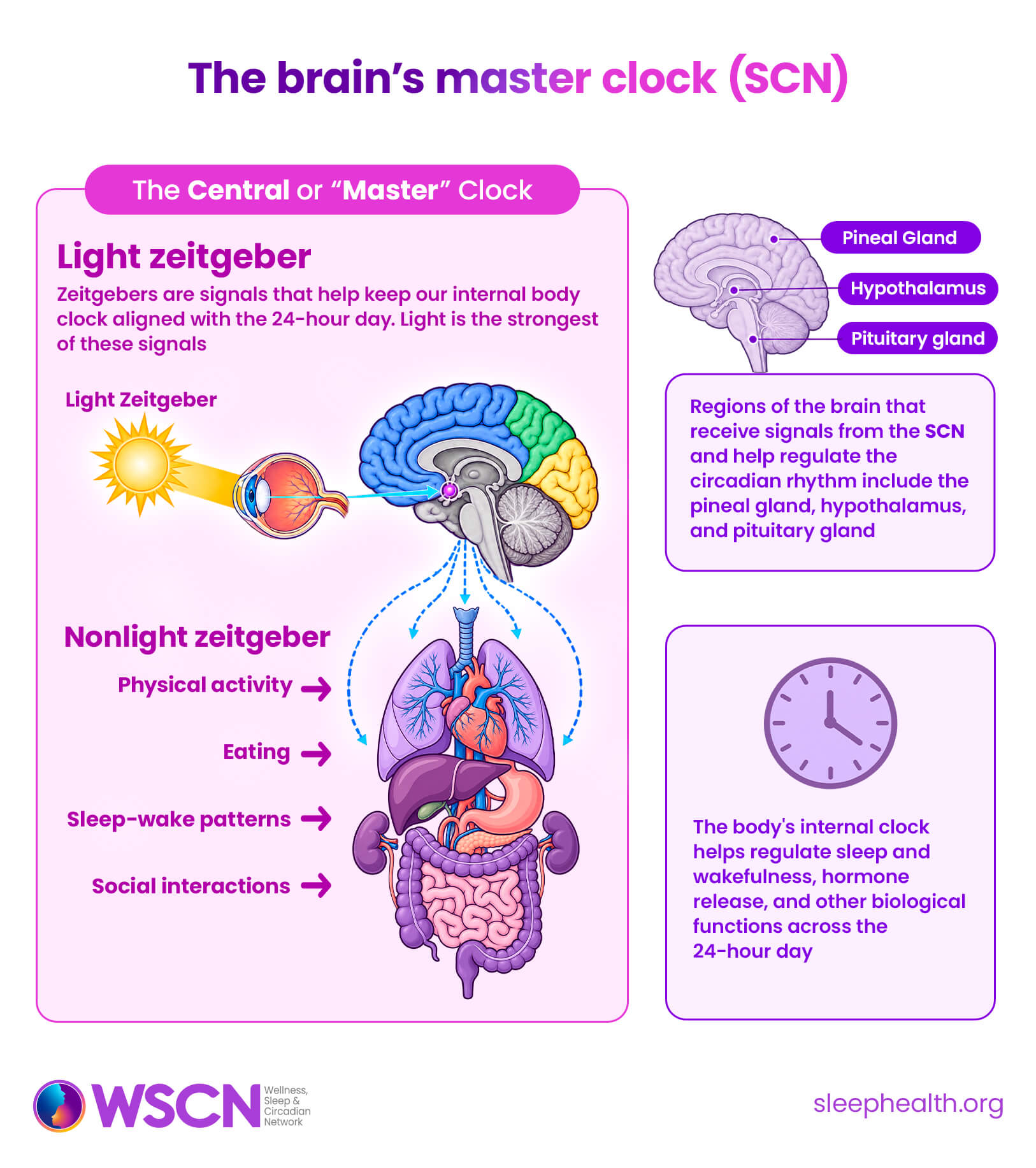
The second is the circadian rhythm, or Process C, which is controlled by the brain’s master clock, called the suprachiasmatic nucleus (SCN).

During the day, the circadian system sends signals that help us stay alert, even as sleep pressure increases. In the evening, these alerting signals weaken and melatonin levels begin to rise, making it easier to fall asleep. This creates a window sometimes called the “sleep gate.”

Although these two systems were traditionally studied separately, research shows that they influence each other. Together, they help determine when we feel awake and when we’re ready for sleep. 

Read more about Process S and Process C here.

Why does the body clock need to reset each day?

Our internal body clock runs slightly longer than 24 hours, by about 11–18 minutes on average. Without daily adjustments, our natural sleep and wake times would gradually shift later, moving out of sync with the day-night cycle.

Light is the strongest signal that keeps our body clock aligned with the 24-hour day. Scientists call these signals zeitgebers, or “time-givers.” Morning light helps reset the brain’s master clock, the suprachiasmatic nucleus (SCN), while bright light in the evening can shift our body clock later, making it harder to fall asleep at the usual time.

The importance of light was demonstrated in a study comparing people who spent a weekend camping outdoors with those who stayed at home. Exposure to natural daylight and darkness shifted the campers’ internal clocks earlier, while those exposed to electric lighting experienced a later shift.

How do sleep and the body clock affect hormones?

Hormones are chemical messengers that regulate many functions in the body. Many follow daily rhythms influenced by sleep and the body’s internal clock, and these patterns can change when sleep is disrupted or poorly timed.

Melatonin

Melatonin is made by the pineal gland in the brain. Levels rise in the evening as darkness signals “biological night” and stay elevated overnight. Melatonin signals biological night and helps prepare for sleep, but it does not act like a conventional sleeping pill. Evening light exposure, even at ordinary indoor and screen levels, can suppress melatonin and delay its release, leading to delayed onset of sleep. Sensitivity to evening light varies widely between people. Read more about melatonin and supplementation.

Cortisol

Cortisol is often called a stress hormone, but it also helps the body wake up and mobilizes energy to support daily activities. Levels normally peak shortly after waking and fall to their lowest point in the first part of the night. Sleep loss, as well as stress, can raise cortisol in the evening, when it should be low. This can both delay the onset of sleep and disrupt sleep across the night, often leading to the dreaded 3am wake-up. Ongoing circadian disruption, such as long-term night-shift work, can flatten, shift, or even reverse the normal daily pattern. 

Leptin and ghrelin

Leptin and ghrelin are hormones that help regulate hunger and appetite. Leptin, produced mainly by fat tissue, helps signal the body’s energy stores and reduce hunger. Ghrelin, produced mainly by the stomach, stimulates hunger.

Sleep and circadian rhythms influence how these hormones are regulated. Some studies have found that insufficient sleep increases ghrelin or reduces leptin, although results are not consistent across studies.

Research also shows that insufficient sleep can increase hunger and food intake, which may contribute to weight gain over time. Changes in appetite hormones may play a role, but they are only part of this complex relationship.

Thyroid-stimulating hormone (TSH)

TSH is released by the pituitary gland and it stimulates the thyroid to produce its own hormones that regulate metabolism and energy. TSH normally rises in the evening and peaks around the start of sleep. Deep sleep then helps hold TSH levels down. Disrupted sleep can alter how and when TSH is released, which in turn impacts metabolic patterns.

Insulin

Insulin helps move sugar (glucose) from the blood into cells for energy. Insufficient sleep can make the body less responsive to insulin, a state called reduced insulin sensitivity. Eating when the body clock expects sleep can also impair blood sugar control. Over time, these changes are associated with a higher risk of type 2 diabetes. In a simulated night-shift study, eating at night reduced glucose tolerance, while limiting meals to daytime hours prevented this effect.

These findings suggest that when we eat, as well as when we sleep, can influence blood sugar regulation. They also highlight the importance of circadian timing for metabolic health.

What neurotransmitters control sleep and wakefulness?

Neurotransmitters are chemical messengers that carry signals between nerve cells. Some help keep us awake and alert, while others promote sleep. Different areas of the brain release these messengers to help regulate the sleep-wake cycle.

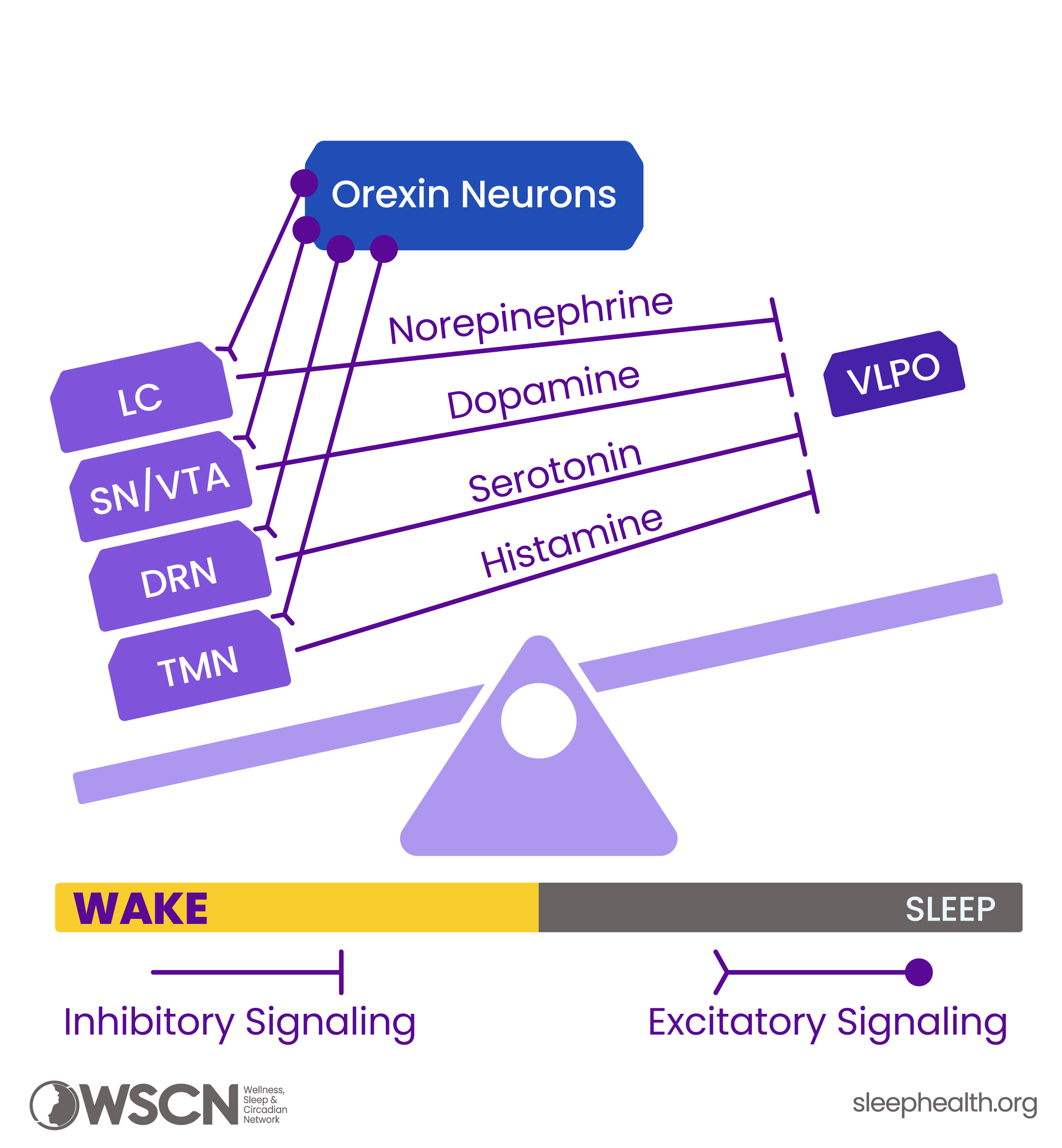
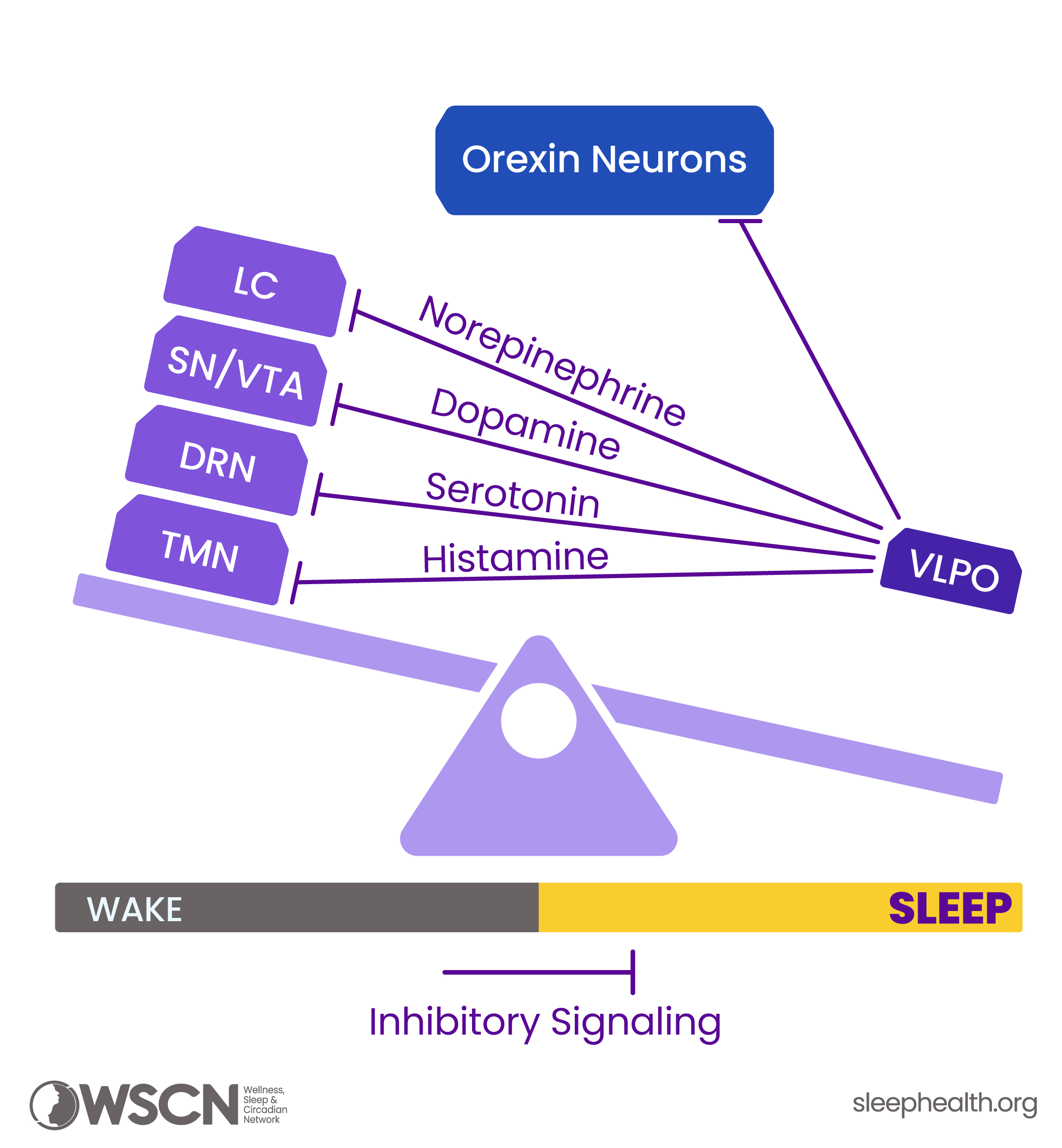
  • Norepinephrine: Released mainly from an area of the brainstem called the locus coeruleus. It helps maintain alertness and attention and is closely related to adrenaline, a hormone involved in the stress response.
  • Dopamine: Produced in several brain regions, including the midbrain. It helps promote wakefulness and plays an important role in motivation and reward.
  • Serotonin: Released from areas of the brainstem called the raphe nuclei. It helps regulate wakefulness and mood, although its effects on sleep vary depending on where and how it acts in the brain.
  • Histamine: Released from an area of the hypothalamus, histamine helps maintain wakefulness. This explains why some antihistamine medications cause drowsiness.
  • GABA and galanin: Released by sleep-promoting nerve cells in the hypothalamus, these chemical messengers help quiet the brain systems that keep us awake, allowing sleep to begin.

Together, these neurotransmitters help the brain regulate when we are awake and when we sleep.

Adenosine and caffeine

Adenosine is a neuromodulator, a chemical that adjusts how strongly other brain signals act. It builds up in the brain during waking hours as brain cells use energy, and it is one of the main signals behind sleep pressure. During sleep, adenosine levels fall and sleep pressure resets.

Caffeine blocks adenosine from attaching to its receptors. This is why caffeine can temporarily reduce feelings of sleepiness, even though the body’s need for sleep remains and adenosine continues to build up over the day. Because caffeine can stay active for many hours, intake later in the day can make it harder to fall asleep and can make sleep lighter. Research also suggests that high levels of daily caffeine intake can delay REM sleep and lower sleep quality.

Orexin (hypocretin)

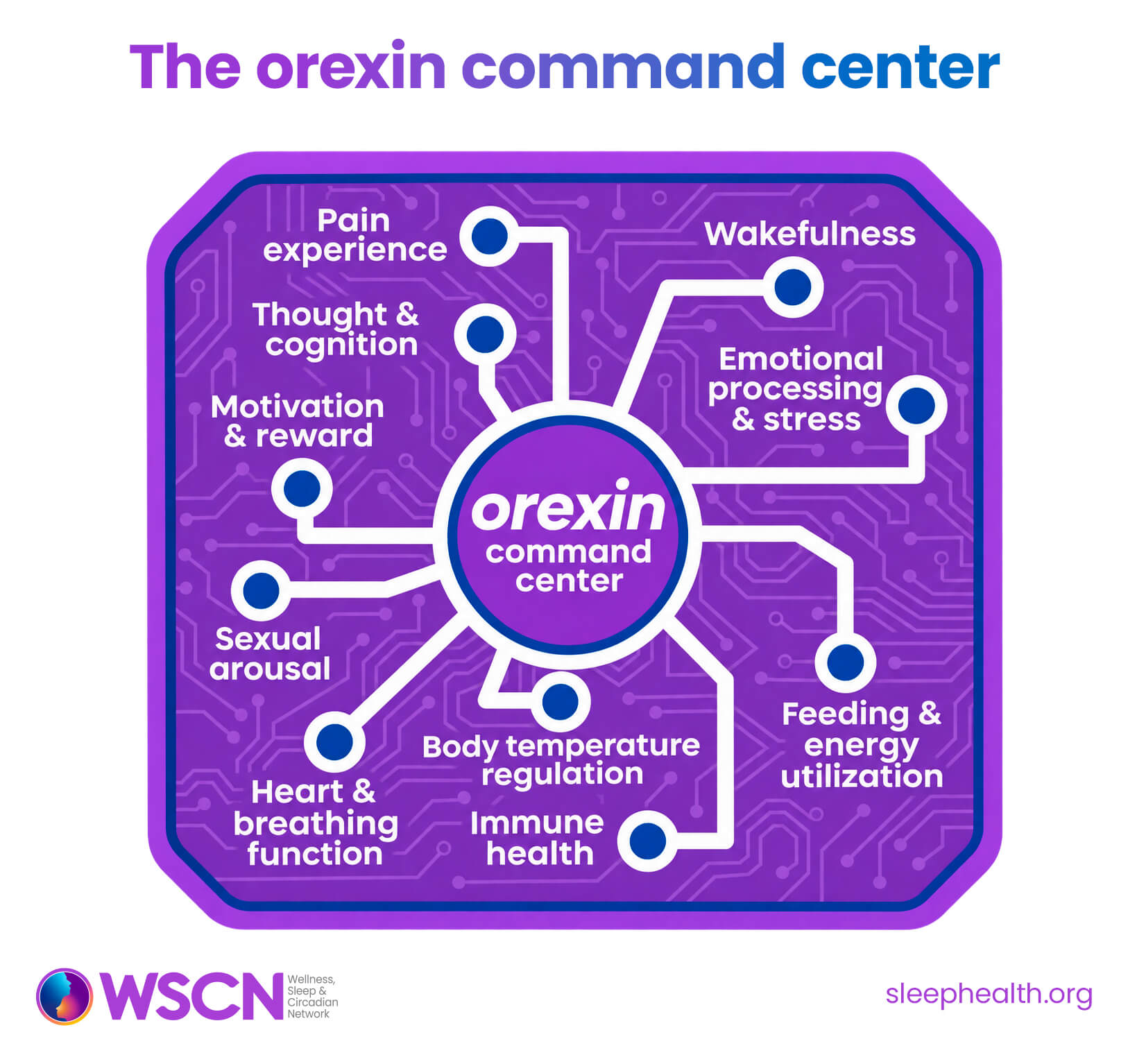
Orexin, also called hypocretin, is a neuropeptide produced by a small group of nerve cells in the hypothalamus. It helps maintain wakefulness by activating several of the brain systems that keep us awake and alert.

Orexin also helps stabilize the transition between sleep and wakefulness, preventing sudden changes between these states. It plays an important role in regulating REM sleep and is involved in other functions, including appetite and energy regulation.

In people with type 1 narcolepsy, most orexin-producing nerve cells have been lost. Without enough orexin, the brain has difficulty maintaining stable sleep and wakefulness. This can lead to excessive daytime sleepiness, sudden episodes of sleep, and symptoms such as cataplexy, a sudden loss of muscle control triggered by strong emotions. Learn more about narcolepsy here.

How does the brain switch between sleep and wakefulness?

The brain has a system that helps us move between sleep and wakefulness, often described as a “flip-flop switch.” Like a light switch, it helps the brain shift between two distinct states rather than remaining somewhere in between.

When sleep-promoting nerve cells in the hypothalamus become active, they suppress the brain systems that keep us awake. When wake-promoting systems are active, they suppress the sleep-promoting cells, helping us stay alert.

Orexin helps stabilize this switch, keeping us awake when we need to be and preventing unwanted transitions into sleep. Sleep pressure and the body’s internal clock influence when the switch changes states, helping coordinate sleep and wakefulness with our daily rhythms.


What happens when this balance is disrupted?

Sleep loss, irregular schedules, night-shift work, and jet lag can disrupt the body’s internal clock and the chemical signals that regulate sleep and wakefulness.

These disruptions can affect how we feel and function, contributing to daytime sleepiness, difficulty concentrating, and changes in mood. Over time, ongoing sleep and circadian disruption is also associated with an increased risk of metabolic conditions, including obesity and type 2 diabetes.

The relationship works in both directions. Conditions that affect the brain’s sleep-wake systems, such as narcolepsy, can also interfere with normal sleep and circadian rhythms.

Understanding how these systems work together can help us make more informed choices about sleep and daily routines. Although we cannot always control our schedules, finding opportunities to support regular sleep and circadian rhythms can benefit our overall health.

References


Medical disclaimer
This article is for educational purposes only and is not intended to replace professional medical advice, diagnosis, or treatment. Speak with a qualified healthcare professional about questions or concerns related to your sleep. Read full medical disclaimer
Continue reading

Melatonin

Melatonin is a hormone that helps the body keep time. Produced mainly in the brain, melatonin levels naturally rise as darkness falls, signaling that biological night is beginning and helping the body prepare for sleep.

Melatonin plays an important role in regulating the body’s internal clock, also known as the circadian rhythm. It helps coordinate the timing of sleep and other biological processes with the natural day-night cycle.

Melatonin is also widely available as a sleep supplement. It may help people fall asleep or adjust their sleep schedules, particularly when sleep problems are related to the timing of their internal body clock. However, its effectiveness depends on the underlying sleep problem, and taking melatonin at the right time is often as important as the dose.

Overview

  • Melatonin is a hormone produced mainly by the pineal gland in the brain
  • Melatonin levels rise in darkness and help signal biological night
  • Melatonin helps regulate the body’s internal clock and sleep timing
  • Supplements may help with jet lag and certain circadian rhythm sleep disorders
  • The benefits depend on when melatonin is taken, not just the dose
  • Consult a healthcare professional before taking melatonin supplements

ON THIS PAGE

What is melatonin?

Melatonin is produced mainly by the pineal gland, a small gland in the brain. Its production is controlled by the body’s central clock, which receives information about light and darkness from the eyes.

As evening light decreases, melatonin levels typically begin to rise about two hours before a person’s usual bedtime. Levels remain elevated during biological night and fall toward morning.

In specialized sleep clinics, melatonin levels can be measured to help determine the timing of a person’s internal body clock. This can be useful when evaluating certain circadian rhythm sleep disorders.

How does melatonin relate to sleep and the circadian rhythm?

Sleep is regulated by two closely connected processes: the body’s internal clock (circadian rhythm) and sleep pressure, which builds the longer we stay awake.

Melatonin mainly influences the circadian rhythm. Its rise in the evening signals biological night and helps the body prepare for sleep. It can also promote sleepiness when released or taken at the appropriate time.

Sleep pressure works differently. It builds during waking hours, partly through the accumulation of a substance called adenosine in the brain. The longer we stay awake, the stronger the drive to sleep becomes.

Healthy sleep is most likely when the body’s internal clock and sleep pressure are aligned. Melatonin helps regulate sleep timing, but it does not replace the natural need for sleep. Although widely used as a sleep supplement, melatonin is not a cure for insomnia or other underlying causes of disrupted sleep.

When might a melatonin supplement be considered?

Melatonin supplements may help with certain sleep problems, particularly those involving a mismatch between the body’s internal clock and the desired sleep schedule. Their effectiveness depends on the condition being treated and when the supplement is taken.

A healthcare professional may recommend melatonin for:

  • Jet lag: To help the body adjust to a new time zone.
  • Delayed sleep-wake phase disorder: To help people who naturally fall asleep and wake up much later than desired.
  • Non-24-hour sleep-wake rhythm disorder: To help regulate sleep timing, particularly in people who are totally blind.
  • Shift work: To help improve sleep in some people who work outside conventional daytime hours.
  • Certain childhood sleep problems: In selected cases, particularly when behavioral approaches have not been effective.

Melatonin is generally less effective for chronic insomnia that is not related to circadian timing. Cognitive behavioral therapy for insomnia (CBT-I) is usually recommended as the first-line treatment.

Because the appropriate timing, dose, and formulation depend on the individual and the sleep problem, melatonin supplements should be used with guidance from a qualified healthcare professional.

Melatonin safety and side effects

Melatonin is generally well tolerated when used for short periods, but it can cause side effects, including daytime sleepiness, dizziness, headaches, nausea, and vivid dreams.

Melatonin may also interact with certain medications, and combining it with alcohol or other substances that cause drowsiness can increase impairment.

Pregnant or breastfeeding women, children and adolescents, and people with certain medical conditions should seek medical advice before taking melatonin. Long-term safety remains less certain, particularly in children and with regular high-dose use.

The amount of melatonin in supplements may also differ from what is stated on the label.

Questions to ask your doctor about melatonin

  • Could melatonin help with my particular sleep problem?
  • What dose, timing, and duration would be appropriate for me?
  • Is melatonin safe to take with my current medications, or would another treatment be more effective?

Melatonin can be helpful for certain sleep and circadian rhythm problems, but its effectiveness depends on the individual and how it is used.

Melatonin can be useful when there is a clear indication and the timing is correct. It is best understood as one tool for circadian care, not a universal sleeping pill.

References


Medical disclaimer
This article is for educational purposes only and is not intended to replace professional medical advice, diagnosis, or treatment. Speak with a qualified healthcare professional about questions or concerns related to your sleep. Read full medical disclaimer
Continue reading

Own All 24 Hours

Your health is shaped by more than your sleep. It’s shaped by your entire day.

For too long, we have treated sleep as something that happens at night, separate from the rest of our lives.

But our bodies work across all 24 hours. Sleep helps us rest and recover, while circadian rhythms regulate when we feel sleepy or alert. They also help coordinate essential processes throughout the body, including metabolism and hormone release.

What happens during the day influences how we sleep. And how we sleep affects how we feel and function the following day.

It’s time to look beyond bedtime.

Think differently about your health

Sleep and circadian health are closely connected with our physical and mental well-being. When they are regularly disrupted, the effects can extend beyond tiredness, influencing our health and how we respond to illness.

The relationship also works in reverse. Illness and its treatment can disrupt sleep and circadian rhythms.

Understanding these connections opens up new opportunities to improve health across the entire day.

Taking care of our health means looking at the whole person, across all 24 hours.

Take ownership of what you can change

Owning all 24 hours does not mean following a perfect schedule or controlling every moment of your life.

It means recognizing where small changes can make a difference. Getting more daylight, being physically active, or finding a more consistent sleep schedule can all support sleep and circadian health.

It also means recognizing when sleep problems persist and seeking appropriate care rather than simply accepting them.

Not everything is within our control. Work, family responsibilities, and other circumstances can make healthy routines difficult.

The goal is not a perfect 24 hours. It’s finding a routine that supports your health and works with your life.

Advocating for better sleep and circadian health

Individual choices are only part of the picture.

At the Wellness, Sleep & Circadian Network, we believe sleep and circadian health should be recognized as essential components of people’s physical and mental well-being.

They should be routinely considered in healthcare conversations and treatment decisions, not only when someone reports trouble sleeping. They also deserve greater attention in research into disease prevention and treatment.

We also need policies and environments that help more people get sufficient sleep and maintain healthy circadian rhythms.

At WSCN, we want to empower individuals while changing how healthcare and society understand health across all 24 hours.

Better sleep. Better circadian health. Better lives.

It’s time to Own All 24 Hours.

References


Medical disclaimer
This article is for educational purposes only and is not intended to replace professional medical advice, diagnosis, or treatment. Speak with a qualified healthcare professional about questions or concerns related to your sleep. Read full medical disclaimer
Continue reading

Chronotypes

Some people wake alert and ready for the day. Others feel slow in the morning and think most clearly in the evening. These differences are not simply habits. They often reflect a person’s chronotype, the natural timing of their internal body clock. 

This page explains how genes shape chronotype, how it differs from popular schedule trends, and how understanding one’s own timing can support wellbeing across all 24 hours.

Overview

  • A chronotype is a person’s natural tendency to sleep and feel alert earlier or later in the 24-hour day.
  • Many genes help set chronotype by shaping the timing of the body clock.
  • Most people fall in the middle, with smaller groups leaning toward morning or evening.
  • Chronotype is biology, whereas trends such as the “5 a.m. club” are chosen schedules.
  • A mismatch between chronotype and daily demands is common, not a personal failure.
  • Knowing one’s natural rhythm can guide realistic and health-optimizing choices about light, sleep, and daily planning.

ON THIS PAGE

What Is a Chronotype?

A chronotype describes when a person naturally prefers to sleep and wake up. It also influences when they tend to feel most alert or sleepy throughout the day. Chronotype is closely connected to our internal body clock, which helps regulate these daily patterns.

Our internal body clock helps coordinate changes in sleepiness and alertness throughout the day. It also influences when hormones such as melatonin are released, helping the body prepare for sleep and wakefulness.

Chronotypes exist on a spectrum, from “early birds” or “morning larks” to “night owls,” with most people falling somewhere in between. They are shaped partly by genetics, but age, light exposure, and daily routines also play a role.

Chronotype describes when we naturally prefer to sleep, not how many hours of sleep we need. Understanding our natural timing can help us develop routines that support better sleep and work with our body clock rather than against it.

How Genes Shape Chronotype

Our genes play an important role in determining whether we naturally prefer earlier or later sleep times. In a large study involving nearly 700,000 people, researchers identified hundreds of genetic variations associated with chronotype. This shows that our natural sleep timing is influenced by many genes rather than a single one.

However, genetics is only part of the picture. Age, light exposure, and our daily environment also influence when we naturally feel sleepy or alert.

In rare cases, a change in a single gene can have a particularly strong effect. For example, a variation in a gene called CRY1 has been linked to unusually late sleep timing that runs in families.

Chronotypes Categories

Chronotype is usually described in three broad groups, with newer research suggesting additional patterns.

  • Morning types: Often called “early birds” or “larks.” They tend to feel sleepy early in the evening, wake easily, and feel most alert in the morning.
  • Intermediate types: Most people fall in this middle range waking later morning and enjoying some evening time before sleep onset.
  • Evening types: Often called “night owls.” They tend to go to sleep and wake later and feel most alert from afternoon into evening.

At the far ends of the spectrum, very early or very late timing that causes ongoing difficulty may signal a circadian rhythm sleep-wake disorder.

Chronotypes and Lifestyle Trends

Chronotypes have become a popular topic, with online quizzes that classify people into different animal types and lifestyle trends such as the “5 a.m. club” promoting early rising as a path to better health and productivity.

While these trends can encourage people to think about their sleep habits, they often overlook the biological differences in our natural sleep timing. Waking up at 5 a.m. may work well for a morning person, but for a night owl, it could mean losing valuable sleep and feeling tired throughout the day.

Understanding your chronotype is more useful than trying to follow someone else’s ideal schedule. Rather than focusing on when successful people wake up, focus on getting enough sleep and finding a regular routine that works with your natural body clock.

Popular online chronotype quizzes can be entertaining, but many have not been scientifically validated and should not be used to diagnose sleep problems.

How Chronotype Changes Across Life

Our chronotype is not fixed throughout life. As we grow and age, our internal body clock changes, influencing when we naturally feel sleepy and alert.

Childhood: Young children generally have earlier chronotypes, tending to fall asleep and wake up earlier.

Adolescence: During puberty, the body clock shifts later. This helps explain why teenagers often prefer staying up late and struggle with early school start times.

Early adulthood: Chronotype typically reaches its latest point in the late teens or early twenties, before gradually shifting earlier again.

Middle and older adulthood: Many people naturally begin to feel sleepy earlier in the evening and wake earlier in the morning as they age.

There are also differences between individuals. Genetics, light exposure, and daily routines influence chronotype, so not everyone follows the same pattern.

When the Body Clock and the Schedule Do Not Match

School, work, caregiving, and social schedules may not match a person’s natural sleep timing. Evening types often need to wake up before their body is ready on workdays, then go to bed and wake up later on free days. Researchers call this difference in sleep timing social jetlag.

This mismatch is common and can lead to insufficient sleep and daytime tiredness. People with later chronotypes may struggle with attention and concentration early in the morning but perform better later in the day.

Many people cannot change their work, school, or family schedules. However, understanding your natural body clock can help you make adjustments where possible. Getting morning daylight, reducing bright light in the evening, and maintaining regular sleep times can help support healthier sleep patterns.

Finding Your Natural Rhythm

Understanding your chronotype starts with paying attention to when you naturally feel sleepy or alert. Observing your sleep patterns and energy levels over a week or two can help you recognize your body’s preferred timing.

Here are some ways to get started:

  • Notice your natural sleep times: Pay attention to when you feel sleepy and when you wake up naturally on days without an alarm.
  • Track your energy levels: Notice when you feel most alert and when your energy tends to drop throughout the day.
  • Keep a sleep diary: Record your sleep and wake times for one or two weeks to identify patterns. Remember that sleeping later on days off can also reflect catching up on lost sleep.
  • Plan around your natural rhythm: When possible, schedule demanding tasks for times when you feel most alert.
  • Use light to support your body clock: Getting daylight earlier in the day and reducing bright light in the evening can help support an earlier sleep schedule.

Understanding your chronotype is one way to own all 24 hours. The goal is not to follow a perfect schedule, but to find routines that work with your natural body clock and support your health and wellbeing.

When to talk with a healthcare professional

Having an early or late chronotype is normal. However, persistent difficulties with sleep timing can sometimes indicate a circadian rhythm sleep-wake disorder or another sleep condition.

Consider speaking with a healthcare professional if:

  • You regularly struggle to fall asleep or wake up at the times required by your daily schedule.
  • Sleep difficulties interfere with work, school, or everyday activities.
  • You experience excessive daytime sleepiness, even when you allow enough time for sleep.
  • Sleepiness affects your safety, particularly when driving.

A healthcare professional can help identify the underlying cause and recommend appropriate treatment or adjustments to your sleep schedule. You don’t have to accept ongoing sleep difficulties as a normal part of life.

References


Medical disclaimer
This article is for educational purposes only and is not intended to replace professional medical advice, diagnosis, or treatment. Speak with a qualified healthcare professional about questions or concerns related to your sleep. Read full medical disclaimer
Continue reading

Sleep, Circadian, and Performance

The definition of performance looks and feels different for every person, but good performance always depends on how well the brain and body have recovered, and how well they are timed to the demands of the day. A championship race, a final exam, a board meeting, and a night of parenting a newborn all draw on the same foundations. Sleep provides recovery, circadian rhythm provides timing. When there is optimal alignment across these body rhythms and the tasks at hand, our performance is better. On the other hand, performance can be negatively impacted when sleep is poor or when our circadian rhythm is not matched to a task.

Overview

  • Sleep and circadian rhythm are core pillars of physical and mental performance, alongside preparation, nutrition and exercise
  • The brain and body complete much of their recovery, learning, and adaptation during sleep, so rest is part of training/preparing rather than time away from it
  • Aligned circadian rhythms support reaction time, speed, endurance, power, learning, decision making, and emotional regulation
  • Performance naturally varies across the day, which raises practical questions about the best times for racing, exams, and important meetings
  • Protecting sleep matters at every level, from elite sport to classrooms, workplaces, and family life.
  • Training, in the context of this page, can refer to any type of preparation for an important task: training for a race, studying for an exam, preparing a work presentation, or making a big family decision

ON THIS PAGE

What does sleep do for performance?

Sleep is an active biological state in which the brain and body carry out essential work. During deep non-REM sleep, the body supports physical repair, immune function, and energy regulation, and releases growth hormone that helps tissues recover after hard training. During REM sleep, the brain processes and stores what was learned during the day and supports emotional processing.

In this sense, sleep is when adaptation to the stresses of training is made. An athlete who trains hard but sleeps little gains less from each session. A student who studies hard into the night but cuts sleep loses much of the benefit, because memory consolidation happens largely during sleep. Sleep is not the end of training; it is the step that converts effort into progress.

Can better sleep improve performance?

Physical and athletic performance

Research suggests that it can. In a study of collegiate basketball players, athletes who extended their nightly sleep toward ten hours for several weeks ran faster timed sprints, improved free throw and three point shooting accuracy by roughly nine percent, and reported better games with less fatigue. The improvements appeared within weeks, which makes sleep one of the most accessible performance tools available.

Sleep loss works in the opposite direction. A recent meta-analysis of experimental studies found that insufficient sleep measurably reduced endurance, explosive power, maximum strength, speed, and skill control in athletes, increased the sense of effort during exercise, and was linked with higher injury risk. Even moderate sleep restriction weakens attention, working memory, and judgment, which matters in meetings, classrooms, and driving as much as on the field.

Mental and emotional performance

The same pattern holds for learning, problem solving, and emotional work. In a study of preschool children, an afternoon nap after a memory game helped children remember what they had learned later that day and the next morning, while children who stayed awake forgot more. In a college study, students who slept 8 hours or more before a final exam did better than those who slept 7.9 hours or less, even when controlling for pre-final grades.

In a study of problem solving, participants who slept on a number puzzle were more than twice as likely to discover a hidden rule that made the puzzle easier to solve. Sleep supports insight as well as memory. 

Sleep also protects emotional performance. Healthy adults restricted to five hours of sleep for five nights showed increased emotional reactivity. A meta-analysis covering more than fifty years of experiments found that sleep loss consistently worsens mood, heightens anxiety, and weakens the ability to regulate emotion. Steady sleep supports the emotional control and clear thinking that exams, meetings, relationships, and parenting depend on.

What is the best time of day for athletic performance?

Circadian rhythm shapes how the body performs across the day. In studies of elite athletes, physical performance is generally lowest in the early morning and highest in the late afternoon and early evening, and the gap between an athlete’s biological best and worst times of day can reach twenty six percent. A sprinter scheduled to race at seven in the morning is not competing in the same body as one racing at three in the afternoon, because body temperature, muscle function, and alertness all follow a daily rhythm that naturally varies.

There is no single best time for everyone. Each person has a chronotype, a natural tendency toward earlier or later body clock timing, and personal performance peaks shift accordingly. Evening types face a particular disadvantage in early morning competitions, and morning types lose their edge in late evening events. Understanding these timing natural patterns can help a person understand when performance is best – and use this to take ownership of all 24 hours. This could mean planning an important meeting during times of peak alertness, or signing up for sports events that start at a time when the body is primed for athletic outputs.

Is there an optimal time for exams or important meetings?

Timing effects also appear in mental work. An analysis of results from all children attending Danish public schools found that standardized test performance decreased for every hour later in the day, while a twenty to thirty minute break improved average scores. Mental fatigue builds across the day, and thoughtful scheduling can partly offset it.

Sleep habits matter as much as clock time. Research that tracked college students for several months with sleep monitors found that on-going positive sleep duration, consistency, and quality were all associated with better grades. For important exams and meetings, arriving rested matters more than last-minute extra preparation.

When a broken night matters: the Tour de France example

The stakes of a broken night reached a wide audience during the 2026 Tour de France. Race leader Tadej Pogacar and his main rival Jonas Vingegaard were woken in the early hours for doping controls: Vingegaard at 2 am and Pogacar at 5 am. Vingegaard said he could not return to sleep after the test. He crashed heavily on the first Alpine stage that same day, broke his collarbone, and left the race. Pogacar described the 2am test as inhuman and suggested that the broken night might have contributed to the crash.

The causes of a crash are never certain, and no evidence established the disrupted sleep as the direct cause. The case nevertheless raised a fair question. When sleep loss is known to slow reaction time and raise injury risk, should testing and other demanding protocols be scheduled with more respect for circadian timing and for the safety importance of sleep? The same question applies to shift work, on-call schedules, and any system that asks people to perform after fragmented sleep.

Sleep and circadian rhythm as pillars of performance

Nutrition and exercise are widely recognized as foundations of performance. Sleep and circadian alignment belong beside them. No training plan or study plan is complete without the nightly recovery and daily rhythm that allow the body to repair, the brain to learn, and alertness to arrive at the times when it is needed.

When performance problems deserve attention

Occasional poor sleep is normal. Persistent loud snoring, breathing pauses during sleep, extreme daytime sleepiness, long-standing trouble falling or staying asleep, or performance that stays below expectations despite enough time in bed may signal a sleep or circadian disorder. These conditions are common, evaluation is straightforward, and treatment can make a measurable difference. Speaking with a primary care practitioner or sports physician can be an excellent first step to taking ownership of health across all 24 hours.

References


Medical disclaimer
This article is for educational purposes only and is not intended to replace professional medical advice, diagnosis, or treatment. Speak with a qualified healthcare professional about questions or concerns related to your sleep. Read full medical disclaimer

Continue reading